eC2: Multi-stakeholder platform for knowledge sharing on access solutions for innovative medicines

Deadline: 31-Aug-2017 at 11:59:59 PM (Eastern Time – Washington D.C.)


The initial scope and purpose of the multi-stakeholder platform for knowledge sharing medical-appointment-doctor-healthcare-clinic-health-hospital-medicine[7]on access solutions for innovative medicines (henceforth, the Platform) will be to develop and share knowledge and tools for smarter decision making on access strategies for patented medicines for NCDs, through a collaborative approach. The Platform will leverage the pharmaceutical industry’s capacity for developing innovative access solutions and the World Banks role as a strategic long term partner for developing countries and its convening power, to create a reference policy and implementation framework and decision-making tools for maximizing reach of new treatments for populations that typically would not have access to patented medicines, ultimately driving uptake of voluntary access strategies in developing countries.

Continue reading

eC2: Impact of carbon pricing instruments on national economy and contribution to NDC

Deadline:  31-Aug-2017 at 11:59:59 PM (Eastern Time – Washington D.C.)


The Partnership for Market Readiness (PMR) is a forum for collective innovation and a solar-energyfund to support countries to prepare and implement climate change policies in order to scale-up mitigation efforts. The PMR consists of 13 Contributing Participants, who provide financial support to the PMR Trust Fund and share their carbon pricing experience, and 19 Implementing Country Participants, who receive funding and technical support. In Thailand, the PMR supports the design of an Energy Performance Certificate scheme and prepares infrastructure such as a database and MRV system. PMR activities also include a study on the legal framework for an ETS and preparation of the Low Carbon City Program and Fund.


Continue reading

Community-Driven Projects Reduce Poverty and Empower Youth in Nigeria

STORY HIGHLIGHTSng-community-driven-projects-reduce-poverty-and-empower-youth-in-nigeria-780x439.jpg

  • To combat poverty, the Commercial Agriculture Development Project for Nigeria involves beneficiaries as key players and partners.
  • The project supports the strengthening of skills and capacity of Local Government Authorities and sectoral public agencies to provide support to communities.
  • The community-driven, development approach has resulted in 3,435 micro-projects, of which more than 50 percent are completed and in use.

Continue reading

eC2: Ethiopia Malt Barley Supply Chain – Cooperative and Lead Farmer Business Management Training

Deadline:  04-Sep-2017 at 11:59:59 PM (Eastern Time – Washington D.C.) ml-can-a-nation-build-its-future-if-it-cannot-feed-its-children-five-policy-actions-to-transform-crop-and-livestock-farming-in-mali-780x439

IFC plans to assist a large domestic buyer to increase the quantity of malt barley procured from local smallholder farmers by aggregators such as cooperatives or “lead farmers”. Part of the project includes improving the professionalism of approximately 80 aggregators so that they can function more effectively as businesses and provide better services to their members and/or smallholder farmer clients.

Continue reading

eC2: SE4All Least-Cost Electrification Global Platform

Deadline: 07-Sep-2017 at 11:59:59 PM (Eastern Time – Washington D.C.)logo

Specifically, the objectives of this assignment are threefold:
1. Develop a set of industry compatible data standards for electrification models data inputs and modelling outputs, primarily to facilitate data inputs reuse and comparability of outputs across models and countries;
2. Develop a scenario-based global model of least-cost electrification planning for universal access for all countries with electrification rate below 90% (as per World Bank Global Tracking Framework 2017)
3. Develop a web mapping application that demonstrates the global models results, and allows users to adjust certain parameters that affect least cost electrification planning, such as but not limited to:
a. Technology costs
b. Cost of diesel
c. Electrification level targeted
d. Timeline considered for universal access
The web mapping platform will need to ensure compatibility leveraging data standards specified as part of this assignment, notably to allow users to visualize other or future modelling results.

Continue reading

Finger Splints, Coding, Drones and R2D2: The Evolving Face of Technology and Development

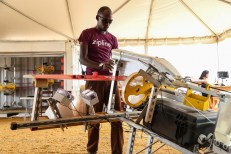
Blood-delivering drones? Check. 3D-printer working off grid to print finger splints?drone Check. Disadvantaged women trained and employed in software-developing? Check. Is this how technology can deliver for development?


First things first. Let’s go back to the first principles. The World Bank’s World Development Report 2016 used a 3X3 framework to think about digital technology from a development lens: inclusion, efficiency and innovation for people, governments and businesses. Digital technologies, when employed as a tool for development, have the capacity to promote inclusive economies and societies, build upon existing capital and generate economies of scale. Herein lies powerful potential.

Continue reading

eC2: Prioritization of locations for off-grid rural electrification in Tanzania

Deadline:  05-Sep-2017 at 11:59:59 PM (Eastern Time – Washington D.C.) scaling+solar+main+banner

IFC is seeking to develop new datasets that will enable faster and more accurate market analysis for DESCOs operating in Tanzania, including household locations and indicators on ability to pay, potential for productive uses of electricity and up-to-date data on national electricity grid transmission and distribution line locations. Collectively, it is expected that these datasets will help DESCOs operating in, or seeking to enter, Tanzania to narrow down geographic areas that could be interesting markets for their off-grid energy services. Datasets should of sufficient detail and quality to inform and prioritize the parallel project on detailed mapping of priority villages and households. In addition, it should enable preliminary assessment of market potentials and be useful in the wider rural energy sector and beyond. The data should be presented online in a manner that allows for affordable updating on a regular basis, with intuitive presentation of the results and prioritization of feasible off-grid villages.  IFC is seeking the services of a specialist firm to develop these datasets and prioritize detailed household mapping; to disseminate them in an accessible manner; and to and maintain the data up-to-date.

Continue reading

eC2: Prioritization of locations for off-grid rural electrification in Tanzania

Deadline: 05-Sep-2017 at 11:59:59 PM (Eastern Time – Washington D.C.)

The project is expected to include mapping using satellite imagery, along with engagements in Tanzania to collect detailed indicators on village potentials. The selection committee will take into consideration the use of local Tanzanian consortium members or contractors in these activities. However, approaches that differ from these two points will still be considered. These datasets should be of sufficient quality to allow detailed assessment of mini-grid potential in villages, and in addition be useful to other rural energy actors and in wider development objectives. The datasets should be uploaded to OpenStreetMap and will also be made available on the platform developed in the parallel project. IFC is seeking the services of a specialist firm to develop this data; to ensure its quality and accuracy; and to upload and maintain it on OpenStreetMap and other platforms.
Continue reading

eC2: Benefit Sharing in Hydropower

Deadline: 28-Aug-2017 at 11:59:59 PM (Eastern Time – Washington D.C.) HYDRO

Social license to operate is a critical issue for renewable energy projects, particularly in the hydropower sector which can pose significant environmental and social impacts. Numerous cases in developing and developed countries demonstrated that stakeholder support for hydropower projects is often closely interwoven with the perceived balance of impacts and benefits to the host communities. Perceived absence of benefit sharing can cause objection to the development and lead to stagnation of projects and loss of social license to operate. The objective of the study is to highlight benefit sharing frameworks and document lessons from global experiences. This will help the private sector understand the different models of benefit sharing and how its implementation can support gaining social license to operate for hydropower projects.

Continue reading

eC2: GFDRR Challenge Fund Data Exploration Tool

Deadline:  07-Sep-2017 at 11:59:59 PM (Eastern Time – Washington D.C.) logo1

GFDRR is supporting the development of an open data schema for hazard, exposure and vulnerability data through the Challenge Fund(https://www.gfdrr.org/challengefund). This Consultancy will support the project by developing software that will allow for extracting a subset of hazard, exposure and vulnerability data from external databases using an API, and then subsequently downloading and interactively analyzing the extracted data. The software should allow the user to save and/or print the analysis results. It should permit a variety of means for exploring and understanding the data. The overall goal is to provide a non-expert user with the ability to simply extract, explore and understand hazard, exposure and vulnerability data relevant to a country or region of interest. The desktop versions should be compatible with common operating systems. The software should be based on open-source software such as R or Python. This will need to be delivered by March 2018.

Continue reading