
December 1, 2017– While the developing world has made strong progress towards 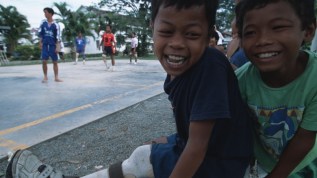
universal primary education, education is still largely an unfulfilled dream for millions of children with disabilities. Leroy Philips, a youth leader and radio broadcaster from Guyana, recalls what it was like growing up blind.
Tag Archives: World Bank Group
eC2: DEVELOPING AN INFRASTRUCTURE AND PPP SCREENING TOOL FOR INDONESIA
 Deadline: 11-Jan-2018 at 11:59:59 PM (Eastern Time – Washington D.C.)
Objective: SCOPE OF WORK: Under this consultancy work, a Multi-Sector Screening and Prioritization Tool for proposed infrastructure projects (from the 19 infrastructure sectors as defined in Perpres 38/2015), will be developed for the Indonesia’s Ministry of National Development Planning (BAPPENAS).
Stronger together? Reflections on an 11-year journey through water reform
It’s now 2017 and I’m in Washington DC at the latest leg of my journey. Just a few days ago the World Bank’s Water Global Practice launched a toolkit and background report that explores why, when and how water utilities can work together to provide better services. This is the culmination of a years-long team effort and, for me, a particular satisfaction to have even more evidence to inform our policy advice on the matter. As often, the conclusions are more nuanced than my (and many of my colleagues’) Cartesian mind would like. The success of an aggregation depends very much on your starting point and what you are trying to achieve, and so you really need to think about those two points as you design your reform process…. But I don’t want to give all the insights away – check out the toolkit, discover the case studies, listen to the interviews and read the report if you want to know more!

eC2: Sectoral Water Use Assessment for Adaptive Allocation and Valuing Water in Tanzania
Deadline: 08-Jan-2018 at 11:59:59 PM (Eastern Time – Washington D.C.)
Objective: The Bank is carrying out analytical study on Tanzania freshwater resilience, which will underpin institutional reform and future on-the-ground investment for water resources management. A core activity of this study is to assess water use of the major sectors, namely, agriculture and industry, in Tanzania. The agricultural and industrial sectors are the major economic drivers of the country representing the biggest and most rapidly expanding users of water resources.


eC2: Support to the Government of Uganda for a Capacity Building Program for Implementing PPPs
Deadline: 14-Dec-2017 at 11:59:59 PM (Eastern Time – Washington D.C.)
Objective: The Finance and Markets Global Practice and the Infrastructure, PPPs and Guarantees (IPG) Group of the World Bank, supported by DFID, intend to engage the services of a consulting firm qualified and experienced in PPP related technical, financial, institutional and legal work to develop and deliver a comprehensive training program for relevant government entities and other relevant stakeholders in PPPs and infrastructure financing. The services expected are described in the Terms of Reference.

eC2: Climate Resilient Industries Framework Development
Deadline: 19-Dec-2017 at 11:59:59 PM (Eastern Time – Washington D.C.)
Objective: The World Bank Trade & Competitiveness Global Practice and Global Facility for Disaster Reduction and Recovery (GFDRR) Tokyo Disaster Risk Management (DRM) Hub is embarking on a knowledge project on Business Continuity Planning (BCP) for Climate Resilient Industries.  The Project aims to identify, mitigate, and manage risks from disasters and climate change impacts that disrupt national industries, domestic and international value chains, undermine competitiveness and reduce economic derived from industries through a focus on business continuity planning and upgrading of critical industrial infrastructure. The results from this knowledge project will fill a critical gap in knowledge related to industrial resilience and provide the World Bank Group with a clear entry point on providing solutions for client governments.
eC2: Strengthening the integration of disaster risk management and climate resilience in road transport to improve trade and competitiveness in the Western Balkans Region
Deadline: 23-Dec-2017 at 11:59:59 PM (Eastern Time – Washington D.C.)
Objective: The Development Objective of this proposed activity is to: Support the development of a more resilient trade and transport in the Western Balkans.  For this end the activity will assess the economic impacts associated with the potential disruption of core road network assets in terms of infrastructure related loss and the loss of functional connectivity as a function of time among other dimensions. It will overall advance the analytical knowledge to better inform and define possible measures and strategies to improve the Western Balkans Regions Action Plan for Facilitating Trade and Transport against adverse natural events.
eC2: Enhancing technical skills for analyzing and advocating private sector and investment climate reform issues in Bangladesh
Deadline: 19-Dec-2017 at 11:59:59 PM (Eastern Time – Washington D.C.)
Objective: Bangladesh has set a national target to improve its business climate by 2021. In achieving this target, private sector stakeholders can play a significant role by identifying, analyzing, prioritizing and advocating relevant reform issues. As part of its investment competitiveness and private sector reforms engagement, WBG is supporting Bangladesh in selected reform areas. This assignment aims to enhance analytical capacity for reform advocacy of key stakeholders who engage actively with the government in private sector and investment climate policy dialogues.

eC2: Evaluation of Local Stakeholder Engagement in the Climate Investment Funds
Deadline: 19-Dec-2017 at 11:59:59 PM (Eastern Time – Washington D.C.)
Objective: The purpose of this evaluation is to better understand the extent to which CIF programs and their local stakeholder engagement (LSE) mechanisms have accomplished their goals and are achieving tangible benefits to end-beneficiaries; to inform enhancements and increase the effectiveness of CIFs LSE approach; and to identify successes, challenges, and lessons learned for the benefit of the CIF, multilateral development banks, and other climate finance mechanisms.


eC2: GT-Strengthening Government HR Management Capacity and Systems
Deadline: 19-Dec-2017 at 11:59:59 PM (Eastern Time – Washington D.C.)
Objective: The Firm is expected to review the implementation arrangements developed by the GoG and finalize preparations for the implementation of the Census as follows: Review and improve, where necessary, the Census methodology. Review the specifications for the Census instruments and Census framework. Review and develop data collection and verification instrument(s). Review and update data collection guidelines for administration. Develop a relevant database and data collection interface. Document the data collection process flow. Develop the required data collection procedures and guidelines; and provide adequate copies for surveyors and stakeholders. Develop the project plan which includes data collection schedule and logistical arrangements.


You must be logged in to post a comment.