
In a decade of miserable trade growth, 2019 is set to make the record books for all the  wrong reasons. Since the Great Recession, trade growth hovered around 3 percent per year, down from the 7 percent growth rates for the two decades preceding the crisis. This year world trade is expected to grow slightly above 1 percent. We find that policy uncertainty might account for almost half of the slowdown of world trade growth in 2019.
Tag Archives: Wereldbank Groep
Ending Learning Poverty: A Target to Galvanize Action on Literacy
At a school in Malawi, students are enjoying play time at recess. Unfortunately,  sometimes recess lasts all day because the teacher doesn’t come to work.
In a classroom in Armenia, students are receiving grades for their ability to repeat memorized text, with textbooks dominating the learning process rather than teacher instruction and innovation, leaving graduates unprepared for a competitive work environment.
In Bangladesh, despite improving enrollment rates, girls are still not learning as much as boys, and dropout rates are high – with lost years in schooling being attributed to child marriage, household responsibilities and other factors.
The real costs of illegal logging, fishing and wildlife trade: $1 trillion–$2 trillion per year
Illegal logging, fishing and wildlife trade rob the world of precious natural resources – 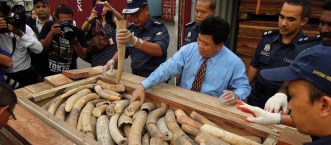 and ultimately of development benefits and livelihoods. The statistics are grim: an elephant is poached for its tusks about every 30 minutes, an African rhino for its horn every 8 hours, one in five fish is caught illegally, and in certain countries, particularly in Africa and South America, 50% to 90% of timber is harvested and traded illegally. As much as 35% of the value of all illegal trade is estimated to come from rosewood.
eC2: Sector Impact Assessment of Subnational Infrastructure Investments in Indonesia
Deadline: 13-Nov-2019 at 11:59:59 PM (Eastern Time – Washington D.C.)
Consultant firm to provide support to the World Bank team in conducting the detailed regional impact analysis for several projects financed through RIDF and/or municipal bonds. The consultant firm will also prepare a guidance note on the analysis and conduct series of trainings to the relevant stakeholders.
eC2: Development of national approaches for assessment of hydromorphological status of Surface Water Bodies and of national methodology for identification and designation of Heavily Modified Water Bodies
Deadline: 12-Nov-2019 at 11:59:59 PM (Eastern Time – Washington D.C.)
The assignment aims at filling the encountered gaps in terms of methodical base, qualitative and quantitative data for hydromorphological quality elements (HMQE), required for the assessment of the ecological status of surface water bodies (SWBs) and potential of Heavily Modified Water Bodies (HMWB) and Artificial Water Bodies (AWBs), in compliance with the WFD and most recent good practices and CIS guidance documents. The procedures are mandatory for achieving the objectives of Directive 2000/60/EC and the obligations of Bulgaria as a MS with respect to the EU water policy. The results have to provide the missing and further develop the existing methodical basis, which should regulate and guide the identification and designation of HMWBs & AWBs, the execution of further field works and monitoring programs, the interpretation of the results for HMQEs and the following assessment of the hydromorphological status of SWBs of category rivers, lakes and transitional waters as supporting the overall ecological status assessment.
The Bahamas after Hurricane Dorian
I have never seen this level of destruction. I was deployed to Haiti after the 2010  earthquake, New York after Superstorm Sandy, northeast Nigeria after the worst of the Boko Haram insurgency, and to Somalia and Malawi after devastating droughts and floods delivered destruction on a tragic level. But mere walking through the worst hit areas of Abaco in northern Bahamas in the wake of Hurricane Dorian provided a glimpse of what total devastation really looks like.
Call for Proposals: Fragility Forum 2020
GENERAL INFO
- When: March 2-4, 2020
- Where: 1818 H St. NW, 20433 Washington, D.C.
- Contact: fragilityforum@worldbank.org
- Call for proposals: Open until November 22
- Registration for participants: Opens on November 1, 2019
The Fragility Forum is a high-level event organized by the World Bank Group which brings together practitioners and policymakers from around the world to exchange knowledge and experience on engaging in environments affected by fragility, conflict and violence (FCV). Over three days, the Forum aims to provide an opportunity to harness the collective brain trust of stakeholders coming from government, international institutions, donor agencies, private sector, civil society, academia and media to improve the efficiency and effectiveness of development approaches to achieve lasting impact. The Forum has been held three times previously, in February 2015, March 2016 and March 2018. The Fragility Forum 2020 will focus on implementation: the concrete approaches that are needed to maximize our collective impact and more effectively respond to dynamic, multidimensional, and global challenges affecting countries around the world.
Doing Business 2020–Sustaining the pace of reforms
Regulation exists to protect workers, public safety, businesses, and investments. But inefficient or inadequate regulation can stifle entrepreneurial activity and business growth and impact the ease of doing business. It takes over 200 hours to complete export border requirements for maritime transport in Cameroon and Côte d’Ivoire. In contrast, it takes only 10 hours in Singapore. Border compliance costs for export at seaports in Gabon average over $1,600, but just over $300 in Mauritius.
eC2: Trade Facilitation West Africa Communications and Awareness
Deadline: 11-Nov-2019 at 11:59:59 PM (Eastern Time – Washington D.C.) 
Develop an informed, regionally effective communications strategy and tactical plan (in writing) by: Researching and mapping which tactics are the most suitable for the market/region/audience. Organizing and facilitating meetings and/or workshops between TFWA Program communications focal points and representatives of various institutions with an interest in the regions trade facilitation agenda to inform its approach. Ensuring the strategy and plan incorporate priorities of the various TFWA Program stakeholders while also ensuring consistency with TFWA Program objectives, targets, and communications guidelines and graphic standards. Seek approval for the above strategy and plan and rework the approach as needed.
Execute the approved tactics to Bank-level standards.
Provide ECOWAS/UEMOA with the tools required to take over and implement the communications plan in the long term.
Produce progress reports at agreed intervals (per each task order).
How Statistical Capacity Building projects benefited Sudan
The Trust Fund for Statistical Capacity Building (TFSCB) Administrative Unit at the  Development Economic Data Group (DECDG) launched a new blog series “TFSCB: Statistics for a Better World” earlier this year to share the impacts of the World Bank’s TFSCB in low- and mid-income countries over the last 20 years.
One of the projects that benefited from the TFSCB was the Sudan Statistical Capacity Building project.
 Netherlands for the World Bank
You must be logged in to post a comment.