
There has been a broad-based slowdown in productivity growth since the global 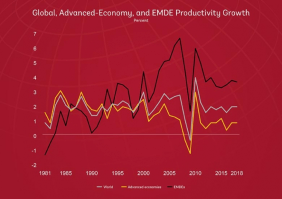 financial crisis, affecting the majority of advanced economies and emerging market and developing economies (EMDEs). Productivity growth is the primary source of lasting income growth, which in turn is the main driver of poverty reduction. Whereas the one-quarter of emerging market and developing economies (EMDEs) with the fastest productivity growth have reduced their extreme poverty rates by an average of more than 1 percentage point per year since 1981, poverty rates rose in EMDEs with productivity growth in the lowest quartile. The broad-based slowdown in labor productivity growth over the past decade has raised concerns about progress in achieving development goals.
Tag Archives: Wereldbank Groep
eC2: Digital Financial Services and the Digitization of Agricultural Value Chains
Deadline: 10-Feb-2020 at 11:59:59 PM (Eastern Time – Washington D.C.) 
The objective of this study is to perform an in-depth assessment of the current state and potential of digital financial services in Iraq to better understand the opportunities for digitization of financial transactions in the country. This study will additionally provide detailed insights into opportunities for digitization of financial transactions in the agricultural value chains and improving agri-finance.
Fulfilling the Aspirations of MENA’s Youth
 In recent months across the Middle East and North Africa (MENA) region, youth have been taking to the streets in ever larger numbers to demand improvements in governance, transparency, service delivery, the environment, and job opportunities.
World Bank blogs
eC2: Advisory Services to the Indonesia Coastal Fisheries Initiative
Deadline: 10-Feb-2020 at 11:59:59 PM (Eastern Time – Washington D.C.) 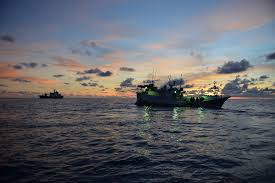
The objective of this consultancy is to identify: (1) main barriers a) for the participation of the private sector in sustainable fisheries and b) for the establishment of community private sector partnerships around sustainable fisheries; (2) advise on ways to address these barriers; and (3) present a concrete business case of return-seeking responsible investments in a specific target fishery, that incorporates the advice above, and thus informs understanding of fisheries investment risks and opportunities.
Jobs, Skills, and the Potential of AI in Kenya
One of the advantages of artificial intelligence (AI) is that it can help us carry out tasks  faster and with fewer errors than humans. I wanted to test this on analyzing labor market demand and skills gaps. So, earlier this year, I partnered with Headai, a Finnish company, to apply an AI-enabled labor market assessment tool in Kenya. We used the tool to analyze: (a) online job advertisements from select online job portals in Kenya and (b) computer science curricula from the University of Nairobi and Moi University to identify the gaps between what the labor market is looking for and what the university curriculum is providing.
World Bank blogs
eC2: Ghana Cocoa Forest REDD+ programme (GCFRP)
Deadline: 06-Feb-2020 at 11:59:59 PM (Eastern Time – Washington D.C.)
A reputable Ghanaian non-governmental organization (NGO)/firm, with significant experience and expertise working on community-based natural resource management (e.g. CREMA and HIA) and established presence in the GCFRP landscape will be contracted to work in direct collaboration to with the National REDD+ Secretariat to:
1) bring together the existing plans, knowledge, processes, structures and learning on the implementation of HIAs (including governance structures and consortiums); and then
2) use this information in 2 target HIAs to support the development of governance structures (e.g. CREMA, Sub-HIA, HIA, and Consortium), leading to the signing of Framework Agreements in partnership with the private sector and government.
Top 9 water blogs of 2019
As we wrap up 2019, we continue our end-of-year tradition of recapping the top pieces  from The Water Blog and creating this special list for you.
Does the impact of refugees on host communities pass down through generations?
Following decades of violent conflicts in Burundi, Rwanda, South Sudan and the  Democratic Republic of Congo (DRC), Tanzania became home to thousands of refugees seeking shelter. , making it one of the top four refugee-receiving countries in Sub Saharan Africa. The majority of these refugees settled in 13 main camps in the northwestern districts of Karagwe, Ngara, Kasulu, Kigoma and Kibondo. In some of these districts, refugees outnumbered Tanzanians five to one— making it perhaps the most pronounced forced displacement crisis. By the end of May 1994, the Benaco refugee camp in Ngara district had become the largest in the world.
World Bank Blogs
eC2: Evaluation of the 2030 Water Resources Group Model & Lessons Learned for Achieving the SDGs
Deadline: 13-Feb-2020 at 11:59:59 PM (Eastern Time – Washington D.C.) 
Launched in 2008, the 2030 Water Resources Group (2030 WRG) (http://www.2030wrg.org) aims to help countries facilitate collective action among government, the private sector, and civil society to improve water resources management. 2030 WRG does so by: (a) creating the wider political economy conditions and momentum for change in water sector reform; (b) facilitating collaboration and awareness building within the water resources community, including the private sector; and, (c) improving the design and implementation of a comprehensive and innovative set of policies, programs and projects in selected countries or regions in order to increase their water security.
World Development Report 2021 – Data for Development
As the new year begins, I am pleased to announce that the World Bank Group’s next  World Development Report (WDR) for 2021 will be on Data for Development.
WDR 2021 will be the first WDR report on the role of Data for Development


You must be logged in to post a comment.