
WASHINGTON, November 24, 2025—Countries in Europe and Central Asia (ECA) should urgently push to make more efficient use of existing economic assets and invest in the capabilities of its firms and people to unlock faster growth, according to a new World Bank report released today.
Continue readingTag Archives: Wereldbank Groep
Job Creation Key to Equality and Faster Poverty Reduction in Bangladesh, says World Bank
DHAKA, November 25, 2025 — Bangladesh reduced poverty significantly between 2010-2022, lifting 34 million people out of poverty while improving living standards and access to essential services like electricity, education, and sanitation, but since 2016, the pace of poverty reduction slowed and economic growth became less inclusive, says a new report launched today.
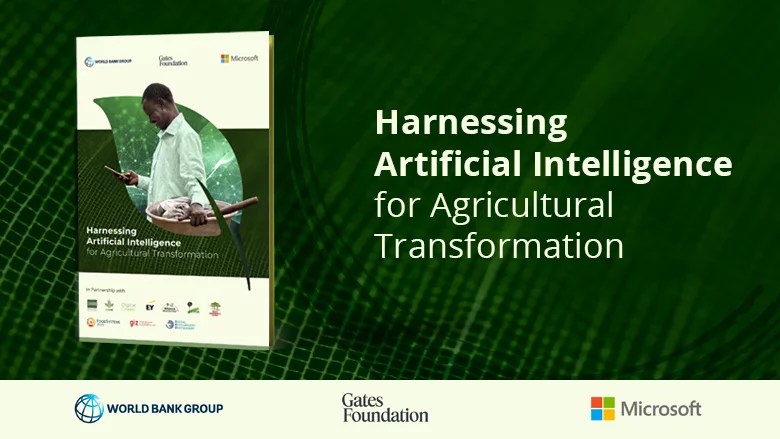
Continue readingHarnessing Artificial Intelligence for Agricultural Transformation
Download report here
This report presents a comprehensive analysis of how AI can be responsibly deployed across agrifood systems, especially in low- and middle-income countries. It provides a roadmap of applications, requirements, and investment priorities focusing on ethical, inclusive, and scalable use.
Level Up MENA: How digital education and skills are powering the next generation of jobs

Imagine landing your dream engineering role at one of Silicon Valley’s top technology companies – from your apartment in Riyadh, Cairo, or Beirut. This dream is now within reach for thousands in the Middle East and North Africa (MENA), provided they have the right skills.
Continue readingContinental Drying: A Threat to Our Common Future
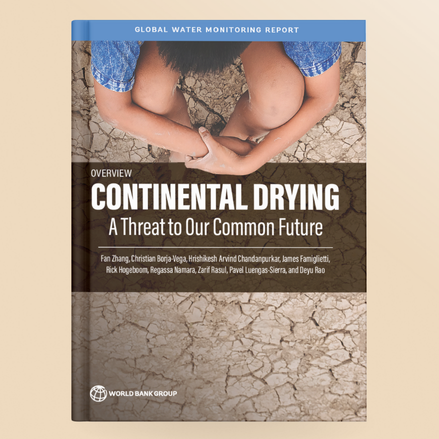
The world is facing a dangerous decline in freshwater availability. This persistent freshwater loss—known as continental drying— is disrupting jobs, incomes, and ecosystems. By combining satellite data with economic and land-use information, Continental Drying: A Threat to our Common Future, offers new insight into where and why freshwater is disappearing and what can be done.
The report maps global hotspots, quantifies the economic and environmental toll, and outlines a three-pronged strategy—managing demand, augmenting supply, and improving allocation—to tackle the continental drying crisis. Beyond water, addressing trade barriers, investing in education and skills, and expanding access to markets and finance are critical to strengthening jobs and safeguarding livelihoods worldwide.
“Credit: World Bank Group. All rights reserved”
World Bank and Southern African Power Pool Partner to Expand Regional Power Trade
WASHINGTON, November 4, 2025 – Today the World Bank approved the Technical Assistance to the Southern African Power Pool (SAPP) project, also known as RETRADE SAPP, to support increasing and expanding the regional electricity market in the SAPP.
Continue readingGuinea’s electricity surge: powering local small businesses and communities
STORY HIGHLIGHTS

- The OMVG transmission network has increased Guinea’s electricity trade capacity to 340,000 KVA, up from zero in 2015, surpassing the original project target and enabling reliable cross-border energy exchange.
- Guinea’s hydropower plants (Kaleta and Souapiti) now supply clean energy domestically and export 1,174 GWh annually to Senegal, The Gambia, and Guinea-Bissau, supporting regional energy transition and reducing reliance on fossil fuels.
- Commercial losses in Guinea’s grid are projected to decrease from 40% in 2025 to 20% by 2030, thanks to grid modernization, regularization of illegal connections, and deployment of pre-paid meters under the project.
World Bank’s USD 5 Billion Benchmark Bond Attracts Exceptional Investor Interest in Support of its Mission
WASHINGTON, D.C., October 21, 2025 – The World Bank (International Bank for Reconstruction and Development, IBRD, Aaa/AAA) today priced a USD 5 billion benchmark bond that matures in October 2030.
With more than 165 investor orders, the transaction attracted over USD 11 billion high-quality investor orders, primarily driven by bank treasuries, central banks/official institutions, and asset managers.
Continue readingThe World Bank and Blockchain: A New Era of Transparency
Story Highlights

- FundsChain, a blockchain-based platform, enables the World Bank to improve traceability, accountability, and streamline operations when tracking the use of funds.
- Key features include tamper-proof digital records, end-to-end tracking of project funds, granting project partners immediate access to transaction records, and the use of digitization to enhance financial management practices.
- The solution has been successfully tested in 13 projects across 10 countries, earned industry recognition and by June 2026, it is expected to cover approximately 250 projects in developing countries.
Embracing and Shaping Change: Human Development for a Middle East and North Africa in Transition
“Credit: World Bank Group. All rights reserved”


You must be logged in to post a comment.