eC2:Feasibility Study for Public Service Delegation of Drinking Water Supply (DWS) in Rural Areas

Deadline: 30-Jan-2017 at 11:59:59 PM (Eastern Time – Washington D.C.)water

The Ministry of Agriculture, Hydraulic Resources, and Fisheries of Tunisia requested the World Bank’s assistance to conduct this project and mobilize a grant for its funding. The mission relating to the development of the study addressed by these terms of reference is funded by a Private Infrastructure Advisory Facility (PPIAF) grant. The contracting authority for this mission is the World Bank. The beneficiary is DGGREE of the Ministry of Agriculture of Tunisia. The purpose of this consultation is to recruit a firm or grouping to conduct a mission of due diligence, feasibility study, and design of a Pilot Project for the private management of rural DWS systems.

Continue reading

Danube Learning Partnership – Technical Partner for Disaster Risk Management and Business Continuity as a tool for Water Safety Planning

Deadline: 23-Jan-2017 at 11:59:59 PM (Eastern Time – Washington D.C.) water

The overall objective of the work of the Technical Partner is to develop and organize a curriculum and training of trainers for capacity building in Disaster Risk Management and Business Continuity Program as a tool for water safety planning. The specific objectives of the consultancy are to (i) prepare a curriculum and related training materials necessary to deliver the Disaster Risk Management and Business Continuity capacity building program; (ii) validate the capacity of the participating Hubs to deliver the Disaster Risk Management and Business Continuity capacity building program (iii)Train the Trainers in the hubs of likely three countries including Serbia, Kosovo and possibly Bosnia & Herzegovina as well as other countries in the region according to demand (iv) oversee the quality of development and delivery of the Risk Program by the Hubs; and (v) ensure lessons learned and good practices developed during the activity are incorporated in subsequent programs.

Continue reading

eC2: Developing a Roadmap for Improving Water Quality of Lake Toba, Indonesia

Deadline:  23-Jan-2017 at 11:59:59 PM (Eastern Time – Washington D.C.)

The objective of the assignment is to (a) identify the nature and extent of point-sources Afbeeldingsresultaat voor lake toba indonesia(PS) and non-point sources (NPS) impacting water quality of the Lake; (b) provide options for appropriate targeted infrastructure investments as pollution control management; and (c) provide recommendations for a Government-led integrated Lake Basin Management plan which will inform the monitoring and evaluation system during the implementation of the government’s Tourism Development Program in Lake Toba. The Consultant will also facilitate a stakeholder process to agree on the roadmap for the improvement and preservation of the water quality in Lake Toba.
Continue reading

12 moments for water in 2016

2016 has become the year for water. From the World Economic Forum, COP22, to thewater Budapest Water Summit, water has been widely acknowledged as a key to achieving the Sustainable Development Goals, and essential to the climate change solution.

Here are the defining moments of 2016 that put water security and sustainability on the global agenda like never before:

Continue reading

The New Gold: Providing Quality Water and Sanitation in Bulgaria

STORY HIGHLIGHTS ( Full WB Article )bg-water-story2
  • Almost all Bulgarians have access to drinking water in their homes, but a significant number of people still suffer seasonal rationing due to incomplete construction of dams.
  • The World Bank–supported Municipal Infrastructure Development Project will guarantee a reliable and high-quality water supply for 170,000 Bulgarians through the completion of three dams.
  • Two unfinished dams will be completed under this project, while a third will be rehabilitated.

Continue reading

Can you crowdsource water quality data?

­
graph_1.png

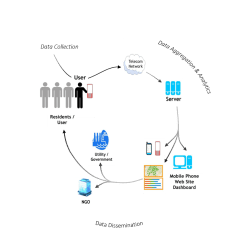
The recently released Contextual Framework for Crowdsourcing Water Quality Data lays out a strategy for citizen engagement in decentralized water quality monitoring, enabled by the “mobile revolution.”

According to the WHO, 1.8 billion people lack access to safe drinking water worldwide. Poor source water quality, non-existent or insufficient treatment, and defects in water distribution systems and storage mean these consumers use water that often doesn’t meet the WHO’s Guidelines for Drinking Water Quality.

Continue reading

Article: Reviving Flood-Ravaged Livelihoods in Malawi

Article published on http://www.worldbank.org on November 29, 2016

STORY HIGHLIGHTS
  • In 2015, about half of Malawi’s 29 districts were hit by floods, destroying agriculturalImage

    livelihoods, leaving more than 1,150,000 people affected and 336,000 displaced

  • With $80 million in support through IDA, the World Bank has helped to restore livelihoods through providing agricultural inputs, rebuilding irrigation schemes, and stocking the national grain reserve
  • With community grain banks, families are now able to take care of themselves and are feeling less vulnerable to future disasters.

Continue reading

eC2: Consultancy for Hydraulic Modeling to Enhance Resilience of Mekong Delta Region

Deadline: 26-Dec-2016 at 11:59:59 PM (Eastern Time – Washington D.C.)

Development of hydraulic models for water simulation in 7 cities supporting risk saigon_-_mekong_delta_2042765375screening of infrastructural intervention proposals.

Scope of Work:

Task 1: Preparation with an inventory of flood hazards and available models and data:
Provide a comprehensive assessment of the threats caused by flood hazards in the seven cities;

Task 2: Adapt the existing hydrological and hydraulic models for the seven cities;

Task 3: Flood hazard mapping and additional recommendations for the seven cities;

Task 4: Training assigned staffs of the seven cities.

Continue reading

eC2: Development of a National Early Warning Platform for Rwanda and a Flood Early Warning system

Deadline: 19-Dec-2016 at 11:59:59 PM (Eastern Time – Washington D.C.)


A consulting firm is being sought to develop and operationalize a national platform to watersupport data sharing, analysis, visualization and decision making (for example through automated alert triggering) in support of a shared early warning approach between MIDIMAR, RMA, RNRA, and District government teams. While the focus of this support will be at the national level, the firm will also develop a local early warning system utilizing the national platform in the Sebeya Basin.

To complete the Sebeya Basin flood early warning system, the firm will also develop and operationalize a flood forecasting system in the basin. The firm will provide technical expertise on flood hazard assessment, particularly hydraulic/hydrological modeling, flood hazard mapping and operational flood forecasting, also to support capacity building of the appropriate agencies at the national and local levels.

Continue reading

eC2: Improving Access to Water Supply, Energy and Irrigation in Rural Areas in Bolivia

Deadline: 12-Dec-2016 at 11:59:59 PM (Eastern Time – Washington D.C.)

A baseline study in a statistical sample of households in communities targeted under the

‘Improving Access to Water Supply, Energy and Irrigation in Rural Areas Project’ will be Water crisis:  Child sitting on cracked earth near drying watercarried out with funding provided by a WB Technical Assistance Programme, in selected communities and municipalities in the Departments of Chuquisaca, Potosi, Cochabamba and Oruro. The baseline data will provide inputs for the Project design, including the implementation strategy in its water supply, energy and irrigation components; and the design of the community development and behavior change activities. The study will also set a baseline to monitor the project results and adjust its design and implementation if needed.

Continue reading