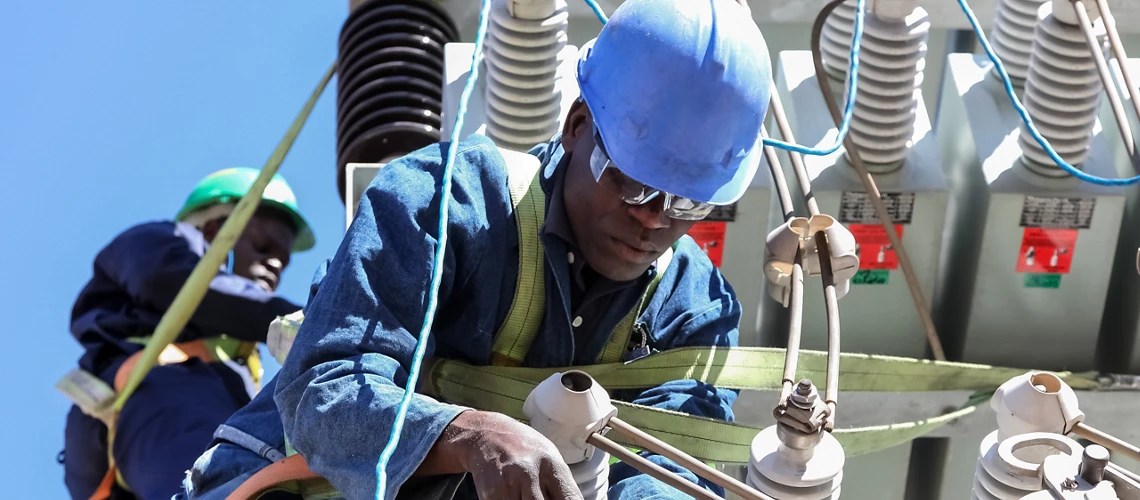
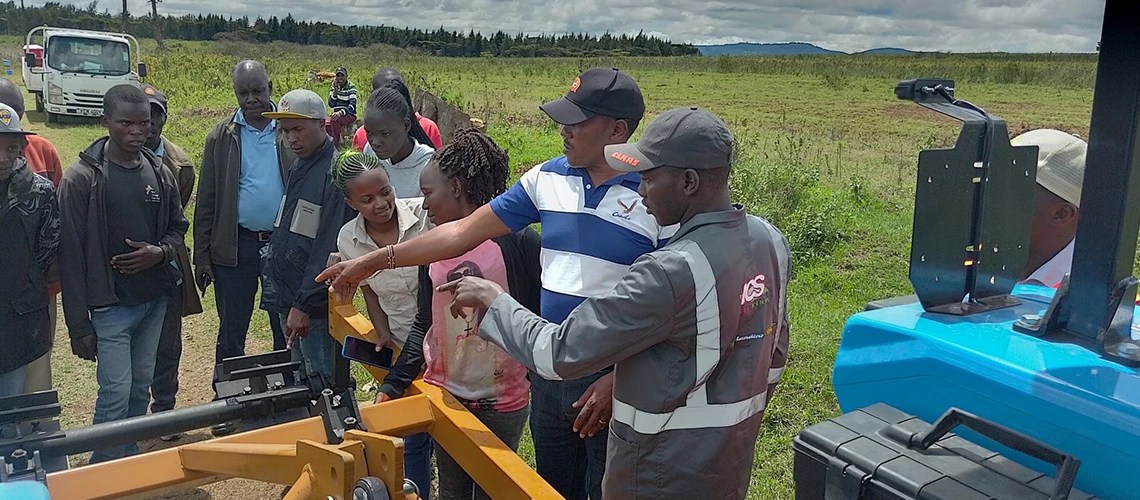
Africa is home to the largest share of the world’s unelectrified population—an estimated half a billion people, mostly in rural areas. In recognition of the significant role of electricity in economic development, the region is poised to erase this unwelcome statistic by achieving universal access by 2030 through several national and multilateral initiatives.
Continue readingTag Archives: Sub-Saharan Africa
Tracking SDG 7 – The Energy Progress Report 2025
Highlights
- In 2023, the number of new electricity connections outpaced population growth, increasing global access to electricity to 92%. While this means 19 million fewer people are without electricity compared to the previous year, 666 million people are still without power. In addition, this rate of growth is not fast enough to ensure universal access to electricity by 2030.
- 85% of the world’s population without electricity lives in Sub-Saharan Africa, up from 50% in 2010. In 2023, 35 million people in this region got electricity, but due to population growth, the number of people without electricity only decreased by 5 million, from 570 million in 2022 to 565 million in 2023.
- Most people without electricity live in remote areas, places facing conflict or violence, and low-income regions, making it hard to expand the electricity grid. However, new technologies and business models for decentralized renewable energy (DRE) – such as solar home systems and solar mini grids- offer flexible solutions for these areas. These solutions are expected to help over 561 million people worldwide in 2023, and they provided 55% of new electricity connections in Sub-Saharan Africa from 2020 to 2022.
The hidden jobs engine: unleashing the potential of agriculture in sub-Saharan Africa
A common misunderstanding persists about job creation in Africa. Many envision cities as the epicenters of economic opportunity. Yet for millions in Sub-Saharan Africa, the path to decent work still winds through agriculture. With youth unemployment rising and cities unable to absorb the growing labor force, agriculture—still the region’s largest employer—must be transformed into a more productive, appealing, and innovative sector.
Continue readingIs Artificial Intelligence the future of farming? Exploring opportunities and challenges in Sub-Saharan Africa
Across Sub-Saharan Africa, a quiet revolution is underway. Smallholder farmers are increasingly leveraging Artificial Intelligence (AI), once a futuristic concept, to transform agriculture. AI now plays a crucial role in addressing the region’s most pressing challenges: food insecurity, environmental degradation, and economic inequality.
Continue readingWorld Bank Group Announces Major Initiative to Electrify Sub-Saharan Africa with Distributed Renewable Energy
Initiative will use solar off-grid, mini-grids and other means to promote universal access to electricity
Washington, Nov. 9, 2022—The World Bank Group announced today an innovative initiative to accelerate the pace of electrification in Africa to achieve universal access by 2030. The World Bank, the Multilateral Investment Guarantee Agency (MIGA), the International Finance Corporation (IFC), and other development agencies will promote private investment in distributed renewable energy (DRE) systems to electrify targeted areas quickly and efficiently. The Distributed Access through Renewable Energy Scale-Up Platform (DARES) calls for joint action by government, private investors, and development agencies to solve Africa’s immediate needs while developing DRE solutions that can be applied globally.
Fact Sheet: An Adjustment to Global Poverty Lines
Why did the World Bank decide to update the International Poverty Line, and why now?
As differences in price levels across the world evolve, the global poverty line has to be periodically updated to reflect these changes. Since 2015, the last update, we have used $1.90 as the global line. As of fall 2022, the new global line will be updated to $2.15.
A bold response is needed to achieve a water-secure world
Clean water, safe sanitation, and good hygiene are necessary for achieving positive health outcomes.
Yet one-quarter of the world’s population – 2 billion people – lack safe drinking water and half – 3.6 billion people – lack safe sanitation.
What is driving COVID-19 vaccine hesitancy in Sub-Saharan Africa?
As African countries accelerate the deployment of COVID-19 (coronavirus) vaccines, the issue of vaccine hesitancy looms. Globally, there has been a rise in general vaccine hesitancy but especially towards COVID-19 vaccines. In Africa, hesitancy must be viewed in the context of significant vaccine shortage; hesitancy does not explain fully the low vaccination rates in Africa. The slow vaccine rollout on the continent is due to supply constraints, structural issues, and logistical barriers.
The triple G of clean cooking: Green, gender, and good health
As many of us stay at home and continue to work there during the COVID-19 pandemic, we
are spending a lot more time in our kitchens than ever before. For some of us, this is about cooking in the comfort of a modern cooking environment.
COVID-19 (Coronavirus) Drives Sub-Saharan Africa Toward First Recession in 25 Years
WASHINGTON, April 9, 2020—Growth in Sub-Saharan Africa has been significantly

impacted by the ongoing coronavirus outbreak and is forecast to fall sharply from 2.4% in 2019 to -2.1 to -5.1% in 2020, the first recession in the region over the past 25 years, according to the latest Africa’s Pulse, the World Bank’s twice-yearly economic update for the region.
“The COVID-19 pandemic is testing the limits of societies and economies across the world, and African countries are likely to be hit particularly hard,” said Hafez Ghanem, World Bank Vice President for Africa. “We are rallying all possible resources to help countries meet people’s immediate health and survival needs while also safeguarding livelihoods and jobs in the longer term – including calling for a standstill on official bilateral debt service payments which would free up funds for strengthening health systems to deal with COVID 19 and save lives, social safety nets to save livelihoods and help workers who lose jobs, support to small and medium enterprises, and food security.”


resilience.
You must be logged in to post a comment.