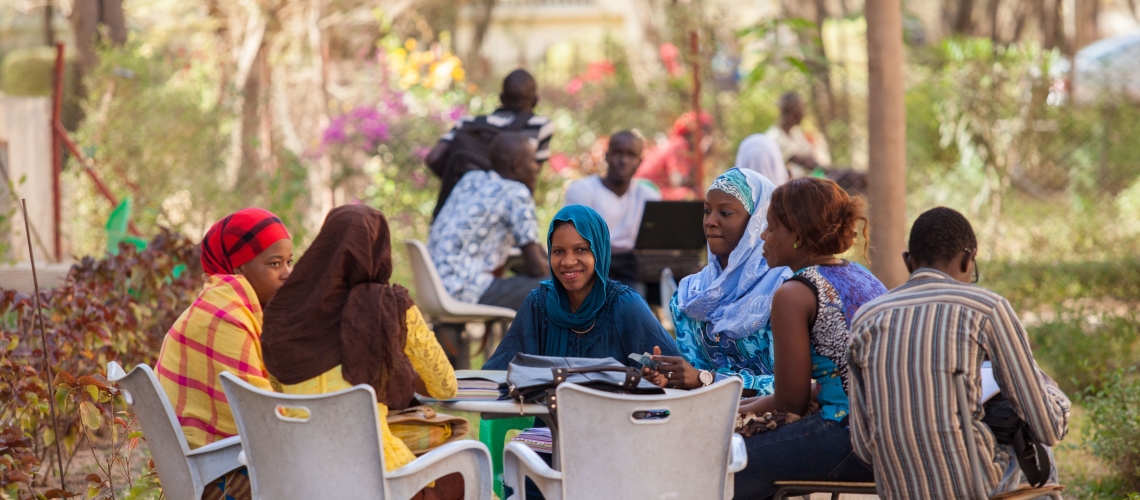
The digital economy can create new job opportunities for young women and help address the
persistent gender disparity in the labor market.
Jobs involving remote, online, flexible work can help young women overcome mobility constraints, challenge restrictive gender norms, and reduce longstanding occupational segregation in traditionally male-dominated industries. However, , and also move up to higher skilled and higher paying digital jobs over time.
exciting positions that the World Bank is looking to fill by June this year.
In recent months across the Middle East and North Africa (MENA) region, youth have been taking to the streets in ever larger numbers to demand improvements in governance, transparency, service delivery, the environment, and job opportunities.
faster and with fewer errors than humans. I wanted to test this on analyzing labor market demand and skills gaps. So, earlier this year, I partnered with
the future of work. Will robots replace humans in the work place? Will digital technologies create a new “digital divide” and widen inequalities between the higher-educated connected and lower-educated unconnected people? Will new opportunities open up for African countries to create jobs, improve incomes, reduce poverty and climb up the development ladder?
leaders and laggards. Through institutional reform that leverages the advantages of digitalization, the Mashreq can become a vital hub in international data networks. Furthermore, digital transformation can assuage pressing challenges. It can deliver higher transparency, accelerate lackluster productivity and increase economic opportunities for all, especially the youth of this region. A new report,
find work, when they get better at what they do, and when they move from low-productivity work to better, higher-productivity jobs. Our newest report `
at meetings both within the World Bank and more broadly. The issue is not just linguistic hair-splitting. Technology optimists prefer the first term and see new technologies, digitization in particular, as an opportunity for low-income developing countries to leapfrog into the 21st century. Moonshot Africa, an ambitious World Bank initiative to connect individuals, firms, and governments in Africa to fast internet is inspired by this vision. Technology pessimists on the other hand emphasize the disruptive effects digital technologies are expected to have on labor markets. Concerns about robots and algorithms replacing human labor increasingly dominate the public debate not only in advanced economies, but also in emerging and developing economies. Against this background, it is natural to ask how these two views are compatible. To be more specific: How will Moonshot Africa create jobs on a continent where job creation is needed more than anywhere else in the world with Africa’s working-age population projected to rise by 70% in the next twenty years?
world’s poorest countries.
You must be logged in to post a comment.