Protecting our water sources brings a wealth of benefits

­

The Water Blog water

The journey of our water from source to tap is long, and not one we think much about. For most of us, our water starts high in the mountains, hundreds of miles away. From there, water flows across natural and working lands until a portion is channeled to water pipes that move water to our faucets, to farms, and to various types of businesses. Most often we think of those pipes as being our main water infrastructure, but upstream lands play a key role in capturing, storing and moving our water. By conserving these lands, we can better protect our water and generate additional benefits for people and nature.

Urban Wastewater Treatment Directive: Opportunities of EU accession

Deadline: 23-Jan-2017 at 11:59:59 PM (Eastern Time – Washington D.C.)waste water treament

The objective of this study is to assess specific issues in Danube Basin region regarding: (i) implementation, (ii) outcomes; and (iii) sustainability (mostly from the point of view of affordability) of the UWWTD in the Danube Region. While the study will primarily base its assessment in the experience of current EU members countries within the Danube River Basin in the directive implementation, the work is expected to also benefit EU candidates and potential candidate countries from the region (meaning almost all other countries of the region). In this first stage, the study will not seek to answer all of those questions conclusively, but rather to provide sufficient elements needed to initiate an in depth discussion on achievement and appropriateness of UWWT directive implementation in DRB. In parallel, the study will also seek to document specific good practices that might show how to improve implementation efficiency.

Continue reading

Rajasthan tells an unexpected story of stopping open defecation under Swachh Bharat Mission

Rajasthan has become an unlikely frontrunner in sanitation.

Until recswachh_bharat_graph_1ently, it was among Indian states with the lowest rates of toilet coverage. With a difficult terrain, scarce water, and low levels of literacy, the slow pace of progress was not surprising.

Since 2011, that has changed. As shown in Figure 1, the proportion of people with access to a toilet has more than trebled – from under 20 percent to nearly 68 percent. Of 9,892 Gram Panchayats, the local level of government in India, almost a third – 3,545 – has been declared free of open defecation. That includes all Gram Panchayats in five of the state’s 33 districts, with more set to follow. What has gone right?

Continue reading

The New Gold: Providing Quality Water and Sanitation in Bulgaria

STORY HIGHLIGHTS ( Full WB Article )bg-water-story2
  • Almost all Bulgarians have access to drinking water in their homes, but a significant number of people still suffer seasonal rationing due to incomplete construction of dams.
  • The World Bank–supported Municipal Infrastructure Development Project will guarantee a reliable and high-quality water supply for 170,000 Bulgarians through the completion of three dams.
  • Two unfinished dams will be completed under this project, while a third will be rehabilitated.

Continue reading

eC2:Coordinator for Study on Local equity sharing schemes for hydropower projects in Nepal

Deadline: 09-Jan-2017 at 11:59:59 PM (Eastern Time – Washington D.C.)HYDRO

The hydropower potential of Nepal offers a unique opportunity for both economic and social development. In order to maximize these economic and social benefits and opportunities, the government of Nepal in consultation with the various stakeholders has provisioned for various benefit sharing mechanisms arising from the hydropower development. One key aspect of the Benefit Sharing mechanism focuses particularly on the practice of offering direct financial equity or shares to local populations affected by the development of hydropower projects. The main objective of the consultants assignment is to oversee and guide the study of the delivery of Local Equity Sharing Schemes commonly referred to as Community Shares in Nepal, in the context of benefit sharing mechanisms applicable to hydropower projects.

Continue reading

Can you crowdsource water quality data?

­
graph_1.png

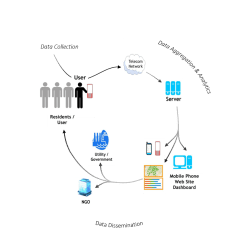
The recently released Contextual Framework for Crowdsourcing Water Quality Data lays out a strategy for citizen engagement in decentralized water quality monitoring, enabled by the “mobile revolution.”

According to the WHO, 1.8 billion people lack access to safe drinking water worldwide. Poor source water quality, non-existent or insufficient treatment, and defects in water distribution systems and storage mean these consumers use water that often doesn’t meet the WHO’s Guidelines for Drinking Water Quality.

Continue reading

eC2:Photovoltaic Water Pumping Project

Deadline: 29-Dec-2016 at 11:59:59 PM (Eastern Time – Washington D.C.)water

The project seeks to facilitate the gradual retrofitting/replacement of existing diesel generators for water pumping with solar power. The financing mechanism will consist of a blended financing approach where 50% of the investment in PVP by Community Owned Water Supply Organizations (COWSOs) will be covered by a grant and the remaining 50% covered through a loan from TIB Development Bank. COWSOs will repay the loan through monthly installments via a mobile money payment modality. COWSOs are generally unfamiliar with PVP technology and are not accustomed to receiving and servicing loans. For the Project to succeed, careful COWSO sensitization, training and follow-up is required.
Continue reading

Tackling the vital challenge of financing the world’s water infrastructure needs

water
We cannot talk about water and Sustainable Development Goal (SDG) 6 without also looking at everything that depends on it: from climate, food and electricity to families, farms and ecosystems. It is thus quite simple, if we don’t get it right on water, then we will not succeed in achieving the other SDGs either.

Event Nov 9:Improving Water Pollution Reduction Using Flexible Market Tools

Market-based mechanisms for addressing environmental externalities have the potential  to reduce environmental harms at lower cost and with water-pollution-cartoongreater efficiency than more traditional command-and-control approaches. However, the use of “cap and trade” mechanisms also entails overcoming a number of challenges including institutional capacity, initial allocation, and distributional equity, among others. This dicussion will focus on an innovative use of market-based mechanisms as an alternative to command-and-control regulation for controlling water pollution. Amelia Letnes from the U.S. Environmental Protection Agency will discuss the lessons of the U.S. experience in applying water quality trading.

How to join!  Wednesday, November 9 | 12:30pm – 2:00pm

Continue reading

eC2: Tina River Hydropower Development Project

Deadline: 10-Nov-2016 at 11:59:59 PM (Eastern Time – Washington D.C.)water

The Bank will recruit a team of engineers (a consulting firm) to assist SIG to review the basic/tender designs and cost estimates submitted by, and will be submitted by, the preferred investor, and assist SIG to negotiate the design and cost of the engineering, procurement and construction (EC) contract.
Continue reading