
We’re living in a time of disruptive technologies evolving at an exponential pace. Today,  you can enjoy an Impossible Burger (meat industry disrupted) delivered by Caviar (food delivery disrupted) to your AirBnB (hotel industry disrupted) while you’re on FaceTime (telecommunication industry disrupted) urging your teenager to get back to lessons on Khan Academy (education industry disrupted). And all the while, you’re leaving a trail of digital data points.
Tag Archives: Data
Make it convenient, make it credible
We’re living in a time of disruptive technologies evolving at an exponential pace. Today,  you can enjoy an Impossible Burger (meat industry disrupted) delivered by Caviar (food delivery disrupted) to your AirBnB (hotel industry disrupted) while you’re on FaceTime (telecommunication industry disrupted) urging your teenager to get back to lessons on Khan Academy (education industry disrupted). And all the while, you’re leaving a trail of digital data points.
eC2: Master Agreement: ESMAP Open Data and Analytics
Deadline: 17-Oct-2018 at 11:59:59 PM (Eastern Time – Washington D.C.)
ESMAP seeks to build on the initial success of ENERGYDATA (a data publishing platform  that hosts energy data provided by the WBG and other development partners) to develop new apps to respond to existing and upcoming needs from our clients, the private sector, and key development partners, and also consolidate those apps already developed and provide a more standardized user experience. ESMAP proposes to issue a new Master Agreement contract covering the development of new apps, consolidation of existing apps, curation of new and existing datasets, user interface improvements and routine maintenance of the ENERGYDATA site and all its current and future subdomains.
eC2: Open Data portal for the open data initiative of the Government of Honduras
Deadline: 19-Aug-2018 at 11:59:59 PM (Eastern Time – Washington D.C.)
The objective of this consultancy is to procure an Open Data portal for Honduras Open  Data Initiative. The Open Data portal will facilitate publication and interaction of various datasets across levels of government, as well as cultivate a strong Open Data Community in Honduras.
Official Statistics in a Post-Truth World
 Submitted by Haishan Fu On Thu, 06/14/2018
I’ve been thinking about the role of data and digital technology in today’s information landscape. New platforms and technologies have democratized access to much of the world’s knowledge, but they’ve also amplified disinformation that affects public discourse. In this context, the official statistics community plays a critical role in bringing credible, evidence-based information to the public.
eC2: BASELINE SECONDARY DATA MINING AND ANALYSIS FOR VIETNAM AGRI FINANCE AND GOOD AGRICULTURE PRACTICES
Deadline: 21-Jun-2018 at 11:59:59 PM (Eastern Time – Washington D.C.) 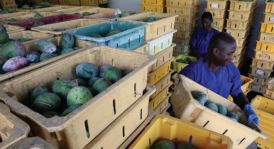
The objective of the assignment is to collect and analyze secondary quantitative data to establish the baseline situation of coffee and rice farmers based on indicators of the Vietnam Agri project. The consultant will implement the following main tasks: (1) collect data from secondary sources, including but not limited to project documents, client firms data provided by IFC, national data sets from the General Statistics Office of Vietnam, (2)conduct quantitative analysis of baseline values of key impact and outcome indicators of project result frameworks relating to coffee and rice farmers, particularly household income including income/sales revenue from coffee and rice, and income sources; (3) describe household demographic and socio-economic profile, coffee and rice farming and post harvest and storage practices to the extent that relevant data is available; and (4) provide gender disaggregated results to the extent that relevant data is available
The 2018 Atlas of Sustainable Development Goals: an all-new visual guide to data and development
 “The World Bank is one of the world’s largest producers of development data and research. But our responsibility does not stop with making these global public goods available; we need to make them understandable to a general audience.
When both the public and policy makers share an evidence-based view of the world, real advances in social and economic development, such as achieving the Sustainable Development Goals (SDGs), become possible.” – Shanta Devarajan
We’re pleased to release the 2018 Atlas of Sustainable Development Goals. With over 180 maps and charts, the new publication shows the progress societies are making towards the 17 SDGs.
Data for Development: An Evaluation of World Bank Support for Data and Statistical Capacity
 Data and evidence are the foundation of development policy and effective program implementation, and countries need data to formulate policy and evaluate progress.
At the global level, the World Bank has a strong reputation in development data and has been highly effective in data production. It produces influential, widely used data and cross-country indicators that fill important niches, benchmark countries, and stimulate research and policy action.
eC2: GFDRR Challenge Fund Data Exploration Tool
Deadline: 07-Sep-2017 at 11:59:59 PM (Eastern Time – Washington D.C.) 
GFDRR is supporting the development of an open data schema for hazard, exposure and vulnerability data through the Challenge Fund(https://www.gfdrr.org/challengefund). This Consultancy will support the project by developing software that will allow for extracting a subset of hazard, exposure and vulnerability data from external databases using an API, and then subsequently downloading and interactively analyzing the extracted data. The software should allow the user to save and/or print the analysis results. It should permit a variety of means for exploring and understanding the data. The overall goal is to provide a non-expert user with the ability to simply extract, explore and understand hazard, exposure and vulnerability data relevant to a country or region of interest. The desktop versions should be compatible with common operating systems. The software should be based on open-source software such as R or Python. This will need to be delivered by March 2018.
The Tech Revolution That’s Changing How We Measure Poverty
Article published on http://www.worldbank.org on July 27, 2017.
The world has an ambitious goal to end extreme poverty by 2030. But, without good poverty data, it is impossible to know whether we are making progress, or whether programs and policies are reaching those who are the most in need.
 Netherlands for the World Bank
You must be logged in to post a comment.