Pandemic Response

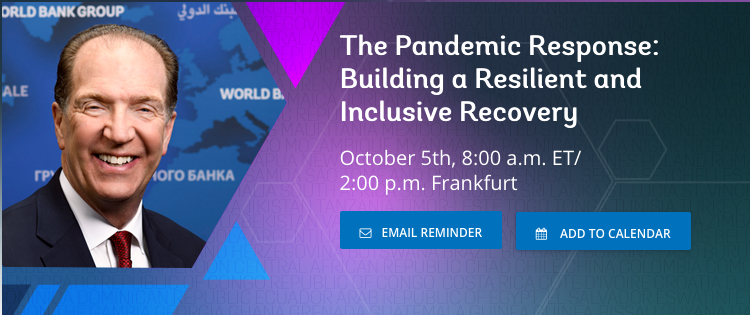
Ahead of the World Bank Group-IMF Annual Meetings, Frankfurt School of Finance and Management will host World Bank Group President David Malpass who will discuss the impact of the COVID-19 pandemic on the world’s poorest and most vulnerable people and the challenge of building a resilient and inclusive global recovery.

The event will be introduced by Germany’s Bundesbank President Dr. Jens Weidmann and include a conversation between President Malpass and Professor Nils Stieglitz, President and Managing Director of Frankfurt School of Finance and Management.
Screenshot_2020-10-03 The Pandemic Response Building a Resilient and Inclusive Recovery

Saving Women and Children in Yemen Through Cash Transfers

Yemen’s high malnutrition rates have drawn global attention, highlighting the impact the

mena-yemen-children-Dhamar

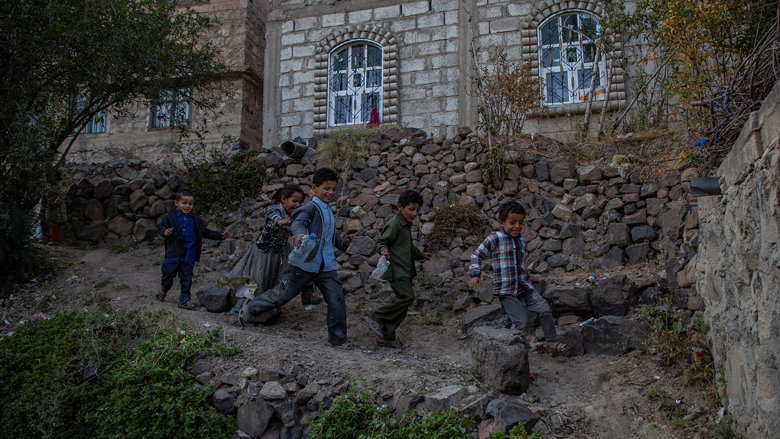
A group of Yemeni children playing in Al-Dhihla village, Anss District, Dhamar Governorate.

country’s five-and-half-year civil war has had on its population. About 20 million Yemenis—70% of the population—are facing hunger, a 13% increase from 2017.

Yemen is one of the most food insecure countries in the world. Long before the conflict began, child malnutrition was widespread. In 2013, 46.5% of children under five were stunted, or short and underweight for their age; 16.3% suffered from acute malnutrition.

Continue reading

Where Climate Change Is Reality: Supporting Africa’s Sahel Pastoralists to Secure a Resilient Future

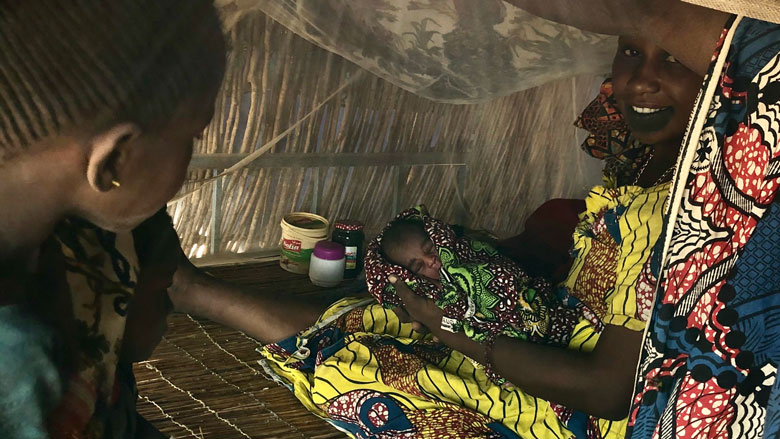
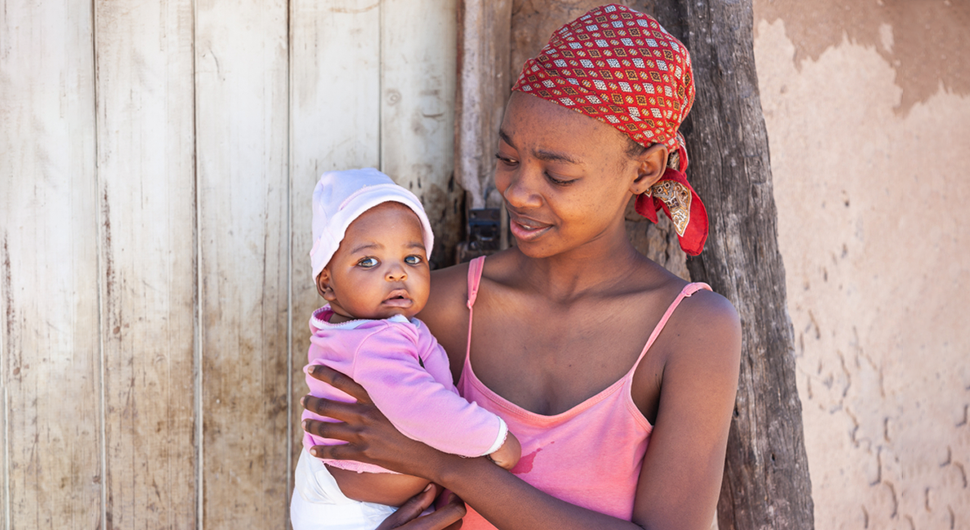
One morning in February, in Kaffrine Region, Senegal, Kaffia Diallo emerged from her tent. She praps2is happy; her new grandson was born just two days earlier. “A beautiful baby,” she said, “although I wish he weighed a little more.”
Continue reading

eC2:  South Asia Water Initiative (SAWI) Rivers and Plastics – Plastic Pollution Management in India – Inland Waterways to Seas

Deadline: 05-Oct-2020 at 11:59:59 PM (Eastern Time – Washington D.C.) eu-plastic-regels-2019

The assignment includes but not limited to undertaking baseline study to identify and quantify of key types of plastics, as per consumer goods/use, that pollute marine environment, identifying main drivers of plastic pollution, data analysis of plastics including material flow analysis and life cycle analysis, gap analysis of relevant existing policy and institutional architecture, stakeholder consultations, developing and implementing a methodology for sampling, testing, and data analysis of macro/microplastic load, development of stakeholder plan as well as contingency response plan in COVID-19 situation, and providing actionable recommendations based on primary and secondary research.

Continue reading

How to Build Back Better After the COVID-19 Crisis? A Practical Approach Applied to Fiji

​Water touches every aspect of development and flows through nearly every Sustainable sd: By Sam Fargher and Stephane Hallegatte

Like every other country, the Republic of Fiji faces the unprecedented challenge of managing the consequences of the COVID-19 pandemic. While the number of cases remains low, in a country where international tourism is a cornerstone of the economy, the implications of the crisis are massive. GDP is expected to contract by more than 20 percent in 2020, with a 75 percent drop in international tourist arrivals and 40,000 tourism jobs already lost. In response, the government is planning a 3.7-billion-Fijian-dollar stimulus package to protect the population and support economic activity.

Continue reading

How AI can help developing countries rebuild after the pandemic

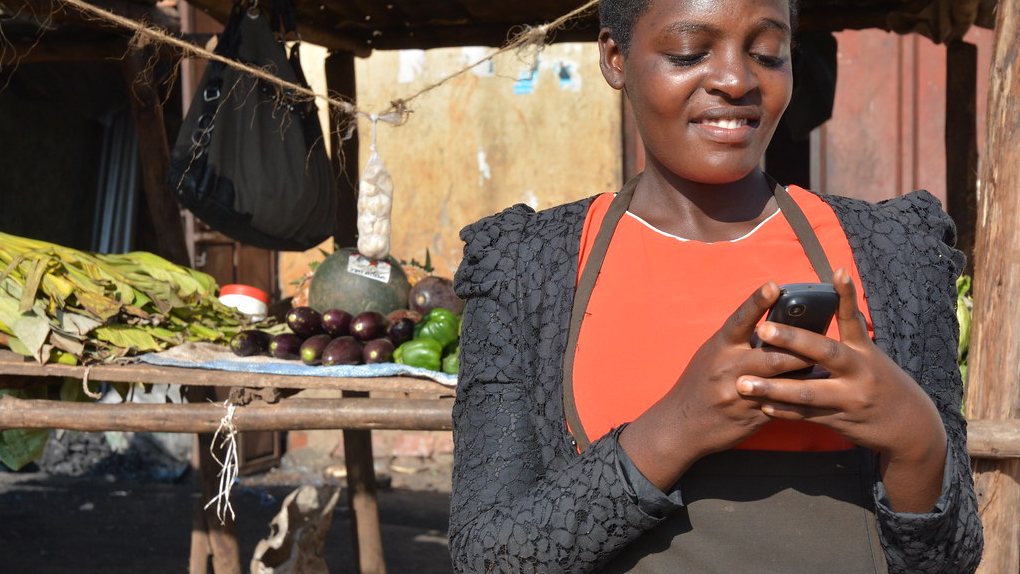
Technology has been a lifeline to developing countries during the COVID-19 crisis, helping to ug-business owner uses her phone for mobile banking-Anna Koblanck IFCmaintain essential services and keep companies in business. It has also offered a glimpse of a brighter future, one in which gains in income and employment are driven by technologies such as artificial intelligence.

Even before the pandemic, commercial uses for AI were expanding rapidly in emerging markets, in fields ranging from manufacturing and energy to education and financial services. The necessary lockdowns and travel restrictions imposed by countries have accelerated that trend. Companies like Clinicas de Azucar in Mexico are using AI to analyze data and improve health outcomes for thousands of at-risk diabetic patients. In India, 1mg uses AI to help customers compare prices for medical services from different labs.

Continue reading

Pandemic Threatens Human Capital Gains of the Past Decade, New Report Says


WASHINGTON, Sept. 16, 2020 – The COVID-19 pandemic threatens jakartahard-won gains in health and education over the past decade, especially in the poorest countries, a new World Bank Group analysis finds. Investments in human capital—the knowledge, skills, and health that people accumulate over their lives—are key to unlocking a child’s potential and to improving economic growth in every country.
Continue reading

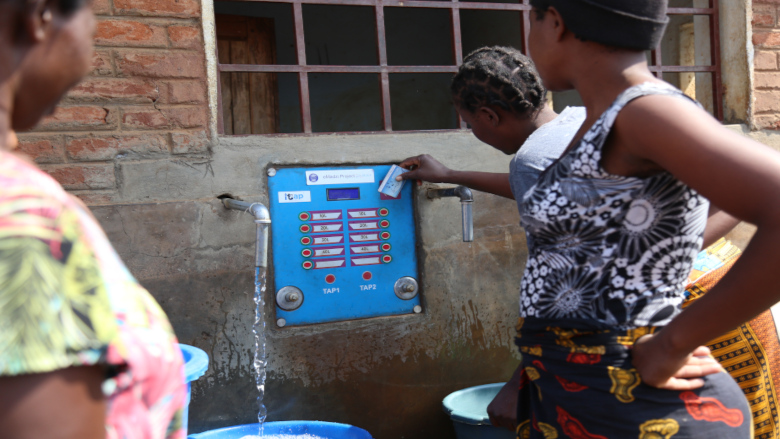
Automated Water Kiosks Provide Continuous Water for Malawians During COVID-19

STORY HIGHLIGHTS malawi

  • Replacing Lilongwe’s manually-operated water kiosks with automated systems helps reduce congestion and contact, lowering COVID-19 risk
  • The automated systems have also reduced the cost of water by 65%, allowing for increased hygiene and handwashing for households dependent on water kiosks
  • The new kiosks are financed through the World Bank-supported COVID-19 response package, implemented by the Lilongwe Water Board

Top COVID-19 (coronavirus) news this week

Muhammad Ali Pate, Global Director for Health, Nutrition and Population at the World Bank by Creativenekosaid “the COVID-19 pandemic has put years of global progress to end preventable child deaths in serious jeopardy,”  referencing a new joint UN-World Bank report on child mortality. Meanwhile, this week highlights the World Bank’s support in Angola and Mongolia’s health systems.

Continue reading