Counting the uncounted: 1.1 billion people without IDs

The World Bank Blog: Vyjayanti T Desai

An estimated 1.1 billion people worldwide cannot officially prove their identity, accordingid4d-global-dataset to the 2017 update of the World Bank’s Identification for Development (ID4D) Global Dataset.

Identification matters

How do we prove who we are to the people and institutions with whom we interact? Imagine trying to open your first bank account, prove your eligibility for health insurance, or apply for university without an ID; quality of life and opportunities become severely restricted.  An officially-recognized form of ID is the key enabler – critical not only for exercising a wide range of rights but also for accessing healthcare, education, finance, and other essential services. According to the World Bank Group’s latest estimates, this is problematic for an estimated 1.1 billion people around the globe.

Continue reading

As Natural Disasters Rise, Countries Call for Action on Resilient Crisis Recovery Planning

STORY HIGHLIGHTSvn-communitybased-disasterrisk-780x439
  • Each year, natural disasters, compounded by climate change and conflict, cause more than $500 billion in losses
  • Yet governments, supported by the World Bank, increasingly understand that investing in disaster recovery enables them to “build back better”
  • The international community sees the World Reconstruction Conference (WRC3) as a call to action on recovery to make countries even more resilient to disasters

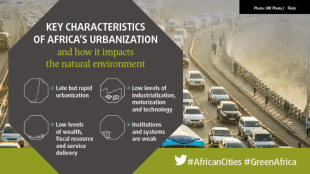
Changing the Environmental Trajectory to Build Sustainable Cities in Africa

STORY HIGHLIGHTS scale-750x750.png

  • A fast urbanizing Africa is rapidly degrading the natural capital of its cities. Unique features of Africa’s urbanization – such as substantially lower per capita incomes, high reliance on biomass fuels, extensive informal settlement with poor service levels, and the exposure of cities to environmental disasters, such as floods – are putting pressure on African cities’ natural environment and eroding the value of environmental assets
  • As a result, there is a significant risk that Africa’s cities may become locked into a “grow dirty now, clean up later” development path that may be irreversible, costly, inefficient, and reducing citizen’s welfare
  • However, there are important opportunities to change the trajectory that African cities are on, and to move toward a more harmonious relationship between the natural and built environments through green urban development policies


Continue reading

eC2: Kenya PPP Support Program: Preparation for Manual and PPP Pipeline Screening

Deadline: 23-May-2017 at 11:59:59 PM (Eastern Time – Washington D.C.)


Preparation of Governance and Operational ManualPPPs
The objective of the activity is to hire a firm to support the GoK to prepare a governance and operating manual for the PFF. The core governance structure of the Fund and the scope of work as stated in the terms of reference, among other things, will define the services and deliverables of the consultant firm.

PPP Pipeline Screening

The objective of the activity is to hire a firm to support the GoK to screen a pipeline of potential, viable PPP projects, and deliver a series of concept notes/ material for 10 of the most promising projects.

Continue reading

Competitiveness Boost Urgently Needed to Meet Africa’s Demographic Challenges

DURBAN, South Africa, May 4, 2017—Without urgent action to address stagnating psd-africa-competitiveness-report-2017-levels of competitiveness, Africa’s economies will not create enough jobs for the young people entering the job market, according to a report released today. If current policies remain unchanged, fewer than one-quarter of the 450 million new jobs needed in Africa in the next 20 years will be created.

Continue reading

Moving Away from Humanitarian Appeals to Managing Droughts in Ethiopia

STORY HIGHLIGHTSafr-moving-away-from-humanitarian-appeals-to-managing-droughts-in-ethiopia-feature-780x439.jpg
  • The World Bank has approved another $100 million for a program in Ethiopia that focuses on long-term practical measures to prevent famine.
  • Despite these measures, this year’s widespread drought in the Horn of Africa has badly affected Afar and Somali pastoralists in eastern Ethiopia.
  • Ethiopia routinely supports people during prolonged droughts like this one, but has issued an appeal for international aid this year.

Continue reading

World Bank Group Launches New Program to Support Africa’s Top Digital Entrepreneurs

WASHINGTON, April 25, 2017 — The World Bank Group launched XL Africa, a five-month business acceleration program designed to support the 20 most promising digital start-ups from Sub-Saharan Africa. Start-ups will receive mentoring from global and local experts, learn through a tailor-made curriculum, increase their regional visibility, and get access to potential corporate partners and investors. With support from prominent African investment groups, XL Africa will help the 20 selected start-ups attract early stage capital between $250,000 and $1.5 million.

Continue reading

Online: Saturday Highlighted! Spring Meeting Events.

wbl-sm2017-calendar-banner

State of the Africa Region

Follow the event on Twitter with #AfricaSOR

Date: Saturday, April 22nd, 2017
Time: 10 am – 11:30 am ET/ 14:00 – 15:30 GMT
Location: JB-1080, World Bank

Spotlight on Nutrition: Unlocking Human Potential and Economic Growth

Follow the event on Twitter with #InvestInNutrition

Date: Saturday, April 22nd, 2017
Time: 12:00 pm – 1:15 pm ET / 16:00 – 17:15 GMT
Location: MC Atrium, World Bank

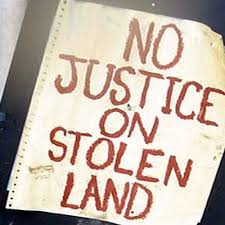
Women, cities, and opportunity: Making the case for secure land rights

Lets talk development blog by Klaus Deininger images

Land and property lie at the center of many of today’s pressing development challenges. Consider that at most 10% of land in rural Africa is reliably registered. At this week‘s annual Land and Poverty Conference here at the World Bank, we will hear how this vast gap in documentation of land gap blunts access to opportunities and key services for millions of the world’s poorest people, contributes to gender inequality, and undermines environmental sustainability.

Continue reading

In Nigeria, Fadama is Synonymous with a Decline in Poverty

INYI, March 14, 2017 – In many parts of Africa, a series of laudatory appellations called Fadama Production Grouppraise songs are widely used to capture the essence of the person or object being praised. In the Inyi village community in Oduma, in Nigeria’s Enugu State, the Fadama project has earned its own praise song.

Inyi women gather in the village hall, dancing and chanting in unison: “Fadama – Ubiam eri mbombo ozo” orin English, “Fadama – poverty has run away, there is no more poverty.”

Continue reading