|
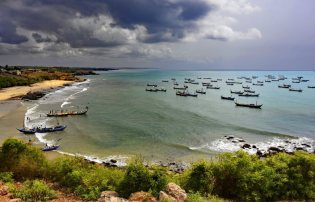
eC2: Saint Vincent and the Grenadines -Improving Urban Resilience of Coastal Cities in the Caribbean through Resilient Infrastructure and Urban Planning
Deadline: 21-Oct-2020 at 11:59:59 PM (Eastern Time – Washington D.C.) 

The objective is to provide professional expertise to develop a comprehensive urban resilience plan for the select coastal cities in Saint Vincent & the Grenadines, which aims to,
1.Study approaches for improving urban infrastructure planning to achieve resilience goals in coastal cities for the sustainable concurrence of the urban space with natural environment;
2.Help urban practitioners better understand the integration of green with existing grey infrastructure and contextually inform cities planning strategies; and
3.Forge an urban vision to identify infrastructure need and investment opportunities for the cities in the selected coastal areas.
Scope of Work: As part of the EU-GFDRR/WB Regional Resilience Program for LAC, the project will focus on carrying out diagnostic work related to urban resilience in selected coastal cities in Saint Vincent and the Grenadines. The main obj. is to develop an integrated vision for building resilience and sustainability into infrastructure.
Reversing the Inequality Pandemic: Speech by World Bank Group President David Malpass
World Bank Group President David Malpass: Speech at Frankfurt School of Finance and Management
You can watch the replay of the event here
Introduction
Thank you, Jens. And thanks to Frankfurt School and the Bundesbank for hosting me virtually. I look forward to engaging with you and taking questions from students, who will be future business leaders in a post-COVID world. I’m here to set the stage ahead of the IMF and World Bank Group’s Annual Meetings, which will focus primarily on COVID and debt, and will also engage partners in urgent discussions on human capital, climate change, and digital development.
eC2: Study on Energy Efficient Cold Storage in Agriculture in Rwanda
Deadline: 27-Oct-2020 at 11:59:59 PM (Eastern Time – Washington D.C.) 
The World Bank is seeking expressions of interest from consulting firms or organizations (including consortiums) to undertake a study on how to mainstream energy efficient cold storage along agri-food chains in Rwanda. Specific activities include: (1) conduct a diagnostic of the cold storage sector in the agri-food chain in Rwanda, by mapping stakeholders, examining operations and maintenance of cold storage equipment and facilities, assessing demand, identifying barriers to uptake, and developing suggestions of sustainable business models; and (2) conduct a stocktaking of international best practices in efficient cold storage along the agri-food chain that could be applied to Rwanda. The consultant should have strong knowledge of agriculture and energy-efficient cold storage technologies (ideally with local knowledge in Rwanda) and demonstrated experience conducting similar studies in Africa. A strong local presence or partnerships with companies/individuals in Rwanda is required.
eC2: DGM and REDD+ GENDER STUDY
Deadline: 08-Oct-2020 at 11:59:59 PM (Eastern Time – Washington D.C.)
The objective of this contract is to gather evidence on how DGM projects provided meaningful benefits to women in the key gender (in)equality domains of economic opportunities, access to and control over productive assets, voice, and agency. The contract will also collect evidence on how DGM empowered women during the intervention process. A selected firm is expected to conduct a study and produce a report which will be based on the research findings, as described below.
Annual Report 2020
Building a resilient and inclusive recovery: World Bank Group Annual Meetings to focus on the path ahead for developing countries
The coronavirus pandemic wreaked havoc around the world and dealt a major setback to
decades of development outcomes. Last spring, we successfully championed a moratorium on debt for the world’s poorest countries and launched a fast, broad-based response to COVID-19. We are financing emergency operations in over 111 countries – home to 70% of the global population- which has been the largest and fastest crisis response in the World Bank Group’s history.
Pandemic Response
Ahead of the World Bank Group-IMF Annual Meetings, Frankfurt School of Finance and Management will host World Bank Group President David Malpass who will discuss the impact of the COVID-19 pandemic on the world’s poorest and most vulnerable people and the challenge of building a resilient and inclusive global recovery.
The event will be introduced by Germany’s Bundesbank President Dr. Jens Weidmann and include a conversation between President Malpass and Professor Nils Stieglitz, President and Managing Director of Frankfurt School of Finance and Management.

Saving Women and Children in Yemen Through Cash Transfers
Yemen’s high malnutrition rates have drawn global attention, highlighting the impact the

A group of Yemeni children playing in Al-Dhihla village, Anss District, Dhamar Governorate.
country’s five-and-half-year civil war has had on its population. About 20 million Yemenis—70% of the population—are facing hunger, a 13% increase from 2017.
Yemen is one of the most food insecure countries in the world. Long before the conflict began, child malnutrition was widespread. In 2013, 46.5% of children under five were stunted, or short and underweight for their age; 16.3% suffered from acute malnutrition.
Where Climate Change Is Reality: Supporting Africa’s Sahel Pastoralists to Secure a Resilient Future
One morning in February, in Kaffrine Region, Senegal, Kaffia Diallo emerged from her tent. She
is happy; her new grandson was born just two days earlier. “A beautiful baby,” she said, “although I wish he weighed a little more.”
decades of development outcomes.

You must be logged in to post a comment.