NL Success: IFC TechEmerge East-Africa

We are excited to announce 3 Dutch Companies are shortlisted for the IFC TechEmerge Health East-Africa: Qtracer, CarePay and SwyMed.index

53 tech companies from 20 countries that have been selected to attend the virtual TechEmerge Health East Africa Innovation Summit (date to be confirmed; possibly Aug/Sept. 2020).

In total, over 415 tech companies from 50 countries applied to the TechEmerge Health East Africa program. Applications went through a competitive evaluation process supported by a global network of  ~30 independent expert advisors. 53 tech companies across multiple categories were identified to have market-relevant solutions that may meet the needs of participating East Africa healthcare providers (“Providers”). There are ~25 leading Providers in Kenya, Uganda and Ethiopia participating in the program, serving over 6.5 million patients across 285+ facilities, with 2,850 beds.
Continue reading

Climate Finance Helps People Adapt to Change

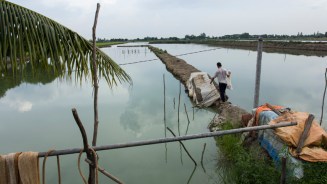
STORY HIGHLIGHTS Shrimp pond in Vietnam

  • With tailored solutions, World Bank Group is helping countries confront the economic and environmental impacts of climate change.
  • A growing number of countries have established social safety nets to protect the vulnerable, while climate-smart agriculture projects address the interlinked challenges of food security and climate change.
  • Investing in job creation and livelihoods, both in the short term and the longer term, will be a priority for a sustainable recovery from the pandemic.

Continue reading

Investing in Africa’s people yields impact, strengthens efforts to beat pandemic

The pandemic is an important reminder of how precious and productive an investment human capital is. One year after the launch of the World Bank’s Africa Human Capital Plan, there has not only been a significant scale-up, but also a shift in World Bank support to African countries.

Continue reading

June 18, 2020: Ending racism

I would like to share publicly my thoughts on racism and the horrific events of the last 061820_banner_installation_endracism_wbg_mc_556_ffew weeks. I’m aided in this by the deeply emotional and thoughtful dialogue taking place within the World Bank Group, including powerful blogs, messages, conversations and town halls.

We’ve agreed to speak out, which I will try to do though I know I won’t be able to find the right or strong enough words.

Continue reading

TechEmerge Resilience India

Although India has made remarkable progress in saving lives through proactive disaster preparedness and risk reduction, the country is also looking at building greater resilience of its communities and infrastructure to extreme events.

TechEmerge India Registration

Through consultations with interested government partners, five thematic key challenges have been identified. We are looking for disruptive technology solutions in the following areas:

Screen Shot 2020-06-19 at 8.41.22 AM

Madagascar: Balancing Conservation and Exploitation of Fisheries Resources

STORY HIGHLIGHTS madagascar-balancing-conservation-and-exploitation-of-fisheries-resources-photo-01

  • With 5,600 square kilometers of coastline and an Exclusive Economic Zone that extends over more than a million square kilometers, Madagascar has substantial marine and coastal resources
  • In 2018, the fishing sector accounted for almost 7% of national gross domestic product, representing 6.6% of the total exports and supported the livelihoods of 1.5 million people
  • Overfishing, increase in harmful fishing practices and widespread destruction of marine habitat have contributed to the decline of many coastal fisheries across the region

Continue reading

Presentation: World Bank COVID-19 Response & Procurement

The World Bank’s COVID-19 response and its implications on Procurement CoronaVirusHeader-Final-3-1536x647
As part of the response to the COVD-19 crisis, the World Bank Group has announced that it expects to deploy up to $160 billion over the next 15 months by boosting health spending, strengthening social safety nets, supporting the private sector, and countering financial disruptions. It was announced that World Bank Group emergency operations to fight COVID-19 have reached over 100 developing countries.

Continue reading

How is the World Bank tackling COVID-19 in fragile and conflict-affected settings?

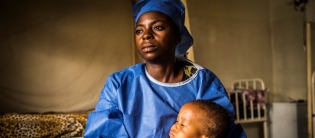
The COVID-19 (coronavirus) crisis has caused thousands of deaths and shaken the mali-covidworld’s richest countries to their core. What happens when it makes its way to low-and middle-income countries, which could face destabilizing and lasting shocks from its health and economic impacts? This is especially true for countries impacted by fragility, conflict and violence (FCV), where cases of COVID-19 infection are increasing. Nearly one-third of our total project investments in 100 countries so far have focused on countries impacted by fragility and conflict —from Afghanistan and Iraq to Somalia and Haiti —  to help them face a multi-layered crisis of a magnitude no one has faced before.
Continue reading

COVID-19 in fragile settings: Ensuring a conflict-sensitive response

Violent conflict often exacerbates the spread of infectious diseases , as seen in the recent resurgence of polio in Syria, cholera outbreaks in the conflict zones in Yemen, and the persistence of Ebola in insecure eastern regions of the Democratic Republicdrc-ebola-2 of Congo (DRC). Between 2009 and 2017, in fact, there were 364 disease outbreaks in 108 refugee camps. Fragility and conflict reverse hard-won development gains and stunt opportunities for children, youth, and the poorest people. In the process, they deeply weaken health systems, leaving societies more vulnerable to disease outbreaks.

Continue reading