‘Dutch development aid is effective and efficient’

Original article posted in the Volkskrant on September 2, 2015

Taxpayers’ money spent well

Useless waste of money, is more andVolkskrant more often the verdict about development aid. To the contrary, is the conclusion after the largest evaluation ever: development organizations are effective and efficient.
Remainder of article in Dutch. Continue reading

September 2015 issue of NL4WorldBank newsletter published

This morning the fifth edition of the NL4WorldBank email campaignnewsletter was published. Those subscribed to the newsletter automatically received it in their inbox. If you did not receive the newsletter, you will find it here.

If you would like to automatically receive the next newsletter when it is published, please subscribe here.

A (welcome) word from Ambassador-designate Schuwer

I am honored to present you with the fifth schuwer-henneedition of the NL for World Bank newsletter on my first day as the newly appointed ambassador to the United States. As Ambassador-designate, I am keenly aware that the Embassy’s resort includes not only the 50 American states, but also the largest development bank in the world: the World Bank Group.

At first glimpse, the contrast between the work of the embassy’s World Bank team and the staff focused on the United States could hardly be starker, perhaps only exceeded by the contrast of the World Bank being a mere two blocks away from the White House. Continue reading

Cambodian Agriculture in Transition: Opportunities and Risks

Article originally posted on the World Bank website on August 19, 2015.

Highlights:

  • Four million people were lifted out of poverty due to positive developments in the Cambodian agriculture sector over the last decade.
  • Cambodian agriculture saw high growth rates but needs to find new pathways to drive future growth as global food prices decline and farmland diminishes.
  • The challenge is to move away from increasing production through land expansion to being more productive and competitive.

The last decade was golden for cambodia-riceCambodian agriculture. The annual agricultural sector growth of 5.3% between 2004 and 2012 was one of the highest in the world, according to a new World Bank report, Cambodian Agriculture in Transition: Opportunities and Risks , prepared with the support of the Australian government.

Continue reading

IFC & Dutch firm help Kenyan farming co-operatives get access to financing

Article originally published by Business Daily Africa on August 23, 2015.

A rating agency has come up with a formula that Printranks agriculture-focused co-operative societies and small-scale businesses in a move that will make it easier for them to access loans and social investor funds.

SCOPEInsight, the company supported by the Embassy of Netherlands and partnering with International Finance Corporation (IFC), has developed a rating system that identifies the strengths and weaknesses of co-operative societies. This will prepare them to get financial support. Continue reading

“With electricity comes life” – lighting up Nairobi’s slums

The World Bank Group, through two Dutch-funded Trust Funds, is helping slums in Kenya getting connected to safe, reliable and affordable electricity.

With electricity, children can study at night, shops can operate into the evening, and hospitals can operate consistently. Through a community based approach, Kenya Power has gone from 5,000 customers in December 2014 to more than 150,000 customers in May 2015, just half a year later.

Continue reading

IFC investment in Dutch Africa Improved Foods (Holding) (AIFH) in Rwanda

On July 7, 2015, the IFC and the AIFH have AIFHsigned an agreement for a $21.5 million loan and $4.5 million equity investment by IFC in AIFH. This loan comes with support from the Dutch-funded Global Agriculture Food Security Program (GAFSP), and is intended for the construction and operation of a 45,000 tons per year processing plant in Rwanda for fortified cereals to treat child malnutrition. Continue reading

IFC investment in Dutch Afriflora

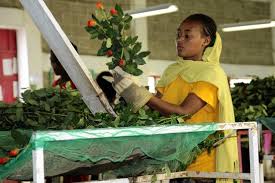
Earlier this year the IFC proposed, and theAfriflora Board of Directors approved, an investment in the Dutch Afriflora Group. The agreement was signed on April 13, and the investment made a month later, on May 13, 2015. The investment consists of an IFC and MCPP senior secured €90 million (US$112 million equivalent) loan.

Afriflora is a family-run manufacturer and marketer of cut-rose products based in Ethiopia. Continue reading

IFC and Dutch investment banks team up

Data released by the International Finance Corporation (IFC), the private sector arm of the World Bank Group, shows that Dutch investment bank FMO was the largest co-investor of the IFC in Fiscal Year 2014. Additionally, of the entire IFC portfolio, two of the five largest co-financiers were Dutch.

The IFC invests in private sector entities IFC and the Dutchthat are active in developing countries. However, as described in a previous blog post, the IFC’s share of the investment is typically no more than 25-35%. The remainder has to come from other investors. Continue reading

Dutch consortium presents clean-up plan to combat pollution of Guanabara Bay, Rio de Janeiro


This article originally appeared on the Dutch Water Sector website.

dws-tauw-guanabara-pollution2-770px

This polluted bay will be the scene of the OIympic water sports venues in August 2016.

A Dutch consortium of government, companies, knowledge institutes and NGOs has joined forces to help Rio de Janeiro to structurally clean up their polluted Guanabara Bay. On 30 June a Dutch delegation presented the ‘Clean Urban Delta Initiative’ to the secretary for the environment of the State of Rio de Janeiro André Corrêa.

The World Bank and the Inter-American Development Bank are so enthusiastic about the Dutch approach that they would like to help make the proposed approach a success. Continue reading