WB Blog: Three innovations to drive infrastructure development

World Bank Blog post submitted by Teo Eng Cheong

A few months ago, I had a chance to visit the Panama Canal, which celebrated its 100th

OLYMPUS DIGITAL CAMERA

anniversary last year. It is truly a mega-structure that is the largest infrastructure project of its time.

When I saw it, what struck me the most was – “How could this be possible”? One hundred years ago, Panama was a country that was just formed and capital markets were not very well-developed. And technology was obviously not as advanced as it is today.
Continue reading

Doing Business Report Analysis

Press release October 27th, 2015

Doing Business Report Finds More than 60% of World’s Economies Improved Their Business Rules in Past Year

WASHINGTON, October 27, 2015 – Developing economies quickened the pace of their business reforms during the last 12 months to make it easier for local businesses to start and operate, says the World Bank Group’s annual ease of doing business measurement.

Continue reading

PPP WB Blog Post: Recommended PPP contractual provisions

How to accelerate the process and reduce costs for public-private partnerships? Recommended PPP contractual provisions

The blog post focuses on the frequently expressed concern over the time and expense involved in creating the legal agreements that are at the center of everyPPPs PPP project.

Everyone recognizes the importance of PPP contracts, since they are the documents that set out how the partnership will work – but there are constant calls for making the contractual drafting process quicker and less expensive.

Continue reading

WB Doing Business Report 2016

Who is it for ? National governments

What is it ? Doing Business 2016: Measuring Regulatory Quality and Efficiency, a World Bank Group flagship publication, is the 13th in a series of annual reports measuring the regulations that enhance business activity and those that constrain it. Doing Business presents quantitative indicators on business regulations and the protection of property rights that can be compared across 189 economies—from Afghanistan to Zimbabwe—and over time.

When was it published? Tuesday October 27th, 2015

How ? Data in Doing Business 2016 are current as of June 1, 2015. The indicators are used to analyze economic outcomes and identify what reforms of business regulation have worked, where and why. This year’s Doing Business report continues a two-year process of introducing improvements in 8 of 10 Doing Business indicator sets—to complement the emphasis on the efficiency of regulation with a greater focus on its quality.

Where can I find it? Click here to access the report


Sustainable Agricultural Development

Technology Drives Sustainable Agricultural Development in China

Below an interesting and enlightening story about farmers in China who are able to raise their income through sustainable farming. The sustainable farming has been made possible by a World Bank project which is geared towards subsidizing certain purchases made by farmers.

_DSC8598

Read the full article here.

World Statistics Day (and Why We Need to Invest in Them)

Statistics day


Below a very interesting blog post focusing on Statistics.

Better data leads to better lives.

World Statistics Day celebrates the role of statistics, the institutions and individuals that produce them, and the impact they have in designing and monitoring the policies and services that can improve people’s wellbeing.

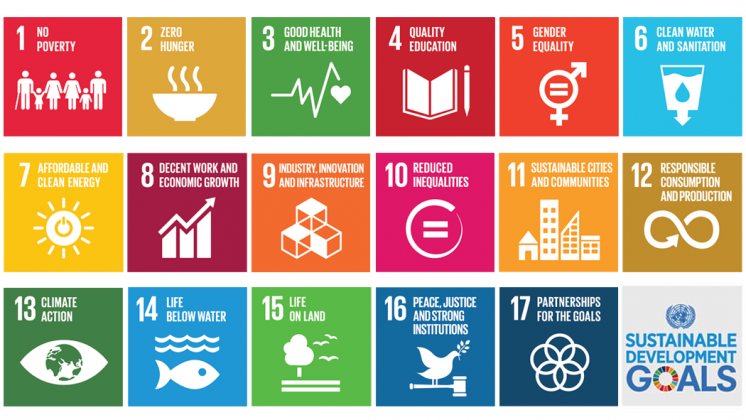
So without further ado, my colleages around the Bank have put together 17 statistics that stand out for them – some you may know, some you may not, all of them related to the Sustainable Development Goals: Click here

Continue reading

Can Dutch firms profit from carbon pricing?

Article originally posted on the World Bank website.

New Principles to Help Accelerate the Growing Global Momentum for Carbon Pricing

STORY HIGHLIGHTS
  • New report shows the number of implemented or planned carbon pricing schemes around the world has almost doubled since 2012, with existing schemes now worth about $50 billion.
  • About 40 nations and 23 cities, states or regions are using a carbon price. This represents the equivalent of about 7 billion tons of carbon dioxide, or 12 percent of annual global greenhouse gas emissions.
  • And new report lays out six key principles to put a price on carbon – the FASTER principles – for putting a price on carbon based on economic principles and experience of what is already working around the world

The spotlight is on New York now with the upcoming United Nations meeting on the new Sustainable Development Goals, Climate Week New York, and in about two months, global leaders will meet again in Paris for COP 21.

The decisions made in New York and Paris will set the course for development for years to come. But while these are top level, pivotal meetings, actors around the world are not waiting for a global agreement to act. They are already putting a price on carbon dioxide and other greenhouse gas emissions to drive clean investment. This includes the private sector. And we’ve seen companies from the oil and gas industry – calling for widespread carbon pricing. Today, over 400 businesses worldwide are using an internal price on carbon to guide their investments.

Continue reading

Investing in agricultural risk management

By any measure, agriculture is risky senegal_sdgs_blogbusiness. It is also vital to ensuring food security and providing employment for 2.6 billion people worldwide, the vast majority of whom are subsistence farmers. Producing more than two-thirds of all food consumed worldwide on roughly half of the world’s arable land, these farmers are also the poorest, the most vulnerable, the most food insecure on earth.

The World Bank is spearheading a global initiative to promote a better understanding of agricultural risks, as well as effective pathways to improved risk management. In addition to enabling agriculture risk knowledge sharing through the FARMD platform, the Bank has worked with nearly 20 countries to help agricultural stakeholders better comprehend the complexity of risks. This knowledge aids the selection of risk mitigation, transfer, and coping investments.

Based on this experience, the Bank has developed the Agricultural Sector Risk Assessment (ASRA), Continue reading

Universal health coverage programs transforming care for poorest and most vulnerable

Article originally published on World Bank website.

The expansion of universal health coveragenurses-in-tonga is critical: According to the World Health Organization (WHO) and the World Bank Group, 400 million people do not have access to essential health services and 6% of people in low- and middle-income countries are tipped into or pushed further into extreme poverty because of out-of-pocket health spending. The World Bank report, Going Universal: How 24 countries are implementing universal health coverage reforms from the bottom up, looks at how 24 countries have embarked on the path to universal health coverage and are expanding coverage to the poor—who too often get much less from their health systems than the better-off. Continue reading

IFIs Back New Global Development Agenda with Stepped-Up Support

Article originally posted on the World Bank website.

Multilateral Development Banks (MDBs) and the International Monetary Fund (IMF) hailed today’s adoption of a sustainable development agenda for the next generation and are fully committed to stepping up their support to ensure its success.

sustainable-development-goals

Continue reading