West African countries commit to common vision for coastal resilience

Togolese families often place talismans, thought to contain magical or spiritual properties, outside their homes facing the Atlantic Ocean in hopes of westafrica_coastalerosion_780x520protecting their dwellings from encroaching tides.

Unfortunately, dozens of villages have been devoured since the mid-1990s, leaving behind shells of houses, livelihoods and memories in the wake of a coast receding as much as 5-10 meters per year. When expatriates return to Togo’s coast to visit their childhood homes, they are astonished to see that communities have literally washed out to sea.

Continue reading

Rajasthan tells an unexpected story of stopping open defecation under Swachh Bharat Mission

Rajasthan has become an unlikely frontrunner in sanitation.

Until recswachh_bharat_graph_1ently, it was among Indian states with the lowest rates of toilet coverage. With a difficult terrain, scarce water, and low levels of literacy, the slow pace of progress was not surprising.
Since 2011, that has changed. As shown in Figure 1, the proportion of people with access to a toilet has more than trebled – from under 20 percent to nearly 68 percent. Of 9,892 Gram Panchayats, the local level of government in India, almost a third – 3,545 – has been declared free of open defecation. That includes all Gram Panchayats in five of the state’s 33 districts, with more set to follow. What has gone right?

Continue reading

Climate-smart transport is a key piece of the sustainable development puzzle

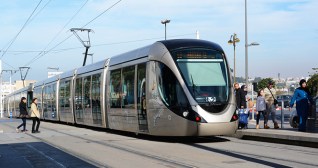
When it comes to climate change, the transport sector is both a vicmo-rabat-tram-lukakikina-shutterstocktim and a perpetrator. On the one hand, transport infrastructure is particularly vulnerable to the effects of climate change such as higher temperatures, increased precipitations, and flooding. At the same time, transport is responsible for 23% of energy-related greenhouse gas (GHG) emissions, and is one of the sectors where emissions are rising the fastest. This statistic alone makes it pretty clear that there will be no significant progress on climate action without greener, more sustainable mobility.

Continue reading

The New Gold: Providing Quality Water and Sanitation in Bulgaria

STORY HIGHLIGHTS ( Full WB Article )bg-water-story2
  • Almost all Bulgarians have access to drinking water in their homes, but a significant number of people still suffer seasonal rationing due to incomplete construction of dams.
  • The World Bank–supported Municipal Infrastructure Development Project will guarantee a reliable and high-quality water supply for 170,000 Bulgarians through the completion of three dams.
  • Two unfinished dams will be completed under this project, while a third will be rehabilitated.

Continue reading

Invigorating Africa’s climate resilient ocean economies

­_bo_5646_0.jpgWe are all too aware that difficult times lie ahead for coastal communities

Coastal erosion, especially in West Africa, has already displaced communities, with economic losses costing about 2.3% of GDP in Togo alone. In the past 60 years, sea temperatures in the Western Indian Ocean increased 0.6 C, triggering mass coral bleaching and deadly climate-related disasters across the region. The economic cost of the 1998 coral bleaching event to Zanzibar and Mombasa was in the tens of millions of dollars. The natural cost is still unknown.

Continue reading

Risks and Returns: Managing Financial Trade-Offs for Inclusive Growth in Europe and Central Asia

Full reporteca-risk-returns-780

“Risks and Returns: Managing Financial Trade-Offs for Inclusive Growth in Europe and Central Asia” argues that striking the right balance across all dimensions of financial development (stability, efficiency, inclusion, and overall depth) is crucial for achieving and sustaining inclusive growth.

Emerging Europe and Central Asia, perhaps now more than ever, faces the urgent need for financial sector reforms. Reforms are needed not only to make the region more resilient to financial shocks but also to support efforts to strengthen income growth, particularly that of the middle- to lower-income earners, many of whom since the global financial crisis have questioned the benefits of greater economic and financial integration.

How can we help smallholder farmers seize opportunities in Africa?

World Bank Blog coffeeuganda

Agriculture is at the heart of addressing poverty in Africa. I was reminded of that during my recent trip to Addis Ababa, Ethiopia, where different stakeholders had gathered to explore how to transform smallholder agriculture for growth. The recent End Poverty Day activities in Africa, which focused largely on agriculture, was also a reminder of how central the sector is to ending poverty and boosting prosperity. Indeed, the different stakeholders I work with on a daily basis—which includes African governments, development partners, civil societies, the private sector and farmers—all agree: Agriculture is important to the future of Africa.

Continue reading

How can Hong Kong stay smart and competitive? By driving change through a ‘Public-Private-People Partnership’ approach

World Bank Blog – 12/14/2016Smart-Cities-All-you-need-to-know

According to the World Economic Forum’s “Global Competitiveness Report 2016-2017,” Hong Kong dropped two notches to rank as No. 9 in its Global Competitiveness Index. The decline occurred mainly because the city faces challenges to “evolve from one of the world’s foremost financial hubs to become an innovative powerhouse.”

Continue reading

Global Community Makes Record $75 Billion Commitment to End Extreme Poverty

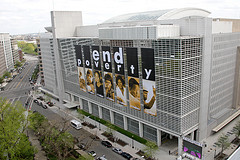
Targets fragility, refugees, climate change and other pressing challengesWorld Bank building

YOGYAKARTA, INDONESIA, December 15, 2016— A coalition of more than 60 donor and borrower governments agreed today to ratchet up the fight against extreme poverty with a record $75 billion commitment for the International Development Association (IDA), the World Bank’s fund for the poorest countries.

This is a pivotal step in the movement to end extreme poverty,” World Bank Group President Jim Yong Kim saidThe commitments made by our partners, combined with IDA’s innovations to crowd in the private sector and raise funds from capital markets, will transform the development trajectory of the world’s poorest countries. We are grateful for our partners’ trust in IDA’s ability to deliver results.”

Continue reading

Can you crowdsource water quality data?

­
graph_1.png

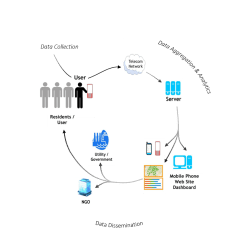
The recently released Contextual Framework for Crowdsourcing Water Quality Data lays out a strategy for citizen engagement in decentralized water quality monitoring, enabled by the “mobile revolution.”

According to the WHO, 1.8 billion people lack access to safe drinking water worldwide. Poor source water quality, non-existent or insufficient treatment, and defects in water distribution systems and storage mean these consumers use water that often doesn’t meet the WHO’s Guidelines for Drinking Water Quality.

Continue reading