Wanted: Entrepreneurs to help end poverty

Article by Jim Yong KimAAEAAQAAAAAAAAsgAAAAJGM1NjhjMTVmLTY0ZTItNDlkMy05MzhhLTQzMmI3NDM3NTEwOA

In many developing countries, governments struggle to reach people living in extreme poverty and bring them into the formal economy. But even in the toughest places, a special kind of entrepreneur is doing what governments often can’t.

Continue reading

Well-Designed Early Childhood Development Programs Can Pay Big Dividends

STORY HIGHLIGHTSearly-childhood-development-

  • 250 million children under the age of five suffer from stunting and extreme poverty.
  • The rate of return on investing in a package of nutrition interventions at scale is estimated at 17 percent.
  • Well-designed early childhood development programs include a focus on quality, complementarities between interventions, and behavioral change.

Continue reading

Meeting Indonesia’s Urban Sanitation Needs

STORY HIGHLIGHTSscale-750x750.jpg
  • Indonesia’s rapid urbanization brings challenges to meeting sanitation needs of the urban population.
  • Access to improved sanitation facilities, with human excreta hygienically separated from human contact, has increased but 95% of fecal sludge is not treated and contaminates the environment.
  • Indonesia is taking a new approach to meet its target of universal sanitation access by 2019.

Continue reading

Legislation and Laws – General and Sector Specific

PPP Concession Laws & Framework

The Legal Framework Assessment provides a summary of key areas of a host country’s existing laws that will need to be reviewed when a government embarks on an infrastructure project, particularly one involving the private sector.

Below are summaries and samples of legislation/ specific legislative provisions relevant to infrastructure PPP projects, together with links to legislation that has been enacted in different countries and different sectors to promote private sector involvement in infrastructure PPP projects. It is not an exhaustive set of samples. For further assistance, please contact ppp@worldbank.org .

Global Tracking Framework 2017 – Progress Toward Sustainable Energy

STORY HIGHLIGHTS pub-page-cover
  • Pace of progress on sustainable energy goals on energy access, renewable energy and energy efficiency fell short of what is needed to meet global objectives by 2030.
  • But in just about every area of sustainable energy, some countries are outperforming the world, indicating that greater policy focus could result in significant payoffs.
  • Progress on energy efficiency is gaining momentum, thanks to decreasing intensity of final energy consumption in industry, agriculture, services, and transport.

Continue reading

Enabling the Business of Agriculture

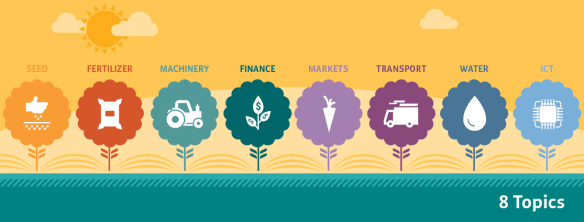
EBA-2017-infographics-1.pngEBA 2017 is the third report in the series, presenting data that measure legal barriers for businesses operating in agriculture in 62 countries and across 12 topic areas. It provides quantitative indicators on regulation for seed, fertilizer, machinery, finance, markets, transport, information and communication technology (ICT), and water. Two overarching themes—gender and environmental sustainability—continue to be included in the report analysis to ensure that the messages developed by EBA encourage inclusive and sustainable practices. This year scoring was piloted for the land topic for 38 countries in which data were collected. The data for the remaining 24 countries will be collected next year and the team will refine the methodology further. EBA also collected data on the livestock topic, focusing on veterinary medicinal products (VMPs).

Read the full report here.

In Senegal, food security and women’s empowerment go hand in hand

WBG Blog Louise Cord

Senegal’s nutrition policy is at a crossroads. Reaching a critical moment where the effects of malnutrition could have a detrimental effect on generations of young Senegalese to come, the Government of Senegal is striving to make efforts to address the root problems of malnutrition. However, if these actions are taken without a conscious effort bolster the key role of women in nutrition, the country may not succeed in stymieing stunting and malnutrition in the country.

Continue reading

Time is Money: Transforming Dar es Salaam’s Road Transport to Reduce Dense Traffic

STORY HIGHLIGHTSTransport

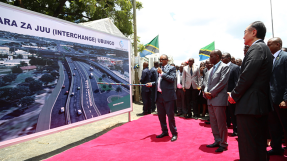
  • World Bank Group President Jim Yong Kim and Tanzanian President John Magufuli unveiled the foundation stone for the Ubongo Interchange, which will ease transportation bottlenecks and help businesses.
  • The interchange is supported by a $225 million concessional credit from the International Development Association (IDA), in addition to an IDA Scale-up Facility Credit of $200 million.
  • Under the first phase of the Bus Rapid Transit system, roundtrip travel time on the corridor was reduced by 90 minutes a day, saving commuters 16 days of sitting in traffic.

Continue reading

Women, cities, and opportunity: Making the case for secure land rights

Lets talk development blog by Klaus Deininger images

Land and property lie at the center of many of today’s pressing development challenges. Consider that at most 10% of land in rural Africa is reliably registered. At this week‘s annual Land and Poverty Conference here at the World Bank, we will hear how this vast gap in documentation of land gap blunts access to opportunities and key services for millions of the world’s poorest people, contributes to gender inequality, and undermines environmental sustainability.

Continue reading