

The World Development Report 2018 (WDR 2018)—LEARNING to Realize Education’s Promise—is the first ever devoted entirely to education. And the timing is excellent: education has long been critical to human welfare, but it is even more so in a time of rapid economic and social change. The best way to equip children and youth for the future is to place their learning at the center. The 2018 WDR explores four main themes: 1) education’s promise; 2) the need to shine a light on learning; 3) how to make schools work for learners; and 4) how to make systems work for learning.
 Latin America, a consensus has emerged that the best approach is Community-Led Total Sanitation, which is widely credited with changing people’s behavior around the world to no longer defecate in the open, which has greatly improved global health.
 of drastic reductions in foreign aid and continued social instability. While efforts have been made to improve the private sector, including several sectors like mining and manufacturing, the gains have been modest as Afghanistan remains beset by conflict and instability.
 their full development potential. Faced with this challenge, governments and donors across the globe have turned to early childhood education and development (ECED) services. These are a cost-effective way to overcome the developmental losses associated with growing up in a disadvantaged environment. The services can be delivered in different ways, such as through kindergartens and community-based playgroups.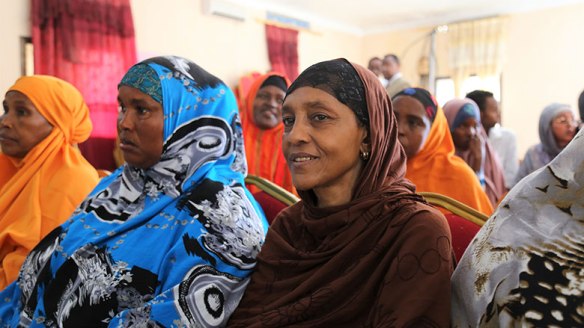
 affect the decisions people, communities, and governments make every day. A family at their farm, a shopkeeper in a store, or a government worker on a dam, all need accurate, timely information to make well-informed day-to-day decisions. This can come from something as simple a river gauge, which warns of rising water levels, to more advanced weather forecasting systems alerting an entire country of the approach of a cyclone.
 unprecedented enrollment rates. Yet, even with these historic investments, children sit in classrooms every day without learning. More than a schooling crisis, we face a learning crisis. Despite progress in countries as diverse as Vietnam, Colombia and Peru, millions of children leave school without knowing how to read a paragraph or solve a simple two-digit subtraction.
 inhospitable environments; with their knees in seawater and their trunks in the air. They create forested barriers between the wrath of the seas and our coastal communities providing benefits in coastal defense and fisheries. Unfortunately there are too many examples where we have not given mangroves half a chance; hundreds of thousands of hectares have been lost to pollution, aquaculture and other developments. These represent real losses to the coastal communities – often some of the most vulnerable communities living in the highest risk areas.

You must be logged in to post a comment.