

Category Archives: WBG News & Reports
Famine Action Mechanism (FAM)
The risk of famine continues to threaten millions of people. Today, 124 million people  experience crisis-levels of food insecurity, and over half of them are in situations affected by conflict. The magnitude of need has grown significantly over the last few years, testing the limits of an already overburdened and underfunded international humanitarian system.
Refugee crisis: What the private sector can do
There are about 68.5 million forcibly displaced people in the world today, of which more than 25 million are considered refugees.
 Almost 85 percent of them are hosted by low or middle countries with limited resources such as Jordan, Ethiopia, Uganda, Turkey, and Bangladesh. These countries face enormous challenges in meeting the needs of refugees while continuing to grow and develop themselves.
Powering New Markets for Battery Storage
STORY HIGHLIGHTS
- A new, first-of-its-kind $1 billion World Bank Group program aims to help fast-track investments in battery storage, so it can be deployed affordably and at scale in middle-income and developing countries, including some of the fastest growing economies in the world.
- Battery storage allows for wind and solar energy to be used at a much greater scale by making it possible to store electricity and use it when it is needed most.
- The program, which is expected to mobilize another $4 billion, will help countries leapfrog to a new era of energy technology and improve their energy security and grid stability while bolstering global efforts to transition to clean energy.
Small yet strong: the Caribbean embraces the quest for resilience
Decline of Global Extreme Poverty Continues but Has Slowed
WASHINGTON, Sept. 19, 2018 Fewer people are living in extreme poverty around the world, but the decline in poverty rates has slowed, raising concerns about achieving the goal of ending poverty by 2030 and pointing to the need for increased pro-poor investments, the World Bank finds.
The percentage of people living in extreme poverty globally fell to a new low of 10 percent in 2015 — the latest number available — down from 11 percent in 2013, reflecting steady but slowing progress, World Bank data show. The number of people living on less than $1.90 a day fell during this period by 68 million to 736 million.
Women Wavemakers: Practical Strategies for Recruiting and Retaining Women in Coding Bootcamps
Coding bootcamps, a type of rapid tech skills training program, have recently emerged as a promising approach to equipping individuals with the skills needed to thrive in digital economies. Despite the potential of these programs, women often participate at lower rates than men.
The Women Wavemakers report draws on the experiences of 25 coding bootcamps and seven digital skills programs in 22 countries to provide a menu of options that providers and policymakers can test and refine, in three key areas:
Beyond Infrastructure: Trade Facilitation Priorities for the Belt and Road Initiative
Countries participating in the Belt and Road Initiative face a major challenge in  facilitating trade. While large investments in trade-related infrastructure capture global headlines, transaction costs generated by inefficient border clearance and trade-related regulatory requirements are one of the major policy risks facing the BRI.
Innovation, entrepreneurship, positive change. Join the farmer-led irrigation revolution.
Imagine that you are a small-scale rainfed agriculture farmer. You face significant  challenges. Water and food demands are growing. Competition for water is escalating. You rely heavily on unpredictable rain to grow food and sustain your livelihood. Weather related disasters — such as floods, droughts, and heat waves — are increasing in frequency, intensity, and duration.
Some reflections on pathways out of poverty
Take two numbers: 1 in 3 young people worldwide are not in education, employment or 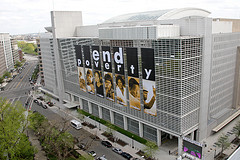 training, and over 875 million people are expected to migrate by 2050.
training, and over 875 million people are expected to migrate by 2050.
These figures often reflect unfulfilled aspirations and lack of opportunity.
People are often in jobs with below poverty-line pay; others have no prospects for a raise and professional advancement; for some others, it is hard to re-enter the job market after a period of unemployment; and, among the youngest, many face daunting obstacles in joining the workforce.
 Netherlands for the World Bank
You must be logged in to post a comment.