
Rwanda will start exporting fortified foods, next month, thanks to a new modern factory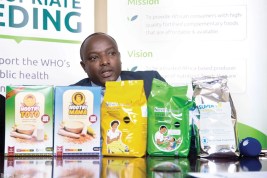 launched yesterday. The Africa Improved Foods – Rwanda, based at Kigali Special Economic Zone Nyandungu, started production of fortified porridge flour yesterday. Workers at Africa Improved Foods factory in Kigali assemble packages for fortified foods. Faustin Niyigena. The $45-million (about Rwf36 billion) factory is expected to produce 45,000 tonnes of fortified food annually, enough to help boost exports and prevent child malnutrition across country. Up to 60 per cent of its output is expected to be exported to regional and global markets.
Category Archives: Uncategorized
Envisioning the global financial system in a decade

4 unprecedented disruptions to the global financial system
Climate change, migration, correspondent banking and cybercrime are putting unprecedented and unforeseen pressures on global financial markets.
They aren’t just disrupting the global financial system, but also affect how we approach international development work.
Imagining infrastructure services in 2017
<!– <!– /sites/all/themes/blogs/templates/header/js/jquery-1.4.4.min.js –>One of my favorite songs when I was growing up was John Lennon’s “Imagine.” A few months ago, UNICEF created a project around it to highlight the plight of millions of refugee children. Now, as the year draws to a close, I couldn’t help but imagine a world with high-quality, affordable, sustainable, well-maintained, infrastructure services for everyone.
Happy Holidays!
Best wishes this holiday season to each of you and your families.
We look forward to informing you on everything World Bank related in 2017!
Thanks for a Great Year!!!
World Bank Group Liaison Officers
at The Netherlands Embassy
These are the world’s most sustainable cities
What does it mean to be a ‘sustainable city’, and which cities around the world are best at it? A new index sets out to find the most successful from a list of 100 cities. The ranking from Arcadis, a design and consultancy firm, and the Centre for Economic and Business Research, assesses the sustainability of cities based on three dimensions. The ranking also highlights the pressure cities are under – from population growth to natural disasters.
How countries and communities are taking on gender-based violence
The stat is appalling: 1 in 3 women worldwide have or will experience intimate partner  violence or non-partner sexual violence in their lifetime.
Although it may take the form of domestic violence, gender-based violence is not merely a personal or family matter. Associated with certain societies’ social norms and many other risk factors, such violence leads to severe social and economic consequences that can contribute to ongoing poverty in developing and developed countries alike.
How can we help smallholder farmers seize opportunities in Africa?

Agriculture is at the heart of addressing poverty in Africa. I was reminded of that during my recent trip to Addis Ababa, Ethiopia, where different stakeholders had gathered to explore how to transform smallholder agriculture for growth. The recent End Poverty Day activities in Africa, which focused largely on agriculture, was also a reminder of how central the sector is to ending poverty and boosting prosperity. Indeed, the different stakeholders I work with on a daily basis—which includes African governments, development partners, civil societies, the private sector and farmers—all agree: Agriculture is important to the future of Africa.
Newsletter December 2016: Gearing towards Dutch Success

Those subscribed to the newsletter automatically received it in their inbox. If you did not receive the newsletter, you will find it here.
If you would like to automatically receive the next newsletter when it is published, please subscribe here.
Presentations New Procurement Framework
On November 2, 2016 the Netherlands Enterprise Agency organized an event focused on  procurement at the World Bank Group in cooperation with the Netherlands’ Embassy in Washington, DC. The procurement event was geared to Dutch companies and organizations who have experience bidding for World Bank funded projects. The sessions were organized to address specific aspects of and bottlenecks in the WBG procurement process. During the interactive sessions the Dutch private sector shared their experiences and their tips and tricks in doing business with the World Bank.
We can share the following presentations:
- General information on the New Procurement Framework
- Impact of the New Procurement Framework
- Feedback and Complaints
Why gender equality in doing business makes good economic sense
Article published on http://www.worldbank.org on November 17, 2016.
Women today represent about 50 percent of the world’s population and, for the past two  decades, about 50 percent of the labor force. Yet there are stark differences in the outcomes they achieve: Women are only half as likely as men to have a full-time wage-earning job. The women who do have paid jobs earn as much as one-third less than men. Fewer women than men are involved in trade or own registered companies. And women are more likely to work in low-productivity activities or informal employment.
 Netherlands for the World Bank
You must be logged in to post a comment.