

Category Archives: Events
Happy New Year!
Regardless of when you celebrate new year, we would l ike to wish you a prosperous & happy 2017.
Best,
World Bank Group Liaison team
IFC and agribusiness in a changing environment
IFC event on GAFSP and climate smart agriculture RVO, Prinses Beatrixlaan 2, The  Hague – 28 October 2016
Executive summary
RVO and IUCN NL organized together with the International Finance Corporation (IFC) on 28 October a one-day event in The Hague in the framework of the World Bank Group-Netherlands strategic partnership ‘Food for All’. The event convened more than 80 professionals in the private sector, knowledge institutions, NGOs and policy makers engaged in agribusiness in developing countries.
Upcoming Smart City Events 2017

Revisiting Economic Geography

- Live Stream: Click here
- Location: MC 13-121, World Bank Main Complex
- CONTACT: Tourya Tourougui
- ttourougui@worldbank.org
Place is one of the most important determinants of welfare. Simply by moving from the countryside to the city, or from a poor to a rich country, a person can greatly increase returns to labor or access to services. Yet, the study of the role of place in development was long neglected in mainstream economics. This changed significantly over the last 15 years or so and in 2009 spatial issues in development became the topic of the World Development Report Reshaping Economic Geography.
Global Community Makes Record $75 Billion Commitment to End Extreme Poverty
Targets fragility, refugees, climate change and other pressing challenges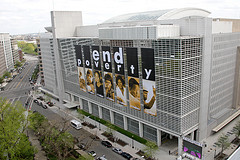
YOGYAKARTA, INDONESIA, December 15, 2016— A coalition of more than 60 donor and borrower governments agreed today to ratchet up the fight against extreme poverty with a record $75 billion commitment for the International Development Association (IDA), the World Bank’s fund for the poorest countries.
“This is a pivotal step in the movement to end extreme poverty,” World Bank Group President Jim Yong Kim said. “The commitments made by our partners, combined with IDA’s innovations to crowd in the private sector and raise funds from capital markets, will transform the development trajectory of the world’s poorest countries. We are grateful for our partners’ trust in IDA’s ability to deliver results.”
Attention eC2 Users

A major system upgrade to the eConsultant2 system will take place from December 15-19, 2016.
An Attractive Environment: The Netherlands Approach to Identifying/Screening PPP Projects
Registration Ends: November 22nd, 2016
Event Date: November 22nd, 2016, 10:00 – 11:00 EST
Event Nov 9:Improving Water Pollution Reduction Using Flexible Market Tools
Market-based mechanisms for addressing environmental externalities have the potential to reduce environmental harms at lower cost and with  greater efficiency than more traditional command-and-control approaches. However, the use of “cap and trade” mechanisms also entails overcoming a number of challenges including institutional capacity, initial allocation, and distributional equity, among others. This dicussion will focus on an innovative use of market-based mechanisms as an alternative to command-and-control regulation for controlling water pollution. Amelia Letnes from the U.S. Environmental Protection Agency will discuss the lessons of the U.S. experience in applying water quality trading.
How to join! Wednesday, November 9 | 12:30pm – 2:00pm
Event Nov8 :Policies for SME Growth: What Works, What Doesn’t?
Small and medium enterprises (SMEs) employ about half of the workforce in developing countries. SME growth may thus raise incomes for many low-income households. But SMEs often face significant constraints to growth relative to large firms ranging from excessive red tape to limited access to finance.
In this talk, Miriam Bruhn will discuss empirical evidence on commonly used policies for SME growth. Miriam will cover policies that work and policies that don’t in the areas of regulation, access to finance, and business practices. Encouragingly, evidence from Mexico, Georgia, Peru, and elsewhere shows that there are a number of programs that governments can implement to support SME growth. She will also highlight implementation challenges and caveats for some of these policies.
How to join! 12:30 – 2:00 PM, November 8, 2016
 Netherlands for the World Bank
You must be logged in to post a comment.