Deadline: 07-Oct-2017 at 11:59:59 PM (Eastern Time – Washington D.C.)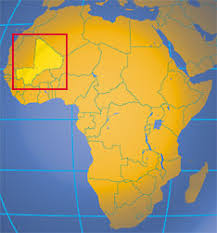
Objective: IFC is looking for a consulting firm to support the implementation of the CEDIAM Environmental and Social Action Plan.


Deadline: 07-Oct-2017 at 11:59:59 PM (Eastern Time – Washington D.C.)
Objective: IFC is looking for a consulting firm to support the implementation of the CEDIAM Environmental and Social Action Plan.
Deadline: 16-Oct-2017 at 11:59:59 PM (Eastern Time – Washington D.C.)

Objective: IFC PPP Transaction Advisory is in the process of being retained by a Government in Southeastern Europe to act as lead advisor on attracting private investment through a Public-Private Partnership for development of an airport or multiple airports. The Government is considering granting a long-term concession for expansion, operation and maintenance of the airport(s) to (i) benefit from expertise of an experienced operator to improve the quality of the service at the airport(s); (ii) access private financing for the airport(s) expansion. IFC’s primary role will be to support the Government in defining an appropriate scope of the PPP transaction and investment plan, exploring PPP options, structuring a PPP contract and conducting a transparent bidding procedure to attract a private investor to finance, design, expand, operate and maintain the airport(s) (the Project).
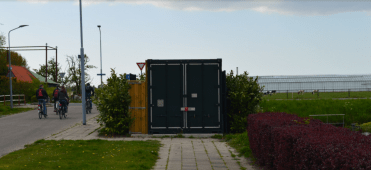 Electric cars are so popular in the Netherlands that it would not be uncommon, say, for a
Tesla to roll up as a taxi outside Amsterdam’s Schiphol Airport. Though charging stations are not yet ubiquitous, it is not difficult to find them in Dutch communities, parking lots, and along the streets.
To reduce carbon emissions, national and local governments are taking various approaches—and, thus, electric cars, solar home systems, and energy-efficient solutions for buildings are booming in Europe. Cities like Amsterdam are front and center of this transformation. For instance, Netherlands has an ambitious goal of reducing CO2 emissions by 80–95 percent by 2050 compared with 1990 , making it an ideal venue for a Smart Cities Tour earlier this year, where a group of 26 representatives, including national and municipal officials and World Bank project teams, to learn from the Netherlands’ successful experience in energy sector transformation.
Deadline: 07-Oct-2017 at 11:59:59 PM (Eastern Time – Washington D.C.) 
Objective: The World Bank intends to hire consulting services to: define the business model for private sector participation in the operation and maintenance of the PLMQ project that meets the policy objectives of the EPMMQ; outline the preliminary legal, funding, financing and institutional terms (preliminary structuring); produce the required analysis for consideration and approval of said business model by the relevant local authorities; and define the roadmap and scope of structuring.

The World Development Report 2018 (WDR 2018)—LEARNING to Realize Education’s Promise—is the first ever devoted entirely to education. And the timing is excellent: education has long been critical to human welfare, but it is even more so in a time of rapid economic and social change. The best way to equip children and youth for the future is to place their learning at the center. The 2018 WDR explores four main themes: 1) education’s promise; 2) the need to shine a light on learning; 3) how to make schools work for learners; and 4) how to make systems work for learning.
Deadline: 05-Oct-2017 at 11:59:59 PM (Eastern Time – Washington D.C.) 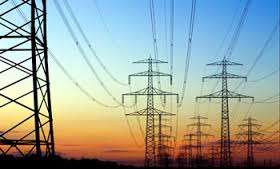
The objective of the assignment is to support the GoHN, in particular the regulatory body CREE, to develop multiyear tariff methodologies and draft the regulatory framework to set retail electricity tariffs, distribution and transmission (D&T) charges/tariffs based on efficient cost components and fees. The methodology and regulation should include i) an automatic adjustment mechanism for D&T components, as well as to reflect changes in power purchase costs, and ii) cover the main process for the D&T companies to periodically submit the tariff application and for the regulatory entity to review and approve.
Join #HLPWater to show your support
Deadline: 05-Oct-2017 at 11:59:59 PM (Eastern Time – Washington D.C.) 
Deadline: 03-Oct-2017 at 11:59:59 PM (Eastern Time – Washington D.C.) 
IFC PPP Transaction Advisory is seeking to recruit an international technical consultant for structuring and implementation of an airport concession tender. The airport is in a EU member state and has capacity of ~5m passengers annually. Additional project information will be disclosed to the shortlisted companies. The work of the technical consultants is to be divided into two main phases. Phase 1 transaction structuring will encompass a technical analysis of all aspects of the project, including traffic projections, capital investment program, and environmental and social issues. Phase 2 will consist of the transaction implementation and will require from the technical consultant to assist in the successful tendering of the project by providing input to the technical annexes of the project documents, assistance with the bidders due diligence and evaluation of their technical offers.
Community-Led Total Sanitation might be the greatest Bangladeshi export you’ve never heard of. In countries across Asia, Africa and  Latin America, a consensus has emerged that the best approach is Community-Led Total Sanitation, which is widely credited with changing people’s behavior around the world to no longer defecate in the open, which has greatly improved global health.
Bangladeshis can take plenty of pride in these far-away accomplishments. That’s because it is Northern Bangladesh – more specifically the Mosmoil village in Rajshahi district – that pioneered this approach seventeen years ago. Its success at home led to its widespread adoption abroad.


You must be logged in to post a comment.