
From Santiago to Abidjan, Milan to Dubai, the first half of 2025
brought a wealth of insight into how multilateral donors are
reshaping their funding strategies, procurement systems, and
development priorities. Assortis attended and monitored five of
the most influential events on the global development
calendar—those organised by the Inter-American
Development Bank (IDB), the African Development Bank
(AfDB), the Asian Development Bank (ADB), the European
Bank for Reconstruction and Development (EBRD), and the
Dubai International Humanitarian Aid & Development
Conference (DIHAD).
Across these gatherings, the message was clear: development
cooperation is entering a new phase—one that requires agility,
digital capacity, local engagement, and a deeper alignment with
ESG principles. In this report, we share our synthesis of key
messages, thematic takeaways, and practical implications for
professionals and organisations working across the development
spectrum
Author Archives: NL4WorldBank

The Global Collaborative Co-Financing Platform: A Big Step Forward for Development Finance
One Year Anniversary of the Co-financing Platform
Launched in April 2024, the Co-financing Platform currently has 16 members, including MDBs and bilateral partners. It presently hosts over 160 pipeline projects and 10 projects have had their financing needs met.
Read more about the Platform’s journey in this immersive story!
Digital technology is unlocking financial inclusion
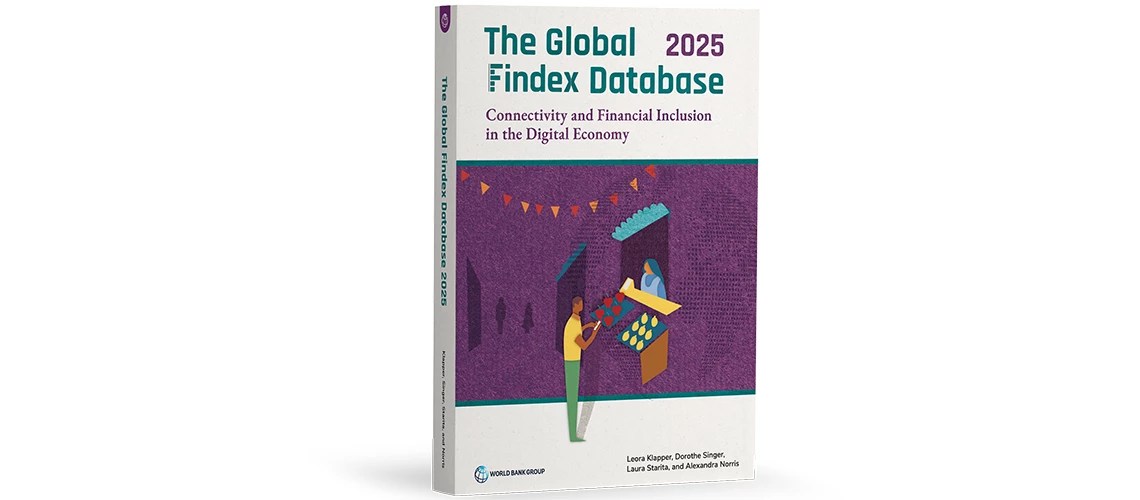
Mobile phones and the internet are revolutionizing financial inclusion, enabling more people to access and use digital financial services to manage their financial lives. From mobile money accounts accessible on basic phones, to bank-account-linked wallets used on smartphones, digital services are fulfilling their promise of being more accessible and affordable than traditional alternatives.
Continue readingRobust Policies for Better Public Services in Africa: The 2025 Country Policy and Institutional Assessment (CPIA) Report in 6 Charts
Since 2006, The World Bank’s annual Country Policy and Institutional Assessment (CPIA) Report has been a guide for countries, policymakers, and investors, identifying key trends and best practices that support effective public service delivery and foster a more resilient and prosperous future for Sub-Saharan Africa (SSA). The CPIA is an annual diagnostic tool for SSA countries eligible for financing from the International Development Association (IDA), the part of the World Bank that helps the world’s low-income countries by providing grants and low to zero-interest loans for projects and programs that boost economic growth, reduce poverty, and improve people’s lives. The CPIA Report aims to capture the quality of each country’s policies and institutional arrangements, focusing on the elements within the country’s control. The scores are designed to assess sustainable growth and poverty reduction. The CPIA provides scores for each country, and an overall regional score, on a scale of 1 (lowest) to 6 (highest) in four clusters: economic management, structural policies, social inclusion and equity policies, and public sector management and institutions. The scores inform governments of the impact of each country’s efforts to support inclusive growth and poverty reduction, and the overall score helps determine the size of the World Bank’s concessional lending and grants to low-income SSA countries. The report includes scores for IDA-eligible countries and acts as a touchstone for country monitoring and regional best practices.
Continue readingBangladesh: Bold, Urgent Reforms Can Accelerate Inclusive Growth, Create Jobs
DHAKA, July 16, 2025—The World Bank Vice President for South Asia, Johannes Zutt, concluded his first official visit to Bangladesh today, reaffirming the World Bank’s continued commitment to help the country address its development priorities and to support the people of Bangladesh.
Continue readingReforms to Boost Job Creation Could Help Transform the Philippines into a Middle-Class Society by 2040
MANILA, July 15, 2025 – Strategic reforms that enhance foundational investments in connectivity and human capital, promote smarter regulations and competition, and mobilize private investments for stronger job creation could propel the Philippines closer to a 7-percent growth trajectory, transforming it into a middle-class society by 2040.
Continue readingSafer, Climate-Resilient Roads Set to Improve Lives of 13,000 people in Comoros
Washington, July 7, 2025—Comoros is set to rehabilitate 12 kilometers of climate-resilient roads, restoring vital connectivity and strengthening disaster resilience for 13,000 people in one of the country’s most cyclone-affected regions. Additional financing of $12.5 million through a grant from the World Bank Group’s International Development Association (IDA), will complete the critical Mtsangadjou–Foumbouni corridor, enhancing access and safety for vulnerable coastal communities.
Continue readingUnlocking Futures: How the IDA Private Sector Window Is Creating Jobs Where They Are Needed Most
STORY HIGHLIGHTS

- By leveraging IFC and MIGA business platforms, the IDA PSW creates an opportunity for the strategic use of public resources to catalyze private investment, making it possible for companies and industries to operate in high-risk, fragile, and conflict-affected settings.
- A total of $5.4 billion from the IDA PSW has catalyzed over $31 billion in commercial investments in low-income and fragile countries and is expected to create 3 million jobs, provide 4 million additional loans to micro, small, and medium-sized enterprises (MSMEs), and expand digital connectivity to 31 million subscribers.
- From agribusiness in Mozambique to telecom infrastructure in West Africa and clean water access in Haiti, IDA PSW-supported investments are building the ecosystems needed to sustain jobs, boost resilience, and spark inclusive economic growth.
Microfinancing Pakistan’s Women Entrepreneurs: A Chance for Jobs and a Better Life
Responsible Closeout of USAID Terminated and Expired Programs
| July 29, 2025 Dear USAID Implementing Partners (IPs), Effective September 2, 2025, USAID headquarters will take over the management and handling of all terminations for all award types to successfully implement a responsible closeout. Awards will be assigned to dedicated Acquisition and Assistance teams which will focus on completing actions related to award termination and closeout. Moving forward, IPs should submit termination settlement proposals, final cost and closeout submissions, and other related documents/correspondence to USAID via dedicated mailboxes we have established. When you are submitting your documents, make sure to include the corresponding award number. Please submit your information based on the name of your organization to the corresponding inboxes below. Partners that have a name starting with a numeral are to use the T-Z mailbox. For all IPs with names from A-C: terminationsettlements_a-c@usaid.gov For all IPs with names from D-H: terminationsettlements_d-h@usaid.gov For all IPs with names from I-M: terminationsettlements_i-m@usaid.gov For all IPs with names from N-S: terminationsettlements_n-s@usaid.gov For all IPs with names from T-Z and Numerals: terminationsettlements_t-z@usaid.gov Each inbox will be monitored by a dedicated team of OAA individuals who are responsible for responding to IPs and filing the documents appropriately for the team that takes over after September 2nd. As a reminder, IPs must still submit appeals under assistance awards of final Agreement Officer (AO) decisions to compliance@usaid.gov. USAID will continue to review and approve payments in accordance with the relevant regulations and the terms and conditions of the award. If the terminated award included an overseas (Mission) payment office, effective July 1, 2025, the payment office is now EIW@usaid.gov. If the terminated award included the payment office of ei@usaid.gov or relied on a letter of credit, there is no change to the payment office. Thank you again for your assistance and cooperation during this period of transition. We will continue to provide communications as we move forward. Please continue to email IndustryLiaison@usaid.gov for any questions you may have about this notice. USAID Industry Liaison |
 Netherlands for the World Bank
You must be logged in to post a comment.