Unknown's avatar

About NL4WorldBank

The World Bank Team at the Royal Netherlands Embassy tweets about news related to Dutch organizations interested in working with the #WorldBank. #NL4WorldBank

eC2: Technical Assistance towards strengthening supply chain management of health products and technologies in selected counties

Deadline: 20-Aug-2020 at 11:59:59 PM (Eastern Time – Washington D.C.)medical-appointment-doctor-healthcare-clinic-health-hospital-medicine[7]

The Reproductive Maternal Newborn Child and Adolescent Health (RMNCAH) Multi-Donor trust fund (MDTF) aims to enhance effectiveness in achieving sustainable RMNCAH results by strengthening the health systems and support progress towards universal health coverage. The overall objective of the MDTF supply chain management Technical Assistance for Health Products and Technologies (HPTs) is to build/strengthen HPT supply chain systems, with an emphasis on RMNCAH commodities, into efficient, effective, responsive and sustainable systems through the provision of targeted technical assistance and mentorship in 12 counties

Continue reading

COVID-19 has put food out of reach for many. Can technology create a more sustainable food system?

The short answer is yes. De-concentration, de-centralization and data are building blocks of a more sustainable food system post-COVID-19. Explore how in this in-depth analysis.

Free masks: A new initiative in the Central African Republic has seen the production of more than two million masks in just two months, looking to generate more than 1.6 million workdays and inject about $17 million into the local economy.

Continue reading

eC2: Study of desalination challenges and opportunities

Deadline: 20-Aug-2020 at 11:59:59 PM (Eastern Time – Washington D.C.) sunrise-phu-quoc-island-ocean.jpg

The objective of the study is to present a comprehensive overview of the desalination efforts carried out in Morocco and desalination plans included in the sector medium and long-term planning documents, and to identify challenges and potential solutions for bringing private-sector to support government efforts to scale-up desalination in the country.

Continue reading

Global Gas Flaring Jumps to Levels Last Seen in 2009

WASHINGTON, July 21, 2020 — Estimates from satellite data show global gas flaring gasincreased to levels not seen in more than a decade, to 150 billion cubic meters (bcm), equivalent to the total annual gas consumption of Sub-Saharan Africa.
The 3% rise, from 145 billion cubic meters (bcm) in 2018 to 150 bcm in 2019, was mainly due to increases in three countries: the United States (up by 23%), Venezuela (up by 16%), and Russia (up by 9%). Gas flaring in fragile or conflict-affected countries increased from 2018 to 2019: in Syria by 35% and in Venezuela by 16%, despite oil production flattening in Syria and declining by 40% in Venezuela.

Continue reading

eC2: Preparation of Flood Hazard and Flood Risk Maps (FHRM) and Flood Risk Management Plans (FRMP) for Romania

Deadline: 24-Aug-2020 at 11:59:59 PM (Eastern Time – Washington D.C.) Bangladeshi villagers repair a vital flood-protecting embankment

The assignment aims to develop flood hazard and flood risk maps (FHRM) and flood risk management plans (FRMP) for all twelve Units of Management of Romania, i.e. for 11 river basins and for the Danube River, in line with the EU Floods Directive. Furthermore, the assignment also aims to develop a plan for measures that are to be taken nationally.

Continue reading

eC2: Indonesia: policy recommendations on operationalization of a national urban flood resilience program and technical study on social inclusion

Deadline: 13-Aug-2020 at 11:59:59 PM (Eastern Time – Washington D.C.)floods

Indonesia is one of the most disaster-prone countries in the world, exposed frequently to a range of hazards. Floods dominate the natural hazard figures in most metropolitan areas, often accounting for almost half of all events occurred. Over sixty percent of Indonesias districts are exposed to a high risk of flooding, caused by a range of factors including rapid urbanization and poor construction practices; poor drainage design and insufficient (or infrequent) maintenance; increasing effects of climate change (e.g., sea level rise); and coastal infrastructure that needs upgrading. A balanced and cross-sectoral approach to urban flood risk management, encompassing both structural and non-structural measures and green infrastructure, is needed to address these challenges. Increased and systematic investments to reduce urban flood risk need to be integrated with urban development projects, as well as the institutionalization of a maintenance and improvements regime of urban drainage and flood infrastructure. Since 2018, the World Bank has been providing technical assistance to the government of Indonesia in support of a national urban flood resilience program that addresses the above.

Continue reading

Social protection for migrants during the COVID-19 crisis: The right and smart choice

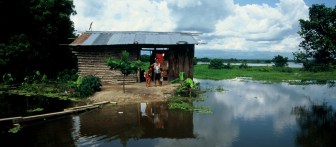
The COVID-19 pandemic and the transmission control measures it has necessitated have migrants_blogabruptly halted the movement of people that characterizes our interconnected world. The implications are enormous for migrants, who rely on working away from home to support themselves, their families, and their communities. Many of them are now in conditions that put them at greater risk of contracting COVID-19. The pandemic is also affecting critical sectors like agriculture where labor shortages are looming.
Continue reading

eC2: Inland Waterways Strategic Plan for Argentina

Deadline: 12-Aug-2020 at 11:59:59 PM (Eastern Time – Washington D.C.)water-pollution-cartoon

The purpose of this assignment is to deliver a proposal of an Inland Waterway Strategic Plan (IWSP) for Argentina, addressing the Paraguay-Parana-Uruguay-Rio de la Plata waterway. It will encompass all the technical, economic and institutional aspects, deemed relevant to achieve an efficient operation of the waterway, identifying and exploiting every opportunity for improvement. These topics will include at least the following: the economically convenient draft to be achieved in each section; economically viable interventions aimed at reducing congestion and delays; the proper sizing of the interventions, taking into account future trends regarding the design of the vessels. The IWSPs horizon will be at least the next 20 years, although it may be increased, if both the team and the Task Team Leader agree.

Continue reading

eC2: National Ports Strategic Plan for Argentina

Deadline: 12-Aug-2020 at 11:59:59 PM (Eastern Time – Washington D.C.)port-614543_640

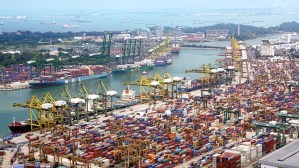
The purpose of this assignment is to deliver a proposal of a National Ports Strategic Plan (NPSP) for Argentina, addressing the whole port activity of the country, either under public or private responsibility; emphasis will be on the public owned ports, either if operated directly by government, or granted to the private sector. It will encompass all the technical, economic and institutional aspects, deemed relevant to achieve an efficient operation of the port system, identifying and exploiting every opportunity for improvement. Among such topics, at least the following will be included: the expected evolution of demand (both actual and potential), the present and potential efficiency of port operations, the opportunities for technological improvement, the definition of the optimal draft both in economic and environmental terms, the potential improvement of inland transportation that might increase the ports performance, the required institutional strengthening of the gov

Continue reading