
 A new book, “Fossil Fuel Subsidy Reforms: A Guide to Economic and Political Complexity” (Routledge), explores the complex economics and politics of fossil fuel subsidies, and distils key principles for designing and implementing of effective reforms. Here are some key insights.
Yearly Archives: 2018
eC2: BASELINE SECONDARY DATA MINING AND ANALYSIS FOR VIETNAM AGRI FINANCE AND GOOD AGRICULTURE PRACTICES
Deadline: 21-Jun-2018 at 11:59:59 PM (Eastern Time – Washington D.C.) 
The objective of the assignment is to collect and analyze secondary quantitative data to establish the baseline situation of coffee and rice farmers based on indicators of the Vietnam Agri project. The consultant will implement the following main tasks: (1) collect data from secondary sources, including but not limited to project documents, client firms data provided by IFC, national data sets from the General Statistics Office of Vietnam, (2)conduct quantitative analysis of baseline values of key impact and outcome indicators of project result frameworks relating to coffee and rice farmers, particularly household income including income/sales revenue from coffee and rice, and income sources; (3) describe household demographic and socio-economic profile, coffee and rice farming and post harvest and storage practices to the extent that relevant data is available; and (4) provide gender disaggregated results to the extent that relevant data is available
Want to keep girls in school? Teach them to negotiate.
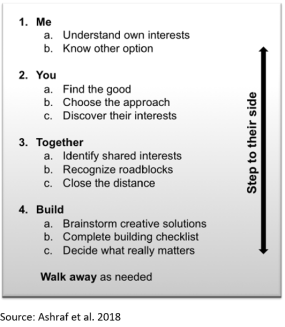 Across low-income countries, fewer than one in every three girls are enrolled in secondary school. Many interventions to improve girls’ access to school provide cash, such as cash transfers in Malawi or Nepal. But what if girls had better skills to advocate for their own interests? In a recent experiment in Zambia, Nava Ashraf, Natalie Bau, Corinne Low, and Kathleen McGinn tested what happens when adolescent girls receive negotiation training. The results are documented in their paper, “Negotiating a Better Future: How Interpersonal Skills Facilitate Inter-Generational Investment.” Over the course of six two-hour after-school sessions, eighth-grade girls engaged in discussion, role-playing, storytelling, and game play to learn four principles of negotiation from college educated Zambian women.
- Principle 1: Me. The girls learned to understand their own interests, identify their back-up plan, when to walk away during a negotiation (when options don’t meet the girls’ needs), and how to regulate emotion by taking a short break when anger gets in the way of good bargaining.
- Principle 2: You. The girls learned to ask open-ended questions to understand the interests of the other person and to approach the other person respectfully.
- Principle 3: Together. The girls were taught to identify common ground with the other person, and to identify if a “no” from the other person came from some external obstacle that the girl and the person could resolve together.
- Principle 4: Build. The girls learned to find “win-win” agreements.
Here’s an example of how this played out for one of the girls, as she negotiated with her parents for school fees:
“I asked my parents if they could talk with me. I put on my chitenge [traditional material skirt], and knelt before them. I chose to approach with respect and so they asked me to stand and sit in the chair near them and tell them what I wanted to say. I said that I really wanted to be able to go back to school but wasn’t able to because the school fees weren’t paid. They said I knew that the family had no more money so it wasn’t possible. I said I know that mom sells chickens out of the house. I see that some people sell them in the marketplace nearby. If I can sell some chickens in the market over the school holiday, could I use the money for my school fees? They agreed and that is how I got to go back to school.”
You can see how she put the principles together: Me – she identified her interest: go back to school. You – she approached her parents with respect and listened to their concern. Together – she saw that the “no” wasn’t from a lack of desire from her parents but from an external obstacle. Build – she proposed a win-win situation. Not every negotiation is about school fees. One girl recounted using the skills to push back against her boyfriend’s demands for sex. Another wrote about negotiation with her sister to exchange child care for hair styling.
Two months after the negotiation training, the girls who participated (“negotiators”) scored much better on an open-ended test of how to find time to study for an exam when a younger brother needed watching. Over the course of the next couple of years, dropout rates were ten percentage points lower for negotiators, and attendance – for girls enrolled in school – was slightly higher. Although some other outcomes – performance in the top quarter on math and English tests and reported pregnancy rates – remained unchanged, an index of all the effects together improves, even when the enrollment effects are excluded. (When interpreting the lack of a pregnancy effect, keep in mind that reported pregnancies in the compaision group are already very low, just 4 percent.) The negotiation skills kept girls in school. Parents reported that negotiators were more likely to ask for more food and did fewer weekday chores; but they also reported that negotiators were more respectful, less likely to give difficulty in doing the chores they had, and more likely to do chores on Fridays – when schoolwork is less pressing.
For the girls with the highest language ability at baseline, the effects on enrollment and attendance are even stronger, and performance on an English test also rose.
But wait, is it really the negotiation skills? Maybe exposure to these college-educated Zambian mentors in a safe space is what’s actually driving these findings. Or maybe interacting with that mentor simply provided better information about the returns to education, which we know can keep youth in school. To test this, the researchers tried two other interventions: one with the same mentors and the same safe space but no negotiation training, and a second that provided information on the returns to education and on HIV prevention. The information intervention had no impact on any outcomes, and the safe space intervention had a similar – slightly smaller – impact on enrollment to the negotiation program, and lower estimated impacts on every other impact (albeit not statistically significantly different). The safe space intervention also had almost no impact on parent reports about the child’s behavior and chores at home.
But wait (again!), does this harm the other children in the household? The researchers look for impacts on other children in the school and in the household and find little evidence of negative spillovers. It didn’t affect the distribution of chores and if anything, it increased the amount of time parents expected sisters of the negotiators to do their own schoolwork. Parents of negotiators do report a higher likelihood to pay girls’ school fees over those of boys, but they don’t reduce the expected years of education for boys in the household. As the authors put it, “While it may seem surprising that increased educational investment in the treated girl did not negatively affect her siblings, this could be because the increased investment came out of parents’ consumption or because girls used negotiation to arrive at solutions that increased family welfare.”
There’s much more in the paper, including lab-in-the-field games to show how the program affected interactions between parents and children, and machine learning techniques to shape the heterogeneity analysis. But this intervention shows that adolescents can learn valuable socio-emotional skills, working through the education system.
Most directly, it demonstrates that it’s possible to help girls to stay in school by making them more effective advocates for themselves.
For more about the program, you can read this story on NPR’s Goats and Soda blog.
Five things you can do to end plastic pollution
 The news headlines are grim. A male pilot whale dies on a Thai beach having swallowed 80 plastics bags; images of turtles stuck in six-pack plastic rings; a sad photo of a tiny seahorse clinging to a plastic ear-bud goes viral. Plastic products wash up daily on beaches worldwide –from Indonesia to coastal west Africa, and waterways in cities are increasingly clogged with plastic waste.
Continue reading
eC2: Design support for developing a Farmer Loyalty Program
Deadline: 25-Jun-2018 at 11:59:59 PM (Eastern Time – Washington D.C.) 
The International Finance Corporation (IFC), in collaboration with its global partners – Bayer AG, Netafim and Swiss Re – launched the Better Life Farming Alliance (BLFA) in April 2018. The objective of BLFA is to support smallholders sustainably improve farm yields and incomes and improve their lives. India is one of the countries covered under the BLFA where two projects are under implementation – in Uttar Pradesh and Jharkhand – for smallholder farm yield improvements. IFC and the BLFA partners are interested in developing a farmer loyalty program such that there are incentives or benefits for farmers to continue to engage with the BLFA partners. The farmer loyalty program should have a clear business rationale for the BLFA partners, as well as clear and articulated value for the farmers who choose to engage in BLFA projects. IFC is planning to recruit a specialized firm to design the farmer loyalty program for a pilot deployment with India BLFA farmers with potential to scale-up.
eC2: Natural Hazard Assessment for the Reconstruction of Critical Transport Infrastructure
Deadline: 21-Jun-2018 at 11:59:59 PM (Eastern Time – Washington D.C.)

The World Bank provides technical assistance to the Government of Myanmar to support technical solutions for Chin State by hiring an international consulting firm to prepare a hazard and vulnerability assessment for road rehabilitation to inform planned investments under the Myanmar Floods and Landslides Emergency Recovery Project in Chin State in Myanmar. The overall objective of the assignment is to contribute to the increase of capacities of the relevant ministries and agencies of the Government of Myanmar in the adoption of appropriate natural hazard assessment approaches in designing transport and infrastructure. The activity will (i) help provide technical solutions on geohazards specifically for Kalay Hakha road; (ii) draw out lessons along the above process, including data gaps and recommend solutions for improvement; (iii) and provide capacity building for the Ministry of Construction on this practice. The assignment is expected to be completed within the period of an estimated six months upon mobilization.
eC2: BEY Airport – Technical Consultant
 Deadline: 21-Jun-2018 at 11:59:59 PM (Eastern Time – Washington D.C.)
IFC PPP Transaction Advisory has been retained by the Lebanons High Council for Privatization and PPP (HCP) to act as lead advisor on attracting private investment through a Public-Private Partnership for the expansion of the Rafic Hariri International Airport (BEY Airport). IFC will provide advisory services to HCP to engage the private sector to optimize the operations of the existing facilities of the BEY Airport in order to solve the current capacity constraints, as well as operate and maintain the airside and landside facilities. The future operator shall also develop new facilities through a phased approach over the term of the contract to cope with the forecasted increase in passenger traffic and cargo over the next few decades.
eC2: Myanmar Distributed Generation Scoping Study
Deadline: 28-Jun-2018 at 11:59:59 PM (Eastern Time – Washington D.C.) 
The International Finance Corporation (IFC) is seeking consultancy services to undertake an analysis of the current market and key barriers for distributed clean power generation solutions in Myanmar. This study will primarily focus on the potential for distributed PV solutions providing power to clients on a commercially viable scale, including both grid-connected and off-grid facilities. In particular, it should focus on the market for commercial and industrial customers, rather than minigrids or other residential applications. The result of this study will be an overview of the commercial and regulatory environment for these types of projects, and the potential business models that would be viable in the Myanmar context; as well as a market mapping of the main companies active in this space in Myanmar and potential customers that could serve as a pipeline of projects for suppliers and investors in the future.
eC2: NATIONAL HEALTH FACILITY SURVEY (NHFS) IN NIGERIA
Deadline: 20-Jun-2018 at 11:59:59 PM (Eastern Time – Washington D.C.)
The consultant will conduct facility surveys at primary health facilities and referral secondary hospitals using the methodology approved by the World Bank in the selected sample facilities. These surveys will be in approximately 3,300 randomly selected facilities in total, with a minimum of 90 facilities in each of the 36 states and the FCT. The survey instrument comprises 5 modules. The survey firm will work with World Bank Consultants and FMOH staff to review the survey instruments, training materials and field manual; program electronic devices for data collection; deploy trained enumerators and supervisors for field work using CAPI; provide supervision and oversight over data entry and ensure compliance with quality standards; produce full clean database of the survey information; and full report and presentation summarizing the results using an agreed outline.
Newsletter June 2018: A Sustainable Future
 We are excited to bring you the June 2018 edition of the NL4WorldBank newsletter, A Sustainable Future which was published the on the 7th of June.
In this edition we feature a story about the Institute for Future of Living which signed an MoU with the World Bank India. The goal of this partnership is to create a strong partnership to support global Smart City development in conjunction with implementing the Sustainable Development Goals of the United Nations.
 Netherlands for the World Bank
You must be logged in to post a comment.