
 It is probably fair to say that the World Bank’s latest report on intergenerational mobility – Fair Progress? Economic Mobility across Generations around the World – is the first-ever attempt to paint a truly global picture of how achievement – or the lack thereof – is transmitted across generations. Though there are results for income mobility for a subset of countries, most of the analysis focuses on educational attainment across 148 economies, representing over 95% of the world’s population.
Yearly Archives: 2018
eC2: Sindh Province: Renewable Energy Locational Study
 Deadline: 18-Jul-2018 at 11:59:59 PM (Eastern Time – Washington D.C.)
The envisaged scope of work will involve four tasks, as follows: (i) Grid integration analysis including an identification of substations that can accommodate solar and/or wind capacity without major upgrades, and those that would require major transmission and/or substation upgrades to allow the addition of VRE capacity; (ii) Assessment and ranking of renewable energy zones using the MapRE tool and utilization the best available data on solar and wind resource potential, transmission lines, elevation, land use, protected and sensitive areas, settlements, and other relevant data; and combining of this data with the results from the grid integration analysis; (iii) More detailed identification of potential sites for solar parks, using the results from the prior work to carry out a land availability analysis that investigates land ownership and other issues in a 10km radius around high ranking substations; (iv) Development of a solar park strategy, based on lessons learned from Quaid-e-Azam Solar Park, international experiences, discussions with key public sector agencies, and consultations with private sector developers.
eC2: Mainstreaming Disaster Risk Management to Sustain Local Infrastructure
 Deadline: 09-Jul-2018 at 11:59:59 PM (Eastern Time – Washington D.C.)
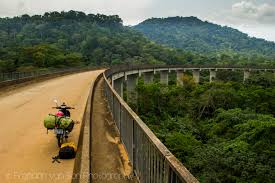
The objective of the technical assistance (TA) is to increase the capacity and knowledge of a selected LGU (1 province) in dealing with climate/disaster risks faced by local transport infrastructure and pilot an institutionalized coordination process with the national agencies to better inform local roads planning, using a learning-by-doing approach. Based on this activity, technical notes/guidelines will be prepared for the ongoing provincial roads program to benefit all participating LGUs. LGUs are the implementing units under the provincial roads program, and hence increasing their technical capacity in dealing with climate resilience for local roads will improve the performance and development impact of the provincial roads program.
How can we help cities provide the building blocks for future growth?
Access to clean drinking water and sanitation can improve children’s health, reduce waterborne disease, and lower the risk of stunting. , which can help people escape poverty. A paved road can lead to a world of possibilities for small business owners, increasing access to additional markets and suppliers, as well as opportunities to grow their businesses.
The urban infrastructure finance gap
Cities already account for approximately 70-80 percent of the world’s economic growth, and this will only increase as cities continue to grow.
ICYMI: Call to join the Young Professionals Program (YPP)
The application for the 2019 Selection Process for the Young Professionals Program will be open from June 14 to July 31, 2018 (midnight EST).
 The Young Professionals Program (YPP) is a starting point for an exciting career at the World Bank Group.
It is a unique opportunity for younger talent who have both a passion for international development and the leadership potential to grow in fascinating top technical and managerial roles in the World Bank Group (WBG). The program is designed for highly qualified and motivated individuals skilled in areas relevant to WBG technical/operations such as economics, finance, education, public health, social sciences, engineering, urban planning, agriculture, natural resources and others.
Building Back Better: How to Cut Natural Disaster Losses by a Third
 WASHINGTON, June 18, 2018 – When countries rebuild stronger, faster and more inclusively after natural disasters they can reduce the impact on people’s livelihoods and well-being by as much as 31 percent, potentially cutting global average losses from $555 billion to $382 billion per year. That’s the conclusion of a new report from the World Bank and the Global Facility for Disaster Reduction and Recovery (GFDRR), released today.
The report, Building Back Better: Achieving resilience through stronger, faster and more inclusive post-disaster reconstruction, assesses socioeconomic resilience and the impact of disasters on people’s well-being. It covers 149 countries, including 17 small island states, representing 95.5 percent of the world’s population.
eC2: Diagnostic Assessment of Black Pepper Supply Chain in Vietnam
 Deadline: 09-Jul-2018 at 11:59:59 PM (Eastern Time – Washington D.C.)
The overall aim of this assessment is to provide an objective reference point for IFC and its private sector client(s) to formulate development options or advisory services needed for Pepper supply chain in Vietnam in order to improve profitability of black pepper production and achieve pepper industry players’ target on 100% sustainable pepper by 2025.
This includes: 1)Prepare a list of existing practices of advisory services provided to black pepper smallholders; 2)Prepare a list of existing agronomy products/package of practices that have potential to improve smallholder practices and improve income; 3)Understand baseline condition of black pepper farming and markets & analyze potential opportunities for improvement 4)Understand supply-demand conditions of (a) pepper seedling business at commune level; (b) drip irrigation equipment, etc; 5)determine the major constraints & opportunities 6) Provide recommendation and strategies of project interventions
eC2: Endline survey for Impact Evaluation of Smallholder Agriculture Productivity Enhancement Project
 Deadline: 05-Jul-2018 at 11:59:59 PM (Eastern Time – Washington D.C.)
The primary household survey will consist of a multi-module household survey instrument including modules on agricultural input use, modules on agricultural input use, agricultural production, sales and purchases of agricultural commodities, livestock holdings and animal products, consumption and food security, household demographics and income, and beliefs about returns to agricultural inputs. This survey is expected to take around 2 hours on average.
The selected firm will be expected to provide surveys for 1,100-1,500 households on the list provided by DIME, which are located in 100 communities across 12 counties in Liberia. Justification should be provided for households that are unavailable to be surveyed.
eC2: Mozambique SLWRMP midline data collection
 Deadline: 05-Jul-2018 at 11:59:59 PM (Eastern Time – Washington D.C.)
Survey Firm for Agriculture Household Listing, Plot Mapping and Baseline Data Collection Sustainable Land and Water Resource Management Project (SLWMRP) Mozambique.
The Mozambique Sustainable Land and Water Resource Management Project (SLWRMP), financed by the African Development Bank (AfDB), aims to increase the resilience of communities towards the adverse impacts of climate change through the development of 56 small scale irrigation kits, covering either 5 or 10 ha, in the Southern province of Gaza. The Gaza province is one of the most adversely affected provinces in terms of climate change events with frequent occurrence of droughts in the northern parts and floods in the coastal areas of the province. The Project is being implemented in the four districts of Guija, Mabalane, Chicualacuala and Massengena. The data collection activities will feed into the rigorous evaluation of the project.
eC2: Assisting Tunisie Autoroutes in exploring management and financing options of highway Infrastructures and identifying a pipeline of potential PPP projects
 Deadline: 05-Jul-2018 at 11:59:59 PM (Eastern Time – Washington D.C.)
The objective of the assignment is to determine the best course of action to encourage sustainable participation of private sector in the management and financing of Tunisias highway network.
As sub-objectives, the study will:
1. Determine the appropriate institutional structure to manage private investment in Tunisias highway network, including reviewing whether the current operational model of STA is fit-for-purpose. Based on the questions below, prepare operational recommendations and an action plan, that would answer the following questions: i) How effective and efficient is the current management of the highway assets? ii) should STA retain all its responsibilities (e.g. construction; O&M; tolling)? iii) would another structure be better? iv) what does international best practice say?
2. Determine broader sector investment needs to achieve service levels needed by the economy and the users;
3. Identify a pipeline of viable PPP projects in highway sector and prepare a road map for their preparation and implementation.
Continue reading
 Netherlands for the World Bank
You must be logged in to post a comment.