NEW YORK, September 24, 2025—Seventeen African governments today committed to reforms and actionable plans to expand electricity access as part of Mission 300—an ambitious partnership led by the World Bank Group and African Development Bank Group that aims to connect 300 million Africans to electricity by 2030.
Continue readingTag Archives: Zakendoen
Port Performance Varies Across the Globe Amid Continuing Shocks
Overall performance slides, but some developing country ports improved between 2020-2024
Washington, D.C., September 22, 2025 — Port performance across the world declined between 2020 and 2024 due to the Red Sea Crisis, challenges at the Panama Canal, and pandemic-related shocks, according to a new report released today. However, efficiency gains varied by region and income level.
Continue readingTackling the Pressing Challenge of Defying Drought in West Africa – An Africa Water Center is Established to Strengthen Capacity in the Water Sector
OUAGADOUGOU, September 30, 2025 – A two-day High-Level Forum on Defying Drought (D2) in West Africa concluded today in Ouagadougou with a strong commitment to address the pressing challenges of drought in the region, amid the broader context of climate change and population growth. Senior policymakers from Burkina Faso, Chad, Mali, Mauritania, Niger, and Senegal, joined by technical experts from Morocco and Brazil, as well as regional and international institutions and development partners, came together to advance coordinated and practical solutions to reduce drought-related losses and build climate resilience across the Sahel. Technical sessions showcased regional and global best practices and facilitated the co-design of a roadmap outlining short-, medium-, and long-term policy actions to strengthen drought resilience across West Africa.
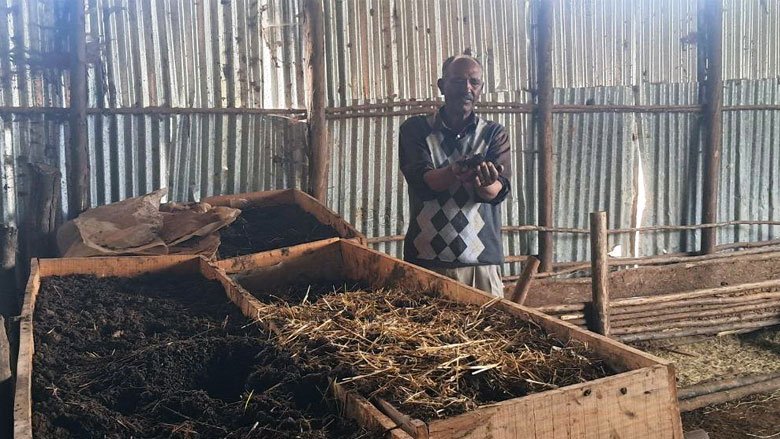
Continue readingIn Ethiopia, Reviving Soil and Improving Farming Livelihoods
STORY HIGHLIGHTS
- Smallholder farmers have been taught to restore soil health by learning sustainable farming practices like vermicomposting and integrated pest management.
- The adoption of these techniques has led to increases in maize yields for individual farmers, improving their family’s food security and financial situation and contributing to broader community resilience.
- The Ethiopia Food Systems Resilience Program has so far reached over 1.2 million farmers with an even broader range of interventions.
Private capital for infrastructure: Resilience amid uncertainty, urgency amid gaps
As the global economy continues to adapt to macroeconomic shifts, infrastructure investment remains a critical driver of job creation, long-term development opportunities and resilience. While recent interest rate hikes and inflationary pressures have reshaped return expectations and complicated financing conditions, infrastructure has stood firm as a preferred asset class. With relatively stable revenues and strong government support, infrastructure investment continues to offer investors lower risk, more predictable returns, and stronger performance than other private investment opportunities.
The World Bank’s Infrastructure Monitor 2024 presents new data and insights on how global trends are shaping private investment in infrastructure. It shows that while investment has continued to grow, especially in primary markets (i.e. greenfield and brownfield infrastructure as well as privatizations), disparities between regions and income levels are deepening. It also underscores that to close the investment gap, we must scale what works: targeted public support, sound regulation, and innovative financing instruments such as blended finance and guarantees.
Continue readingWorld Bank Reenters the Canadian Dollar Bond Market with a CAD 1.5 billion Benchmark Bond
WASHINGTON, D.C. August 21, 2025 – The World Bank (International Bank for Reconstruction and Development, IBRD, Aaa/AAA) today priced a new 3-year CAD $1.5 billion Sustainable Development Bond that matures in September 2028.
The 3-year benchmark transaction pays a semi-annual coupon of 2.90% p.a. and has an issue price of 99.946% and a final spread of 9.8 bps over the CAN 3.25% September 2028 reference bond, offering investors a yield of 2.919% (semi-annual). Joint lead managers for this transaction are BMO Capital Markets, CIBC, National Bank Financial and Scotiabank.
Continue readingThe World Bank’s First USD Benchmark Bond of the 2026 Fiscal Year is a 10-Year with Record Orderbook
WASHINGTON, D.C., August 19, 2025 – The World Bank (International Bank for Reconstruction and Development, IBRD, Aaa/AAA) today priced a USD 5 billion benchmark bond that matures in August 2035. The World Bank’s successful USD bond attracted its largest ever 10-year order book with investors around the world.
With more than 180 investor orders, the transaction attracted over USD 13 billion high-quality investor orders, primarily driven by bank treasuries, central banks/official institutions, and asset managers.
Continue readingThe Future of Jobs: You Ask, We Answer

LIVESTREAM
Q&A with Frederico Gil Sander
and Henriette Kolb
August 27, 2025 @10-10:30 AM EDT (UTC-4)
Sign Up: Event | The Future of Jobs: You Ask, We Answer | World Bank Live
2025 Global Gas Flaring Tracker Report
Highlights
- In 2024, flaring surged by 3 billion cubic meters (bcm) to 151bcm, the highest level since 2007. The top nine flaring countries continue to account for three-quarters of all flaring, but less than half of global oil production.
- More than half a billion people still lack reliable access to electricity. The associated gas wastefully burned each year is equivalent to Africa’s total annual gas consumption.
- 389 million tonnes of carbon dioxide equivalent (MMtCO2e) emissions, including 46 MMtCO2e in the form of unburnt methane, were released by flares in 2024.
The latest Global Gas Flaring Tracker, an independent report of gas flaring worldwide, reveals that global gas flaring volumes rose to 151 bcm in 2024 from 148 bcm in 2023. This is the highest level since 2007. Flaring Intensity, the amount of flaring per barrel of oil produced, has remained largely unchanged in the last fifteen years.
The top nine flaring countries continue to account for three-quarters of all flaring, but less than half of global oil production. If captured and used, the gas flared could have helped provide energy for some of the world’s most energy-deprived people.
The increase in gas flaring in 2024 highlights the need for oil producers to rapidly accelerate efforts to end routine flaring and minimize pollution from oil and gas operations. The World Bank’s Global Flaring and Methane Reduction (GFMR) Partnership estimates that in 2024 flaring released 389 million tonnes of CO2e, with a significant portion in the form of unburnt methane.
The report highlights that countries committed to the Zero Routine Flaring by 2030 (ZRF) initiative performed significantly better than countries that have not made the commitment. However, while some countries have made progress reducing flaring, the overall increase in 2024 underscored the need for governments and operators to prioritize flaring reduction projects.
The report calls on governments and operators to act now to end routine gas flaring and reduce methane emissions from oil and gas production.
The World Bank’s annual Global Gas Flaring Tracker is a tool for monitoring and understanding the state of flaring worldwide and the progress made towards achieving Zero Routine Flaring by 2030. GFMR, together with the Payne Institute at the Colorado School of Mines, has developed global gas flaring estimates based upon observations from a satellite launched in 2012 and operated by the U.S. National Oceanic and Atmospheric Administration. The advanced sensors of this satellite detect the heat emitted by gas flares as infrared emissions.
About GFMR
GFMR is a multi-donor trust fund supported by governments, companies, and multilateral organizations committed to ending routine gas flaring and reducing methane emissions from the oil and gas sector. GFMR provides catalytic grant funding, technical assistance, policy and regulatory reform advisory services, capacity building and institutional strengthening for methane and flaring reduction projects. For example, GFMR mobilized $11 million to detect and repair methane leaks in Uzbekistan’s gas distribution network. The project has already eliminated 9,000 tones of methane emissions per year, with further reductions of 100 thousand tonnes of methane emissions expected each year.
Mid-Year Insights: Key Procurement Trends from MDBs and Global Forums
From Santiago to Abidjan, Milan to Dubai, the first half of 2025
brought a wealth of insight into how multilateral donors are
reshaping their funding strategies, procurement systems, and
development priorities. Assortis attended and monitored five of
the most influential events on the global development
calendar—those organised by the Inter-American
Development Bank (IDB), the African Development Bank
(AfDB), the Asian Development Bank (ADB), the European
Bank for Reconstruction and Development (EBRD), and the
Dubai International Humanitarian Aid & Development
Conference (DIHAD).
Across these gatherings, the message was clear: development
cooperation is entering a new phase—one that requires agility,
digital capacity, local engagement, and a deeper alignment with
ESG principles. In this report, we share our synthesis of key
messages, thematic takeaways, and practical implications for
professionals and organisations working across the development
spectrum


You must be logged in to post a comment.