
Smart City events taking place in November! 
Tag Archives: World Bank Group
Ahead of the next Habitat conference, the urban world we want
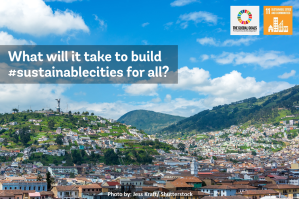
There is no better way to mark this year’s World Cities Day than reflecting on the adoption of the New Urban Agenda at the recent Habitat III conference in Quito. The agenda reaffirms the political commitment to sustainable urbanization and provides a framework to guide global urban development over the next 20 years, based on a shared vision of cities that are inclusive, safe, resilient and sustainable .
.
eC2: Urban sanitation studies in Kigal
Deadline: 14-Nov-2016 at 11:59:59 PM (Eastern Time – Washington D.C.)
This task will generate three key studies related to urban sanitation for two unplanned settlements in Kigali, Rwanda (each with an estimated population of 20,000 inhabitants). The three studies include: 1) Urban Sanitation Status Index; 2) Diagnostic of Small Private Service Providers; and 3) Household Behavior. Significant surveys will need to be conducted in each of the targeted unplanned settlements.
Continue reading
eC2:Provision of capacity building services to Egyptian Water and Sanitation public agencies
Deadline: 15-Nov-2016 at 11:59:59 PM (Eastern Time – Washington D.C.)
The academic institutes will provide capacity building services in the following areas to 3 WSCs (Sharkiya, Dakahlia and Beheira governorates), the Holding Company for Water and Waste Water (HCWW), the Egyptian Water Regulation Agency (EWRA), and the Project Management Unit (PMU) in the Ministry of Housing, Utilities, and Urban Communities (MHUUC):
– Monitoring and Evaluation,
– Project Management,
– Strategic Planning,
– Asset Management,
– Operations and Maintenance,
– Procurement,
– Citizen Engagement,
– Financial sustainability
Continue reading
eC2: Cotton-Apparel Value Chain in Kenya
Deadline: 14-Nov-2016 at 11:59:59 PM (Eastern Time – Washington D.C.)
The consultant will work to look in depth at the cotton-apparel value chain to identify potential obstacles to greater growth. Depending on the location of the main economic activities throughout the value chain, the analysis may focus on specific geographic areas. The selected consultants will be expected to carry out a detailed mapping of the actors in the different links of the value chains. The instruments to be administered by the firm will further cover firm dynamics; costs, productivity, and jobs (scale and skills demanded); and barriers to competitiveness, value chain deepening, and job creation at each stage. In addition, the instruments will cover cross-cutting issues such as the costs of trade, as well as labor market rigidity and costs, and education and skills.
Continue reading
eC2:Interim Support to the PPP Unit-Lesotho
Deadline: 10-Nov-2016 at 11:59:59 PM (Eastern Time – Washington D.C.)
The Government of Lesotho has entered into a landmark Public Private Partnership (PPP) for a new national referral hospital and three primary filter clinics in Maseru (QMMH PPP).The Government wishes to ensure that these PPPs remain cost effective, provide reliable and timely services at the agreed price and to the agreed quality, consistent with legal standards, financial probity and management accountability, while maintaining good partner relationships with the Private Operator.
IFC has mobilized financial resources for the recruitment of a specialist contract management Consultant to support the strengthening of processes and procedures which will assist Government in effective and efficient monitoring of the PPP agreements
Record Number of Economies Carried Out Business Reforms in Past Year: Doing Business
WASHINGTON, October 25, 2016 –  A record 137 economies around the world have adopted key reforms that make it easier to start and operate small and medium-sized businesses, says Doing Business 2017: Equal Opportunity for All, the World Bank Group’s annual report on the ease of doing business.
The new report finds that developing countries carried out more than 75 percent of the 283 reforms in the past year, with Sub-Saharan Africa accounting for over one-quarter of all reforms.
Korea: a model for development of the water and sanitation sector
Can a sustainable water sector be developed simultaneously with a country’s growth? Can the water sector continue to expand and achieve  comprehensive coverage and financial sustainability goals to become a recognized global model for water sector management and performance? Can a country without a single sewer line in 1958 have 90 percent of its wastewater treated by 2012?
The answer is yes! The example is Korea.
Taking Disaster Risk Management to New Heights
STORY HIGHLIGHTS
-
As urbanization rates skyrocket worldwide, cities large and small are grappling with increased disaster risk as infrastructure buckles underneath the weight of rapidly growing populations.
-
In flood-prone Dar es Salaam, Tanzania, public safety officials are working to better protect residents from recurrent flooding, which disproportionately impacts the city’s many makazi holela – unmapped, resource-poor informal settlements.
-
GFDRR is supporting Dar es Salaam’s efforts to secure vulnerable neighborhoods through the Ramani Huria initiative, a community-mapping project that trains university students and local community members on platforms that create open-source maps of the most flood-prone areas of their city. Using novel technologies, including Unmanned Aerial Vehicles (UAV), commonly known as drones, volunteers better understand vulnerabilities in their community, and put crucial information in the hands of those who need it most.
Climate-Smart Poultry Farming Brings Prosperity to Kenya’s Smallholders
STORY HIGHLIGHTS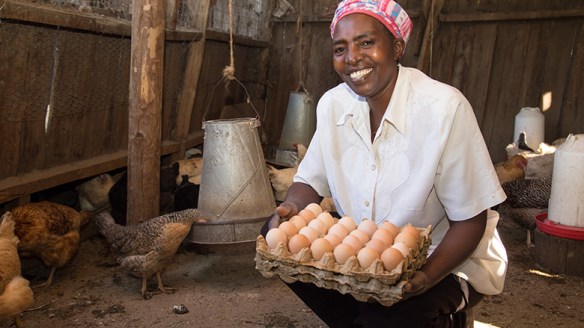
- The Kenya Agricultural Productivity and Agribusiness Project supports smallholder farmers through new technologies, improved market access and climate-smart agriculture approaches.
- More than 75% of Kenyans make a living in agriculture.
- Poultry is recognized for being among the “greenest” meats, using up less resources and emitting less greenhouse gases than larger livestock.


You must be logged in to post a comment.