

Agriculture is at the heart of addressing poverty in Africa. I was reminded of that during my recent trip to Addis Ababa, Ethiopia, where different stakeholders had gathered to explore how to transform smallholder agriculture for growth. The recent End Poverty Day activities in Africa, which focused largely on agriculture, was also a reminder of how central the sector is to ending poverty and boosting prosperity. Indeed, the different stakeholders I work with on a daily basis—which includes African governments, development partners, civil societies, the private sector and farmers—all agree: Agriculture is important to the future of Africa.
Tag Archives: World Bank Group
Revisiting Economic Geography

- Live Stream: Click here
- Location: MC 13-121, World Bank Main Complex
- CONTACT: Tourya Tourougui
- ttourougui@worldbank.org
Place is one of the most important determinants of welfare. Simply by moving from the countryside to the city, or from a poor to a rich country, a person can greatly increase returns to labor or access to services. Yet, the study of the role of place in development was long neglected in mainstream economics. This changed significantly over the last 15 years or so and in 2009 spatial issues in development became the topic of the World Development Report Reshaping Economic Geography.
Global Community Makes Record $75 Billion Commitment to End Extreme Poverty
Targets fragility, refugees, climate change and other pressing challenges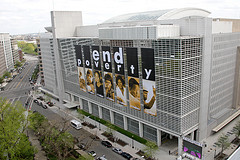
YOGYAKARTA, INDONESIA, December 15, 2016— A coalition of more than 60 donor and borrower governments agreed today to ratchet up the fight against extreme poverty with a record $75 billion commitment for the International Development Association (IDA), the World Bank’s fund for the poorest countries.
“This is a pivotal step in the movement to end extreme poverty,” World Bank Group President Jim Yong Kim said. “The commitments made by our partners, combined with IDA’s innovations to crowd in the private sector and raise funds from capital markets, will transform the development trajectory of the world’s poorest countries. We are grateful for our partners’ trust in IDA’s ability to deliver results.”
Can you crowdsource water quality data?
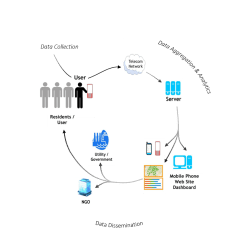
The recently released Contextual Framework for Crowdsourcing Water Quality Data lays out a strategy for citizen engagement in decentralized water quality monitoring, enabled by the “mobile revolution.”
According to the WHO, 1.8 billion people lack access to safe drinking water worldwide. Poor source water quality, non-existent or insufficient treatment, and defects in water distribution systems and storage mean these consumers use water that often doesn’t meet the WHO’s Guidelines for Drinking Water Quality.
Is climate-smart gender-smart?
Climate-smart agriculture (CSA) can help make the food system more sustainable in a changing climate. But does it come at a cost to women,  in terms of a heavier workload?
Climate-smart agriculture’s three pillars: improved agricultural productivity, increased adaptation to climate change and reduction of greenhouse gases are goals well worthy of targeting. On the one hand, CSA practices such as water harvesting or planting trees that provide more accessible fuel, fodder and food can save women’s time. On the other hand, some practices such as increased weeding or mulch spreading can require women to spend more time in the field.
eC2:Photovoltaic Water Pumping Project
Deadline: 29-Dec-2016 at 11:59:59 PM (Eastern Time – Washington D.C.)
The project seeks to facilitate the gradual retrofitting/replacement of existing diesel generators for water pumping with solar power. The financing mechanism will consist of a blended financing approach where 50% of the investment in PVP by Community Owned Water Supply Organizations (COWSOs) will be covered by a grant and the remaining 50% covered through a loan from TIB Development Bank. COWSOs will repay the loan through monthly installments via a mobile money payment modality. COWSOs are generally unfamiliar with PVP technology and are not accustomed to receiving and servicing loans. For the Project to succeed, careful COWSO sensitization, training and follow-up is required.
Continue reading
Tackling the vital challenge of financing the world’s water infrastructure needs
We cannot talk about water and Sustainable Development Goal (SDG) 6 without also looking at everything that depends on it: from climate, food and electricity to families, farms and ecosystems. It is thus quite simple, if we don’t get it right on water, then we will not succeed in achieving the other SDGs either.
either.Attention eC2 Users

A major system upgrade to the eConsultant2 system will take place from December 15-19, 2016.
eC2:Qualitative Assessment of characteristics, constraints and potential interventions to household enterprises in Tanzania
Deadline: 26-Dec-2016 at 11:59:59 PM (Eastern Time – Washington D.C.)
The assignment to be conducted by the Firm will include the following activities:
i) Identifying the final sample of participants.
ii) Piloting and Implementing the Qualitative Tool (QT).
iii) Monitoring implementation and quality control.
iv) Preparation of supporting documentation and databases.
v) Conducting data analysis and compilation of a final report
Can a Nation Build its Future if it Cannot Feed its Children? Five Policy Actions to Transform Crop and Livestock Farming in Mali
Article published on http://www.worldbank.org on December 9, 2016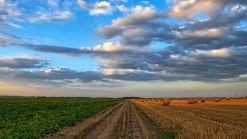
STORY HIGHLIGHTS
- Mali has one of the highest rates of acute malnutrition in West Africa.
- With 40 million hectares of arable land, the largest irrigation capacity in the Sahelian region (560,000 hectares), and 300 days of sunshine a year, Mali should leverage the agricultural sector to roll back malnutrition and poverty.
- New agricultural development policies would prepare the country for the foreseeable impacts of climate change on livestock and crop productivity.


You must be logged in to post a comment.