
Deadline: 07-Oct-2019 at 11:59:59 PM (Eastern Time – Washington D.C.) 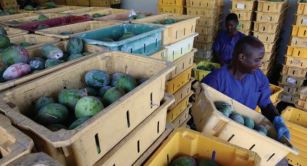
Climate Smart Agriculture (CSA) is an approach aimed at increasing farm productivity sustainably, taking into consideration climate change concerns and impacts. More specifically, the World Bank defines Climate-Smart Agriculture as an approach to managing landscapescropland, livestock, forests and fisheriesthat aims to achieve three wins: (1) Increased productivity to improve food security and boost farmers incomes; (2) Enhanced resilience to drought, pests, disease and other shocks; (3) Reduced GHG emissions. IFCs Strategy is to contribute to CSA by providing investments and advisory operations that contribute to the three pillars of CSA. To adopt climate-smart agricultural practices, farmers need access to sufficient and adequate finance and skills to rightly use finance. In line with the aforementioned, IFC is looking for a consulting firm to conduct agricultural supply chain mapping and market studies of CSA technologies and practices to support financial institutions to increase lending for CSA in three target countries.


 automatic translators or the use of predictive learning analytics have in common? All of them are components of a ‘data-driven education’.
 the difference and why are you yelling about it here?” You have a point – let me explain…
 the World Health Organization (WHO) estimates, some 1.35 million people lose their lives on the road
  globe, Delhi recorded its hottest day at 48°C on June 10.
 Energy en Climate-Smart Energy solutions? Ga dan mee naar de Business Opportunities Fair op 29-31 oktober in Washington D.C.
 Internet, and 90 percent of all people are covered by at least basic data services. Some countries have very high levels of internet usage; the members of the Organisation of Economic Cooperation and Development (OECD), a group of advanced economies, have 84 percent individuals using the internet. Some countries, such as Iceland or South Korea, count almost everyone as users. But what of the rest of the world? What holds back about half of the world’s population from using the internet?

You must be logged in to post a comment.