
Have you noticed the large number of digital trails that are left behind in your browser  and social media? Have you ever received an offer for a product or service that you were just thinking of? A friend of mine was researching about a critical illness and looking for insurance plans on the internet at the same time, and she started receiving ads to secure “the right spot” in a graveyard! Continue reading
Tag Archives: World Bank Group
Making farmers better off by tackling the whole of the value chain
There are a fair number of interventions out there that work with an entire value chain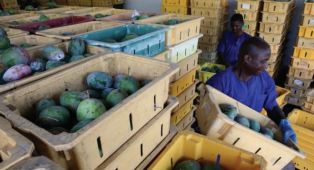 with a set of interventions. The first (and second) time I was asked to evaluate one of these, my response was how hard, even impossible, it might be. I have since been enlightened, first with David’s post on Monday and also from reading an exciting new paper by Macchiavello and Miquel-Florensa.
Turning fecal sludge into a resource: New approaches required to achieve the rural sanitation SDGs
Safely managed sanitation is a focus of the Sustainable Development Goals (SDGs). It is  central to stunting reduction and early childhood survival, both identified by the World Bank’s Human Capital Index as critical for humans to develop their full potential. It is widely known that 4.5 billion people lacked access to safely managed sanitation in 2015, according to the Joint Monitoring Programme. Less well understood is that hundreds of millions more people in densely populated rural areas are exposed to significant health risk due to unsafely managed sanitation.
eC2: Improved Renewable Energy Integration and Electricity Services through Battery Storage in Distribution Network – TPDDL
Deadline: 25-Sep-2019 at 11:59:59 PM (Eastern Time – Washington D.C.)

Battery electric storage systems (BESS) are increasingly being used for power system applications such as grid stabilization, load shifting, grid operational support, power quality improvement, reliability management and enhancing rooftop solar hosting capability. The BESSs could also perform an important role in providing arbitrage and increasing the value of renewable energy resources. The benefits that electric storage systems bring in are, namely: electric energy time shift or energy arbitrage, frequency regulation, voltage and reactive power support, Peak /congestion management, Technical loss reduction and asset life enhancement, distribution upgrade deferral, spinning, non-spinning, and supplemental (black start) reserves, power quality improvement, power reliability improvement and demand charge management. BESS systems at the distribution level may displace diesel gensets which commonly backstop system reliability.
Food 4 All Partnership review presentation
Wijnand van Ijssel became a secondant at the World Bank Group after 10 years at the Ministry of Foreign Affairs in The Hague in 2016 for a period of 3 years to h elp lead the Food 4 All Partnership initiative between the Netherlands and the World Bank Group, this article shares the most important outcomes from his placement period.
Rethinking Energy Sector Reforms in a Power Hungry World
STORY HIGHLIGHTS

- Rethinking Power Sector Reform is a multiyear initiative to refresh the policy debate in the power sector by presenting a comprehensive picture of the reform experiences in developing countries since the 1990s
- Reflecting on these findings and how recent technological trends are disrupting the sector and sparking the need for new strategies, the report points to major policy implications for the future.
Health Technology and the World Bank Group
On October 11, at the Human Capital Summit 2018 Philips CEO Frans van Houten co- signed an open letter, to the world community highlighting the need for greater investment in human capital – the knowledge, skills, and health that people accumulate throughout their lives – through better nutrition, health care, education, jobs and skills. The publication of the open letter coincided with the launch of the World Bank Group’s Human Capital Index – a simple but effective metric for human capital outcomes such as child survival, early hard wiring of children for success, student learning, and adult health. Philips has made a commitment to improve the lives of 3 billion people by 2030. We are working with the World Bank Group (among others) to reach this goal.
eC2: Market Study for Thailand: Private-Sector Plastics Circularity Opportunities
Deadline: 25-Sep-2019 at 11:59:59 PM (Eastern Time – Washington D.C.) 
Engage with targeted plastic value chains and private sector players in Thailand and understand the market drivers and challenges in scaling up circular economy approaches; Review local regulations and benchmark with applicable best practices to identify opportunities as well as gaps that could be limiting broader adoption of plastics circularity; Define the current state-of-play for the local waste plastics recycling industry, including demand and supply volumes, market opportunity, and growth drivers and constraints; and Summarize key findings based on the private-sector focused plastic value chain and recycling market analysis and recommend priority actions.
This in-depth study should analyse current and near-term market opportunities and challenges for private-sector participation in Thailand based on a combination of market analytics, scenario analyses, and reasonable assumptions to address key data gaps.
eC2: Creating an Enabling Environment for Private Sector Investment in Agriculture and Aquaculture in the Mekong Delta
Deadline: 23-Sep-2019 at 11:59:59 PM (Eastern Time – Washington D.C.) 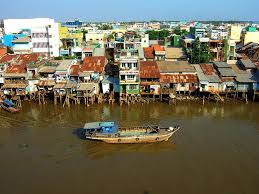
The aim is to assist with informing efforts to promote greater private sector investment in the Mekong Delta region. The work includes: A: SCOPING:
i. Classifying the domestic private firms operating in the Mekong Delta;
ii. Conduct rapid review of ongoing support for the different groups of domestic private firms; iii. Identify three global value chains (GVCs) that domestic firms could link with;
B. SITUATION ASSESSMENT
Conduct a situation assessment of: i. Opportunities / challenges for the different segments of domestic firms independent of GVCs; ii. Opportunities / challenges for the relevant segments of domestic firms if they aim to join one or more of the three GVCs and rank these; iii. Map opportunities/challenges faced by domestic firms (independent of GVCs) and to join the three GVCs and existing support (domestic and international).
C: PATHWAY FOR STRENGTHENING LINKAGES ACROSS SEGMENTS OF THE VALUE CHAIN D: ROADMAP FOR AN ENABLING ENVIRONMENT (CENTRAL & PROVINCE)
Making infrastructure work for both women and men
Despite decades of progress, the global infrastructure gap is still significant: around  940m people live without electricity, 2.2bn lack safely managed water, 4.2bn lack safely managed sanitation facilities and 1bn live more than 2 km away from an all-season road.
This gap has a different meaning for women: infrastructure is not gender-neutral. For instance, it is well documented that women are responsible for obtaining water for domestic use in most countries, which has a big impact on how they spend their time. In Niger, the average time women and girls spend fetching water adds up to 13 days a year.


You must be logged in to post a comment.