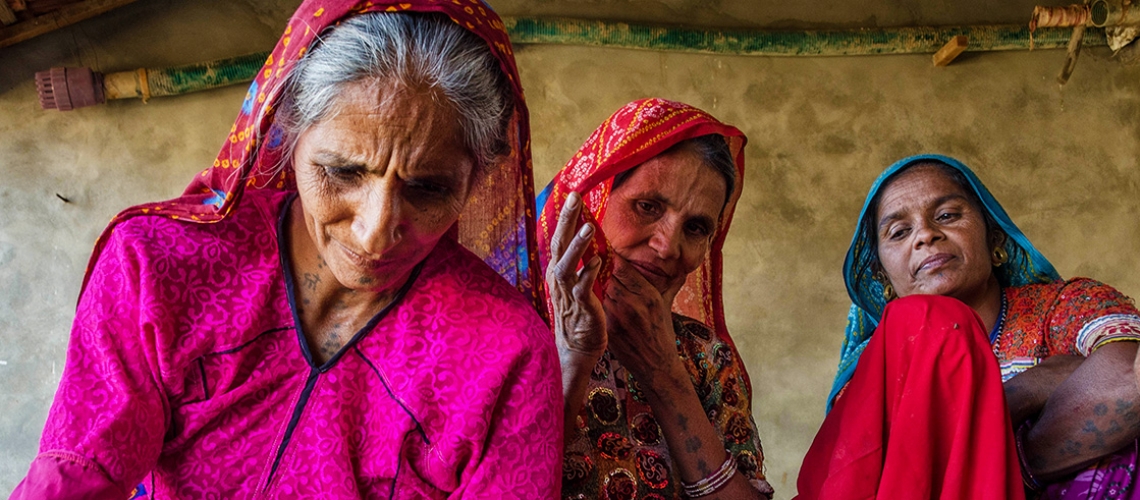
Economic inclusion programs: A springboard out of extreme poverty


As the world grapples with the pandemic, the new State of Economic Inclusion peileaderreport points to paths out of poverty for the poorest and most vulnerable.

For the first time in two decades, extreme poverty is rising around the world, as COVID-19 threatens to erode years of hard-won progress.   The World Bank estimates that the economic fallout from the pandemic may add as many as 150 million extreme poor by 2021. Women, children, displaced populations, and people with disabilities have been particularly hard hit.

Continue reading

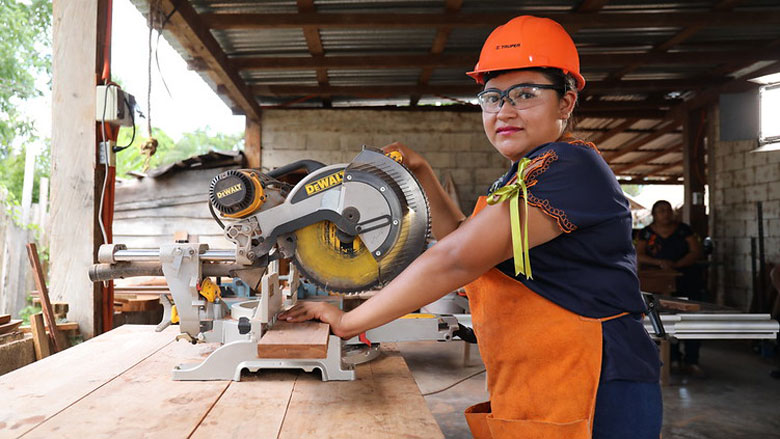
How to use technology to help teachers be better and to make life better for teachers

Teachers matter enormously to student learning. Teachers deliver academic knowledge. d_evans_blogTeachers impart model socioemotional skills. Good teachers boost students’ long-term life outcomes. Teachers can inspire (and in another demonstration of their importance, in some cases, sadly, teachers can disappoint or even abuse). 

Continue reading

The COVID-19 pandemic has reinforced gender inequalities around the world

 
COVID-19 has seriously impacted the global progress towards gender equality, with women around the world continuing to face laws and restrictions that hinder their economic opportunity, according to the latest Women, Business and the Law 2021. Reforming laws toward gender equality must be a priority as governments look to recover from COVID-19.
 
WBL21

Website | Report | Video | Blog

eC2: Electric Vehicles demand mapping in Indonesia

Deadline:  08-Mar-2021 at 11:59:59 PM (Eastern Time – Washington D.C.) index

  • Preliminary Description of Tasks:
  • The Consultant is expected to carry out the following activities:
  • Module 1: Market assessment and demand mapping for various forms of electric vehicles
  • Module 2: Batteries Demand Mapping & Assessment
  • Module 3: Charging infrastructure assessment
  • Module 4: Regulatory and incentive mapping
  • Module 5: Financing and business models
  • Module 6: Roadmap / Action Plan including Legal, Regulatory, policy, Institutional, Procedural and Recommendations
  • Module 7: Identification of e-mobility Investment Opportunities for IFC in Indonesia

Continue reading

India: Rural women go digital to manage the pandemic’s disruptions


Muskanben Vohara and her group of women weavers in Gujarat’s Anand district were women-artisans-members-from-barara-village-of-patan-districts-doing-traditional-painting-on-cloth-to-prepare-for-embroidery-for-sewa-hansiba-product._overcome with worry when the lockdown was announced to contain the Covid-19 pandemic.
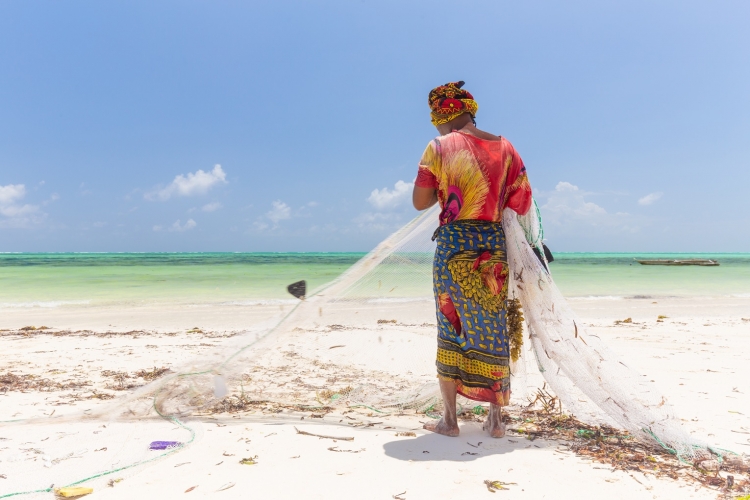
eC2: PROBLUE Project Coordinator for Cabo Verde

Deadline: 08-Mar-2021 at 11:59:59 PM (Eastern Time – Washington D.C.) blue_recovery_world_bank_environment

Task 1: Support the WBG team on the development and coordination of the PROBLUE project. The consultant should provide on-the-ground support, project coordination, and logistics for the WB team. This should cover elements related but not limited to organization of meetings, outreach, communication with stakeholders, as well as providing with local knowledge. Specifically, the consultant will: Serve as the WBG main focal point vis-à-vis the Ministry the Tourism and Transport and the private sector.
Act as a liaison to help set up meetings and ensure smooth conduct of meetings (
Ensure flow of information and documents between counterparts.

Continue reading

Tracking an Unprecedented Year for Businesses, Everywhere


STORY HIGHLIGHTS

Woman worker in leather goods factory in Bogota, Colombia

Woman worker in leather goods factory in Bogota, Colombia

  • Nearly every business in the world has been affected by COVID-19—in different ways. While one-fourth of companies saw sales falling 50 percent in October-January from pre-pandemic levels, a third said their sales increased or stayed the same.
  • To capture the impact of the pandemic on firms’ performance, the World Bank launched ongoing surveys with more than 120,000 firms in over 60 countries. The assessment is expected to help inform recovery efforts.
  • Developing countries have introduced multiple support programs, but businesses most affected by the shock—small firms and those in poorer countries—were the least likely to receive government support.

Continue reading

eC2: Impacts of Natural Disasters on the Agro-Sylvo-Pastoral and Fisheries Sectors in Central Africa

Deadline:    01-Mar-2021 at 11:59:59 PM (Eastern Time – Washington D.C.) index

1. Develop a diagnosis on damage and losses caused by natural disasters in agro-sylvo-pastoral and fisheries/aquaculture sectors of ECCAS Member States since 2010. This report should present on one hand types of damages and losses per types of natural hazards and highlight on the other hand the relative importance of products by value (export vs food security), and finally how the sectors (agriculture and fisheries/aquaculture) provided access to food and livelihoods during and after the disasters. This task will be undertaken thru a desk review and consultative interviews/ survey of the agriculture/fisheries and aquaculture and disaster risk management Focal Points of the Member States.
2. Prepare a guide on national and international existing mechanisms such as climate smart agriculture practices etc, based on good practices, to strengthen and build the livelihoods of rural populations affected by natural disasters in Member States.
3. Identify agro-sylvo-pastoral and fisheries/aquaculture sectors specific needs for hydrometeorological (Hydromet) services to build resilience and capacity to reduce the effects of natural disasters. This task will be completed by consultative interviews/ survey of the agriculture/fisheries and aquaculture focal points.
4. Based on the diagnosis, on identified mechanisms and sectoral Hydromet needs, propose recommendations for a resilient agriculture and building the livelihoods of rural populations affected by natural disasters in ECCAS region.

Continue reading

Matching climate change ambition with collective action

Despite contributing the least to the climate crisis, Sub-Saharan Africa, home to over 1 billion matching-climate-change-ambition-collective-action-1140x500people, continues to suffer some of the worst consequences of a changing climate. In 2019, we saw the catastrophic impacts of Cyclone Idai on millions of people in Mozambique, Zimbabwe, and Malawi, and in 2020, locusts caused widespread food insecurity in the amidst of a global pandemic.

Continue reading

Recap: The impact of the pandemic on woman and girls.


Evidence from outbreaks similar to COVID-19 indicates that women and girls can be affected in particular ways, and in some areas, face more negative impacts than men. In fact, there is a risk that gender gaps could widen during and after the pandemic and that gains in women’s and girls’ accumulation of human capital, economic empowerment and voice and agency, built over the past decades, could be reversed. The World Bank Group is working to ensure that projects responding to COVID-19 consider the pandemic’s different impacts on men and women.