
Flooding is one of the most common and severe hazards disrupting people’s lives and 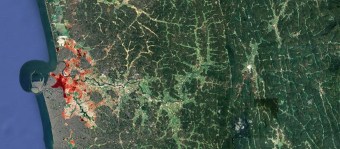 livelihoods around the world. Floods often cause unmitigated damage and suffering, especially in lower income countries where infrastructure systems – including drainage and flood protection – tend to be less developed. While countries at all levels of development face flood risk, the vast majority of the world’s flood exposed people – 89% – live in low- and middle- income countries. Critically, it is not only major, more infrequent floods, but also smaller, frequent events that can reverse years of progress in poverty reduction and development.
Tag Archives: Wereldbank Groep
Firms struggle to stay afloat after losing half of sales, but still keep workers
Firms and workers in every part of the world have been affected by the COVID-19 shock. The  ILO estimates global labor income has declined nearly 11% or US$3.5 trillion in the first three quarters of 2020. As a result of income losses, our colleagues in the World Bank estimate that as many as 150 million people could be pushed into extreme poverty by 2021. Without timely assistance and swift policy action, otherwise healthy firms will be shuttered permanently, and people will suffer longer.
eC2: Consultancy to Undertake a Proof of Concept Work on Business Service Hubs for Climate Smart Dairy Farming in Oromia Forest Landscape Project (OFLP) Areas
Deadline: 07-Dec-2020 at 11:59:59 PM (Eastern Time – Washington D.C.)
The objective of this project is to pilot the 3 business cases that are part of the climate-smart dairy hub model and provide evidence of the economic and environmental viability with participation of the private sector, including a strategy for further acceleration and scaling.
November 9, 2020 update: My Op-Ed and engagements from last week
I would like to briefly highlight some of my writing and engagements from last week:
Op-Ed: To Cope With Covid, the World’s Poor Need Debt Relief
In last week’s Wall Street Journal, I published an op-ed urging greater transparency and timely and meaningful debt relief for the people of the world’s poorest countries. These are immediate, critical needs as countries work to recover from the global pandemic, and we can no longer afford to kick the debt can down the road – developing countries need relief now.
It’s going to be a long painful ride. #InThisTogether
Instead of a sharp decline in 2020 followed by an increase in 2021 that we predicted in April, 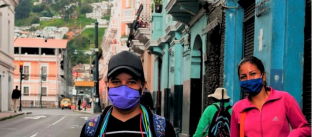 we are now looking at a much more gradual fall extending into 2021. By the end of 2021, we expect remittances to fall by about 14% compared to the pre-Covid-19 record levels of 2019.
Reversing Setbacks to Poverty Reduction Requires Nations to Work Together for a Resilient Recovery
17-year-old M’Balu Tucker was poor even before the pandemic. She lives in Sierra Leone, a 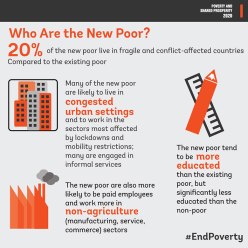 post-conflict country, in a village with only one primary school and a single water tap, not enough to serve all the residents. There is no electricity and the roads are unpaved.
post-conflict country, in a village with only one primary school and a single water tap, not enough to serve all the residents. There is no electricity and the roads are unpaved.She dreams of furthering her education, moving to the city, and someday working in a bank, so that she can help her family, her village, and her country. But her parents, who are farm workers, sometimes don’t have the money to pay her school fees without taking out a loan.
Tackling poor air quality: Lessons from three cities
How can countries grow their economies and keep air pollution in check at the same time? A  new World Bank report explores that tricky question, looking at the kinds of policies and actions three leading cities have taken to tackle poor local air quality, providing lessons for other cities. As we mark World Cities Day on October 31, this research seems more timely than ever.
Annual Meeting 2020: Closing Digital Divide
Six strategies to increase young women’s access to digital jobs
The digital economy can create new job opportunities for young women and help address the persistent gender disparity in the labor market.
Jobs involving remote, online, flexible work can help young women overcome mobility constraints, challenge restrictive gender norms, and reduce longstanding occupational segregation in traditionally male-dominated industries. However, , and also move up to higher skilled and higher paying digital jobs over time.
eC2: Consultancy: Implementation of Public-Private Water Efficiency Initiatives in the South African Agri-Processing Sector
Deadline: 16-Nov-2020 at 11:59:59 PM (Eastern Time – Washington D.C.) 
Water scarcity, greater water demand and changing water supplies due to climate change are severely affecting large parts of Southern Africa, including South Africa, posing a significant risk to the region. In 2019, IFC and the Swiss State Secretariat for Economic Affairs (SECO), launched the Agri-Processing Resource Efficiency (APRE) programme to address this challenge. The programme aims to assist the agri-processing sector in South Africa to improve sustainability and competitiveness, emphasising reductions in water use, along with related reductions in energy and fuel. The objective of this assignment is to continue the development and implementation of the APRE policy and regulatory work with local authorities and user groups in the three localities. The consultant will be required to manage partnerships with key stakeholders related to the promotion of water-use efficiency measures with a public-private sector focus.
 Netherlands for the World Bank
You must be logged in to post a comment.