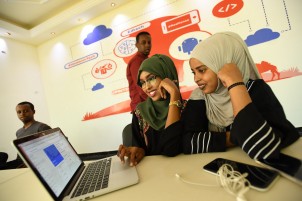
eC2: Developing a Unitary Human Resources Management System within the Public Administration in Romania

untitled

Deadline: 18-Jun-2018 at 11:59:59 PM (Eastern Time – Washington D.C.)

As part of the baseline diagnostic exercise and initial stakeholder exercise, a survey will be conducted with the aim of examining factors that influence HRM, and the attitudes and experiences of employees. In particular, the survey will focus on issues that are priority areas of reform for the government (e.g. the recruitment process, competencies, and performance management). The data collected through the survey will allow to investigate the main HRM issues that the public administration is currently facing through quantitative and qualitative analyses.

Continue reading

Building safer, more inclusive, and more resilient cities

Cities are where most people live and most economic activity takes place. Cities bring opportunities, but not equally for all residents. A lack of access, rights, and opportunities for people within cities undermines the positive role cities can play. 


Continue reading

Brenden Jongman: Young Professional – Disaster Risk Management

BrendenWhat is your role within the World Bank?

I work in the field of disaster risk management. Global economic losses from disasters such as floods, cyclones, droughts and earthquakes exceeded US$300 billion in 2017, which made this the most costly year on record. The poorest people are often hit hardest by such events, because they often live in low-lying areas in less robust housing, and have limited capacity to recover from financial shocks. The Disaster Risk Management practice in the World Bank aims at reducing the impacts of disasters on poor and vulnerable people around the world. We assist countries in disaster risk reduction (such as dikes, drainage, land-use planning and earthquake-resistant building construction), response and recovery after events, and financial solutions to help buffer the economic impact. I work in the Africa regional team, mainly focusing on Madagascar, Mozambique and the Seychelles. In Madagascar, for example, we are working with the Government to reduce flood risk and improve urban living conditions in the nation’s capital.

Continue reading

Call to join the Young Professionals Program (YPP)

WebThe application for the 2019 Selection Process for the Young Professionals Program will be open from June 14 to July 31, 2018 (midnight EST).

Check out the Facebook Live: Q&A with World Bank Young Professionals Program for useful tips and information.

Eligibility – Program Features – Selection Cycle – Application Process

The Young Professionals Program (YPP) is a starting point for an exciting career at the World Bank Group.

Continue reading

2018: New Procurement Framework Deep-Dive

i-love-procurement2On April 18th, 2018 the World Bank Group organized an all day deep dive on procurement for the PSLO’s at the Embassies. The World Bank Procurement Team highlighted the changes in the procurement framework and adressed different topics as Selection Methods for Goods, Works and Non-Consulting Services, Complaints Handling, and Standard Procurement Documents.

Continue reading

Smart Cities MoU between The Institute for Future of Living and World Bank

The Institute for Future of Living (previously GSC3) signed a partnership agreement with the World Bank in India on May 24, 2018. The goal of this partnership is to create a strong partnership to support global Smart City development in conjunction with implementing the Sustainable Development Goals of the United Nations. The agreement will become activated in the coming months in close collaboration with Dutch businesses and government.

Please see the video with Prime Minister of The Netherlands Mark Rutte.

Continue reading

When (and when not) to use PPPs

highway-2211588_1280In the context of strained public finances and limited borrowing capacity for developing countries, there is growing debate on the roles of public and private actors to deliver the trillions of dollars of infrastructure necessary to achieve the Sustainable Development Goals (SDGs). On one hand, high-profile public-private partnership (PPP) project failures have cast doubt about the viability of the model. On the other hand, while public authorities are ultimately responsible for the delivery of public services, deficient infrastructure services in some countries have raised concerns about the ability of the public sector to deliver on its own.

Continue reading

Unrealized Potential: The High Cost of Gender Inequality in Earnings

gender-embargo-report_530Unrealized Potential: The High Cost of Gender Inequality in Earnings is the first in a series of reports that aim to measure the global economic costs of gender inequality. This first report measures these losses in lifetime earnings.

In many countries, girls’ average educational attainment remains lower than boys and adult women are less literate than men. Apart from these gender gaps in educational attainment, discrimination and social norms shape the terms of female labor force participation. Women are less likely than men to join the labor force and to work for pay. When they do, they are more likely to work part-time, in the informal sector, or in occupations that have lower pay. These disadvantages translate into substantial gender gaps in earnings, which in turn decrease women’s bargaining power and voice.

Continue reading

eC2: Project Officer: Empowering Women in the Private Sector

Deadline:  20-Jun-2018 at 11:59:59 PM (Eastern Time – Washington D.C.) Senegal-Woman-at-Well-800

The objective of this assignment is to provide on-the-ground coordination and implementation support for IFCs gender team to ensure Project activities are delivered in a timely manner and objectives are achieved. The appointment is for an initial probationary period of 60 working days. It is expected that upon satisfactory completion of the probation period the contract will be extended up to 150 days per year upon agreement between IFC and the Project Officer. The position can be filled on a part-time (3 days per week or shorter work hours 5 days per week) basis.

Continue reading

The 2018 Atlas of Sustainable Development Goals: an all-new visual guide to data and development

sdg-atlas-2018-cover-400px“The World Bank is one of the world’s largest producers of development data and research. But our responsibility does not stop with making these global public goods available; we need to make them understandable to a general audience.

When both the public and policy makers share an evidence-based view of the world, real advances in social and economic development, such as achieving the Sustainable Development Goals (SDGs), become possible.” – Shanta Devarajan

We’re pleased to release the 2018 Atlas of Sustainable Development Goals. With over 180 maps and charts, the new publication shows the progress societies are making towards the 17 SDGs.

Continue reading