Interested in Doing Business with the World Bank Group? Please see selected opportunities below.
Procurement Framework and Regulations for Projects After July 1, 2016 (worldbank.org)

Interested in Doing Business with the World Bank Group? Please see selected opportunities below.
Procurement Framework and Regulations for Projects After July 1, 2016 (worldbank.org)
Interested in Doing Business with the World Bank Group? Please see selected opportunities below.
Procurement Framework and Regulations for Projects After July 1, 2016 (worldbank.org)
Deadline: 25-Apr-2022 at 11:59:59 PM (Eastern Time – Washington D.C.)
The main objective of this assignment is to develop a national and transboundary water resilient strategy for Botswana. This study will quantitatively assess the climate change risks of water resources management and development alternatives vis-à-vis other identified risks unrelated to such change. The study will include a roadmap for a phased adaptation leading to increased multi-dimensional resilience of the Botswana water resources system using Decision-Making Under Uncertainty Methodologies (DMDU). The assessment will evaluate tradeoffs across in-country water management and services investments as well as the three transboundary options (Chobe-Zambezi transfer, Lesotho-Botswana transfer, and desalination from Namibia). See detailed file with request for expression of interest.
Water is the most essential human need and is critical for development, growth, and resilience. Clean water, safe sanitation, and good hygiene are necessary for achieving positive health outcomes.
Yet one-quarter of the world’s population – 2 billion people – lack safe drinking water and half – 3.6 billion people – lack safe sanitation.
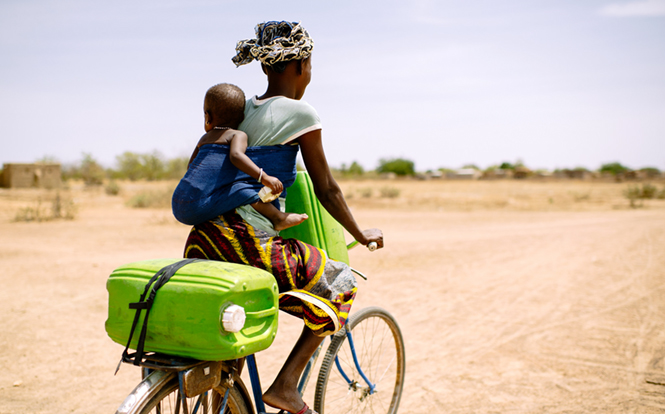
President Sall, Presidents, Distinguished Guests, Honorary Speakers, Friends,
Thank you for inviting me to speak at the opening of this year’s World Water Forum. This is a timely and historic event—the first time this forum has met in sub-Saharan Africa.
Thank you to the organizers for focusing this year’s Forum on Water Security for Peace and Development. Now more than ever, the world needs more peace and more development.
The recent trends for both these imperatives are disheartening.
*This piece was originally published by the Financial Times as part of its Partner Content.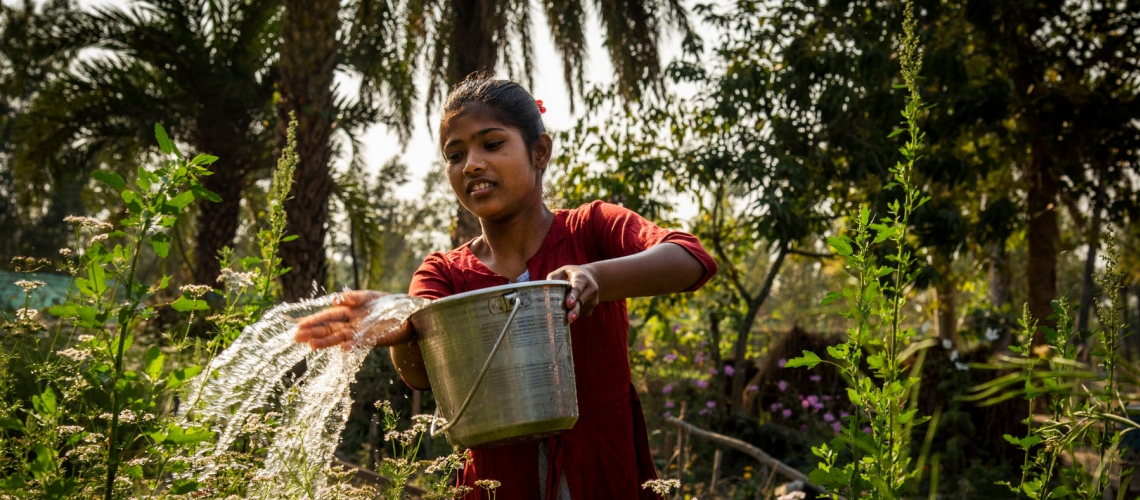
Investing in universal access to water, sanitation and hygiene could yield massive economic gains over the next two decades – but mobilizing finance is not easy
Global leaders seeking a way to rebuild battered economies could hold the key to prosperity in their bathrooms. Among the many infrastructure investments that could help create prosperity in the years to come, one of the most potent – and overlooked – is universal access to taps and toilets. Research by Vivid Economics for international NGO WaterAid has shown that each dollar invested in water, sanitation and hygiene (WASH) could generate up to a $21 return. The analysis showed that giving every home a toilet connected to a safely managed sewerage or off-mains system could generate $86bn in wealth a year.
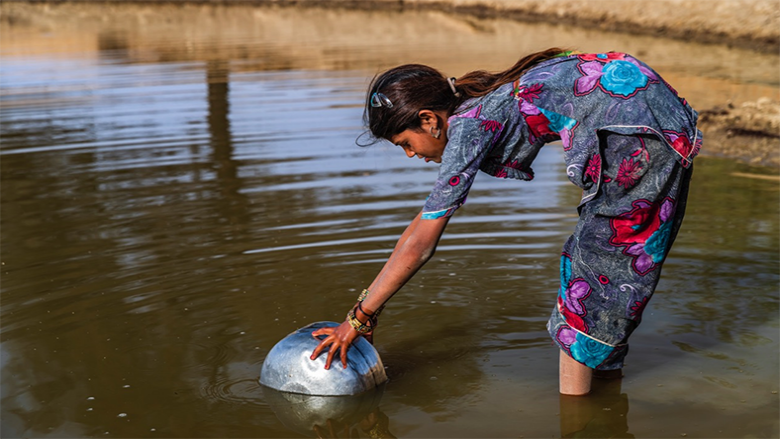 water crisis, the relentless increase in the movement of people around the world requires a considered response to turn crisis into opportunity.
What makes us move
There are more than 1 billion migrants in the world today – and water deficits are linked to 10% of the rise in global migration. The World Bank’s just-released flagship publication on water shows that it is a lack of water, rather than too much, that has a greater impact on migration.
Deadline: 10-Feb-2021 at 11:59:59 PM (Eastern Time – Washington D.C.) 
IFC is seeking a firm or a consortium of firms (‘the Consultant”) to identify and assess potential waste sector opportunities in both the near and medium-term for IFC and private sector financing in Morocco, Egypt and Jordan.
As such, the Consultant is expected to conduct:
(1) A review of the institutional and regulatory frameworks in Morocco, Egypt and Jordan for possible private sector involvement and subnational financing in the waste sector;
(2) A market assessment that includes a mapping of existing and future solid waste projects in Morocco, Egypt and Jordan; and
(3) A preliminary review (including technical and commercial criteria) of selected projects.
The WACA Call for Innovation Demo Day and Award Ceremony were hosted by the World  Bank on 17 and 18 November 2020. It featured presentations of the five shortlisted competitors pitching their proposals. Among the top three winners were two Dutch consortia which included NWP members HKV, IHE Delft, Witteveen+Bos, CDR International, Boskalis and Wetlands International.
 Netherlands for the World Bank
You must be logged in to post a comment.