

Agriculture is at the heart of addressing poverty in Africa. I was reminded of that during my recent trip to Addis Ababa, Ethiopia, where different stakeholders had gathered to explore how to transform smallholder agriculture for growth. The recent End Poverty Day activities in Africa, which focused largely on agriculture, was also a reminder of how central the sector is to ending poverty and boosting prosperity. Indeed, the different stakeholders I work with on a daily basis—which includes African governments, development partners, civil societies, the private sector and farmers—all agree: Agriculture is important to the future of Africa.
Tag Archives: Topsector Agrifood
Is climate-smart gender-smart?
Climate-smart agriculture (CSA) can help make the food system more sustainable in a changing climate. But does it come at a cost to women,  in terms of a heavier workload?
Climate-smart agriculture’s three pillars: improved agricultural productivity, increased adaptation to climate change and reduction of greenhouse gases are goals well worthy of targeting. On the one hand, CSA practices such as water harvesting or planting trees that provide more accessible fuel, fodder and food can save women’s time. On the other hand, some practices such as increased weeding or mulch spreading can require women to spend more time in the field.
Can a Nation Build its Future if it Cannot Feed its Children? Five Policy Actions to Transform Crop and Livestock Farming in Mali
Article published on http://www.worldbank.org on December 9, 2016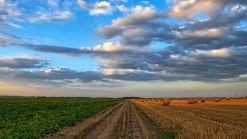
STORY HIGHLIGHTS
- Mali has one of the highest rates of acute malnutrition in West Africa.
- With 40 million hectares of arable land, the largest irrigation capacity in the Sahelian region (560,000 hectares), and 300 days of sunshine a year, Mali should leverage the agricultural sector to roll back malnutrition and poverty.
- New agricultural development policies would prepare the country for the foreseeable impacts of climate change on livestock and crop productivity.
KENYA’S TEA FARMERS TASTE THE BENEFITS OF HYDROPOWER
Kenya’s tropical climate and volcanic red soil make it an ideal place to cultivate tea. That’s why, for over a century, tea has been a major cash crop and the leading foreign exchange earner for the country.
Investments in new technology can’t make Kenyan tea any tastier, but they can help boost production and farmers’ earnings—and these are the goals of a recent IFC investment to finance small hydropower plants along rivers close to growing areas.
eC2: Capacity Need Assessment for Improving Statistics for Sustainable Agriculture in Kenya and Uganda
Deadline: 13-Dec-2016 at 11:59:59 PM (Eastern Time – Washington D.C.)
The objective of the assignment is to assess the capacity and infrastructure needs for improving the production quality and dissemination of agricultural statistics to inform policy makers and the private sector for agricultural transformation in Kenya.
eC2: Design of strategies to create clusters of economic activity around key Eastern Indonesian primary agriculture products
Deadline: 30-Nov-2016 at 11:59:59 PM (Eastern Time – Washington D.C.)
The objective is to assess how logistical costs and bottlenecks constrain the development 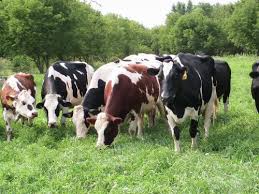 and performance of high value/value adding agro-food value chains in Eastern Indonesia and recommend reforms, investments, capacity building and other measures to increase the competitiveness of those value chains, increase production and finally improve the associated livelihoods in otherwise lagging regions. It is to a large extent about creating sufficient volumes for logistics to work with a focus on short and medium term actions that need to be undertaken to reduce logistics costs for selected products in reaching domestic and/or international markets and stimulate increased production. Continue reading
eC2: ENHANCING WOMENS MARKET ACCESS IN AGRIBUSINESS IN MOZAMBIQUE
Deadline: 30-Nov-2016 at 11:59:59 PM (Eastern Time – Washington D.C.)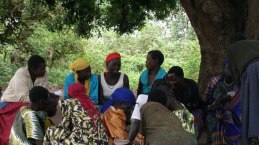
Agriculture is the major source of income for rural households in Mozambique (province of Tete). Market orientation however is strikingly low especially for women with most of the farmers specializing in staple or subsistence crops. The World Bank invites interested parties to submit expressions of interest for implementation of an intervention that will provide women farmers with (i) agricultural extension training, and (ii) noncognitive/behavioural skills training. Continue reading
Climate-Smart Poultry Farming Brings Prosperity to Kenya’s Smallholders
STORY HIGHLIGHTS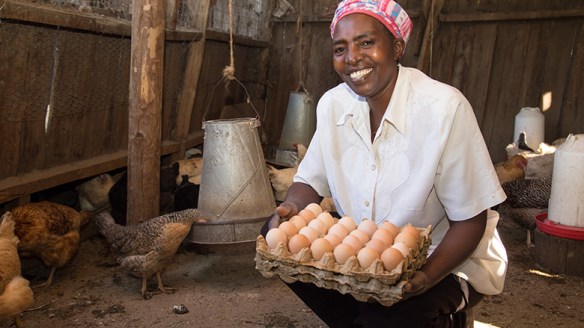
- The Kenya Agricultural Productivity and Agribusiness Project supports smallholder farmers through new technologies, improved market access and climate-smart agriculture approaches.
- More than 75% of Kenyans make a living in agriculture.
- Poultry is recognized for being among the “greenest” meats, using up less resources and emitting less greenhouse gases than larger livestock.
eC2: Financial Awareness Promotion and Capacity Building of Farmer Producer Organizations
Deadline: 27-Oct-2016 at 11:59:59 PM (Eastern Time – Washington D.C.)
WBG is hiring a consultant/ organization to work closely with WBG and FPO promoting organization in low income states for project delivery. The project aims to facilitate access to formal financial services to small and marginal farmers, their households and financially excluded women of low income states of India by leveraging the network and outreach of FPOs.
eC2:Agribusiness PNG: Fresh Produce Pest/Disease Extension Services
Deadline: 24-Oct-2016 at 11:59:59 PM (Eastern Time – Washington D.C.)
IFC through its Advisory Services activities is working in PNG to improve the income of the lead firm linked small holder farmers by improving farmer access to technology, markets, finance and information.
IFC will work with a distributor(the Client)who is a new entrant to the fresh produce supply chain. Working with the client to build its capacity in fresh produce supply is envisaged to improve opportunities for farmers, particularly women farmers in the highlands to access markets in Port Moresby through the deployment of extension training, improved access to inputs and access to information. IFC work with the client to build its internal fresh produce supply chain and logistics capacity and link the farmers to markets in Port Moresby. As part of the fresh produce supply chain development in the Agribusiness PNG Project, IFC is now seeking a qualified consulting firm to build the capacity of the Client in providing pest/disease relate extension services to farmers. Kindly find a more detailed description in the attached TOR. FUNDING SOURCE
 Netherlands for the World Bank
You must be logged in to post a comment.