
Deadline: 10-Mar-2020 at 11:59:59 PM (Eastern Time – Washington D.C.) 
The main objective of the assignment is to: Update and consolidate the Water Sector Strategic Development Plan, the National Environmental Sanitation Strategy and Action Plan and other relevant WASH plans and prepare a National WASH Program Document with indicative cost break down and implementation framework for i) rural WASH; ii) urban WASH; iii) institutional development, iv) M&E and v) funding. It is expected that a WASH sector Institutional review will be conducted with considerable overlapping and its findings will inform the WASH program development. This will suggest that the program will have several phases with the first phase focusing on issues requiring immediate attention and the subsequent phases addressing the suggestions from the institutional review.

 from The Water Blog and creating this special list for you.

 that the rural population in LAC is decreasing in relative terms. In 2001, official figures indicated that 125 million people in LAC resided in rural areas representing 24% of the total LAC population. In 2013, this value decreased to 21% (130 million out of a total population of 609 million inhabitants), and it is estimated that by 2030, the rural population will decrease to represent 16.5% of the total (CEPAL, 2014).
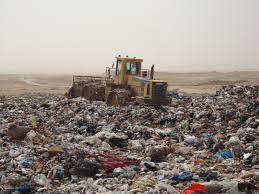 Management (SWM)services, policies and systems in Kerala to inform the design of the proposed Kerala Urban Service Delivery Project (KUSDP). The consultant will be required to undertake a strategic assessment of policy, institutional, governance, technical/service delivery and financial aspects and provide recommendations on the potential solutions/models to fill the existing gaps to inform the project design of KUSDP.
 he (the first female engineer had not graduated yet) would not recognize much of the technology we have today. Personal computers, cell phones, cars, planes, and antibiotics would probably be unfathomable to him. But he would definitely recognize our current piped water and sanitation (WSS) infrastructure, as it looks and operates almost exactly the same as it did 150 years ago. Certainly, there have been significant improvements in the sector, especially in water and wastewater treatment, but the principles on which the piped WSS technology is based have not seen any fundamental changes since the 1860s, when it was (re)introduced on a large scale.
 see a cluster of homes made of varying materials depending on the household income.
 Netherlands for the World Bank
You must be logged in to post a comment.