New World Bank report calls for more investment in better waste management and circular economy
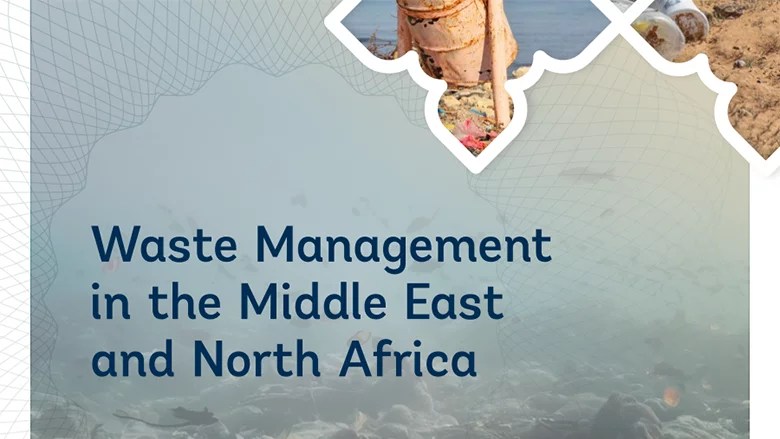
WASHINGTON, January 27, 2026 — The Middle East and North Africa region generates more waste per person than the global average and causes an estimated US$7.2 billion in environmental damage each year, according to a new World Bank report: Waste Management in the Middle East and North Africa.
The World Bank’s flagship report, “Waste Management in the Middle East and North Africa,” reveals that the region currently generates over 155 million tons of waste each year, a figure projected to nearly double to 294 million tons by 2050. Poor waste management costs the region around US$7.2 billion each year in environmental damage. Food waste alone causes US$60 billion in losses, in a region where one in six people faces severe food insecurity. The report analyzes the challenges and opportunities in the waste sector across the region. Through new data from 19 countries and 26 cities, the report recommends pathways to advance waste management systems, tailored to high-income, middle-income, and fragile/conflict-affected countries. It calls for investment to modernize waste systems, reduce food loss and promote measures in line with the principles of circular economy. The report highlights that up to 83 percent of the waste collected in MENA could be reused, recycled, or recovered for energy. Transitioning to a circular economy could also create better jobs, particularly in waste services and recycling, while turning today’s waste crisis into a driver of sustainable growth. The report analyzes the challenges and opportunities in the waste sector across the region. Through new data from 19 countries and 26 cities, the report recommends pathways to advance waste management systems, tailored to high-income, middle-income, and fragile/conflict-affected countries. It calls for investment to modernize waste systems, reduce food loss and promote measures in line with the principles of circular economy. The report highlights that up to 83 percent of the waste collected in MENA could be reused, recycled, or recovered for energy. Transitioning to a circular economy could also create better jobs, particularly in waste services and recycling, while turning today’s waste crisis into a driver of sustainable growth.
Deadline: 23-Dec-2019 at 11:59:59 PM (Eastern Time – Washington D.C.)
understanding the political economy drivers and constraints that influence change and cooperation within the countries and regionally, to achieve sustainable blue economy practices and sound management of coastal areas in North Africa;
(iii) Map out challenges, opportunities and priority measures of intervention for sustainable coastal and blue economy practices with stakeholders including potential trade-offs and;
(iiii) Identify gaps in funding and potential interest for additional investments from donors and organizations in the sector.
Deadline: 01-Feb-2016 at 11:59:59 PM (Eastern Time – Washington D.C.)
The purpose of the 2016 Concentrated Solar Power (CSP) Review is to prepare a status report on the CSP technology, market and industry, covering all segments (and not just the large-scale plants), updating previous studies dating back to 2013 to reflect recent market developments, policy changes and climate change mitigation commitments following COP21 trends briefly discussed in the background section. It will thus guide the work of the whole CTF MENA CSP TA, helping to focus on activities that are the most likely to have an impact on the ground.
On Friday, April 24, the Board of Directors of the World Bank will decide on a proposed project in Morocco to improve primary health in rural areas, involving a total of $100 million from the World Bank, for a total of over $220 million.
The stated Project Development Objective is to expand access to primary healthcare in targeted rural areas in the Program Area. The operation will contribute to the Government’s health sector program by disbursing funds against achievements of the following key results: (a) expanding equitable access to primary care in rural areas; and (b) improving health system governance at the primary level.


 report on the CSP technology, market and industry, covering all segments (and not just the large-scale plants), updating previous studies dating back to 2013 to reflect recent market developments, policy changes and climate change mitigation commitments following COP21 trends briefly discussed in the background section. It will thus guide the work of the whole CTF MENA CSP TA, helping to focus on activities that are the most likely to have an impact on the ground.
 Netherlands for the World Bank
You must be logged in to post a comment.