
IFC’s award-winning match-making program, TechEmerge, has launched its new  Sustainable Cooling program in Latin America (Mexico, Colombia) to drive innovation in climate-smart, energy-efficient cooling technologies, products, and services, where it’s needed most. Phase one focuses on Latin American cities, specifically those in Mexico and Colombia, and will match innovators from across the world with leading local companies and municipalities to pilot projects and build commercial partnerships. Click here to respond to our open call. Applications close September 18, 2020.
APPLY NOW
Join the Webinar
Learn about the benefits of joining the Tech Emerge Sustainable Cooling program in Latin America (Mexico, Colombia), how to apply to our open call, our match-making process, market opportunities, pilot funding, and the valuable support participants receive from our panel of respected industry advisors. We have two timeslots designed to make it easy for you to participate, no matter where you are located.

August 18, 2020
11:00 AM -12:30 PM EST
Virtual – Webex
August 19, 2020
9:00 PM -10:30 PM EST
Virtual – Webex
 Innovation under the IFC TechEmerge Sustainable Cooling in Latin American Cities program.
 but in Latin America
  intentioned solutions based on an “outdated” understanding of the country or sectoral context.
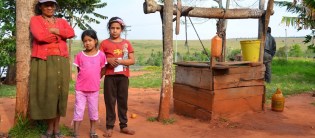
 that the rural population in LAC is decreasing in relative terms. In 2001, official figures indicated that 125 million people in LAC resided in rural areas representing 24% of the total LAC population. In 2013, this value decreased to 21% (130 million out of a total population of 609 million inhabitants), and it is estimated that by 2030, the rural population will decrease to represent 16.5% of the total (CEPAL, 2014).
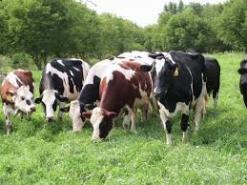 the establishment of an action plan that evaluates the potential of its dairy suppliers where the following market failures exist: i) low productivity and unstable supply of high-quality milk; ii) environmental impacts of dairy production, and iii) limited access to finance hindering adoption of climate-smart-technologies and practices. Within the Clients supply chain, IFC completed assessments for 6 cooperative suppliers related to productivity and food safety practices as well as a diagnostic on managerial/financial skills. The findings have served as a base to structure a four-year project.
 Caribbean (LAC) region is “on track to achieve universal access by 2030,” according to the
  And how is it applied to real life?
 for community forestry that will benefit the implementation of the ASL projects in Brazil, Peru and Colombia. The process should involve a comprehensive study tour that will provide an opportunity for the participants to learn from successful cases and receive technical knowledge. Considering similarities with the conditions of the ASL projects, it is suggested that the study tour considers learning from the community management experiences In the Guatemala Maya Biosphere Reserve. Due to previous engagement in forest community, working with the Association of Forest Communities of Peten (ACOFOP) and the NGO PRIMSA would be required.
 Netherlands for the World Bank
You must be logged in to post a comment.