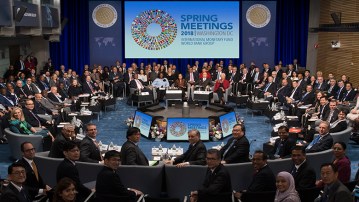
eC2: INDONESIA Health Security Financing Assessment

Deadline: 08-Oct-2018 at 11:59:59 PM (Eastern Time – Washington D.C.)medical-appointment-doctor-healthcare-clinic-health-hospital-medicine[7]

Indonesia has made substantial progress on implementing the International Health Regulation (IHR) 2005 and just conducted a Joint External Evaluation (JEE) which identified priority gaps to improve its IHR core capacities. Recognizing the need for sustainable financing for health security, Indonesia is committing to taking part on a health security financing assessment. The World Bank is providing technical assistance to the Government of Indonesia to implement the health financing security assessment tool (HSFAT) that has been developed for countries conduct the assessment. The assignment is focusing on the following (i) quantitative analysis of the Financing for Health Security Components, especially at the sub national level (Province and District level); (ii) qualitative information on planning and budgeting processes, organization arrangement, and (iii) case study on recent outbreak in Indonesia. Data collection will be done in selected provinces (probably 2) and one district from each selected province.
For this assignment, the firm will be working in close coordination with the World Bank team currently working on the Central level health security financing.
The firm will work with the Technical Task Force (TTF) to involve other relevant agencies in both the public, private sectors and community based organization that need to be included in the assessment.

Continue reading

eC2: Investment Funding Mechanisms and Institutional Set-up Options for a National Urban Flood Risk Investment Program for Indonesian Cities

Deadline: 09-Oct-2018 at 11:59:59 PM (Eastern Time – Washington D.C.)

The World Bank is supporting the Government of Indonesia to address critical urban indonesiaflood risk management and investment needs in Indonesia. This technical assignment will assist with the development of a conceptual framework design for a national urban flood risk reduction investment program, which could comprise risk reduction investments, technical capacity building, knowledge sharing, and innovation generation. The key output will be a conceptual framework and sustainable implementation model for the proposed program that addresses the identified needs through proposed financial and organizational arrangements; makes recommendations for any needed regulatory/institutional/financial arrangements; and propose an overall action plan and timeline to put the program into effect. The team will be expected to provide technical advice on public financial management, municipal finance, disaster risk management, flood risk management, and urban development.
Continue reading

How can Indonesia achieve a more sustainable transport system?

Indonesia, a vast archipelago of more than 17,500 islands, is the fourth most populous id-street-scene-jakarta-un-women-flickrcountry in the world, with 261 million inhabitants, and the largest economy in Southeast Asia, with a nominal Gross Domestic Product of $933 billion.

Central government spending on transport increased by threefold between 2010-2016. This has enabled the country to extend its transport network capacity and improve access to some of the most remote areas across the archipelago.

Continue reading

eC2:Improving energy, water and chemicals use efficiency in the textile sector

Deadline: 26-Jul-2018 at 11:59:59 PM (Eastern Time – Washington D.C.) waterkraan-nieuws-header
A local (South Africa) consulting firm is being sought who will undertake the following work:
1. Establish baselines and collect key performance indicators data on the water, energy and chemicals use and wastewater generated.
2. Design and propose a resource efficiency improvement program (energy, water and chemicals).
3. Prepare a financial plan for the resource efficiency program. The financial plan must explore different investment and business model options and describe which fits the best a selected client.
4. Assess the financial feasibility of implementing power generation projects such as solar photovoltaic, natural gas generators and combined heat and power system.

Continue reading

eC2: Optimal Contribution of Natural Gas in the Indonesian Economy

energyDeadline: 03-Jul-2018 at 11:59:59 PM (Eastern Time – Washington D.C.)

The World Bank seeks the services of an internationally recognized consulting firm to conduct a study on the current and potential contribution of gas to the Indonesian economy as a basis for informing policy directions and specific reforms across a range of industrial, power, transportation and household uses. The work will evaluate the gas value chain in each use of gas to identify the direct and indirect economic benefits and co-benefits of gas use (e.g. pollution abatement, lower carbon, security). It will identify barriers to the optimal use of gas and opportunities to overcome these through policy actions and public investments, including inter alia gas price, allocation and fiscal regulations.

Continue reading

eC2: Sustainable Lowland Agriculture in Indonesia

Deadline:  11-Jun-2018 at 11:59:59 PM (Eastern Time – Washington D.C.) indonesia

This study forms an important part of the World Bank’s Indonesia Landscapes Program. With many of the peatlands drained and in a state of degradation, rural livelihoods need to adapt to new threats and opportunities within the landscape. Given the government’s plans to restore currently drained and occupied lowland areas, an assessment is needed to identify potential alternative crops and sustainable production systems that are appropriate for smallholders in the affected lowlands. The outcomes of the analysis would inform an important policy discussion among the various government institutions, including the Ministries of Agriculture and Public Works and the Peatland Restoration Agency, to shape the business case for improved management of natural resources in Indonesia’s lowlands.

Continue reading

A Strong Foundation for Greater Impact

devcomm_leaderDespite expectations that growth will be robust in the near term, developing countries face challenges to keep up the pace of progress and ensure inclusive, sustainable growth amid structural changes to the global economy. The World Bank Group is uniquely placed to address global challenges and help countries achieve their goals in today’s increasingly complex development landscape.

Continue reading

eC2: Development of Roadmap Towards Sustainable Development Goals for Water Supply

waterDeadline: 09-Apr-2018 at 11:59:59 PM (Eastern Time – Washington D.C.)
Objective: The World Bank is seeking consultancy services to support development of a national roadmap for water supply sector development towards achievement of Sustainable Development Goals in Indonesia. The roadmap will need to layout the set of priority of actions that need to be implemented in the short term (5 years horizon, mid- and longer term, for the following key aspects: (i) regulations/policy development, (ii) investment/financial framework, (iii) institutional development, and (iv) water security that includes climate change and resilience perspective. The short-term priority actions will feed into preparation of the next National Mid-Term Development Plan (RPJMN) 2020-2025.

Continue reading

eC2:Develop Early Warning System (EWS) Model for Financial Conglomeration

Deadline: 12-Feb-2018 at 11:59:59 PM (Eastern Time – Washington D.C.) vn-communitybased-disasterrisk-780x439

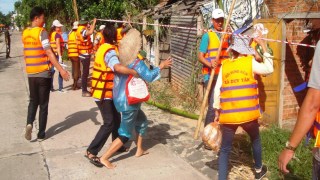
Objective: Conduct diagnostic review of existing prerequisite in developing of an Early Warning System Model FCs Early Warning model and dashboard that incorporate the following: a. Non-financial entities (wider group) b. Identification of institutions and areas within institutions where problems occurs or are likely to emerge

Continue reading

eC2: DEVELOPING AN INFRASTRUCTURE AND PPP SCREENING TOOL FOR INDONESIA

PPPsDeadline: 11-Jan-2018 at 11:59:59 PM (Eastern Time – Washington D.C.)

Objective: SCOPE OF WORK: Under this consultancy work, a Multi-Sector Screening and Prioritization Tool for proposed infrastructure projects (from the 19 infrastructure sectors as defined in Perpres 38/2015), will be developed for the Indonesia’s Ministry of National Development Planning (BAPPENAS).

Continue reading