
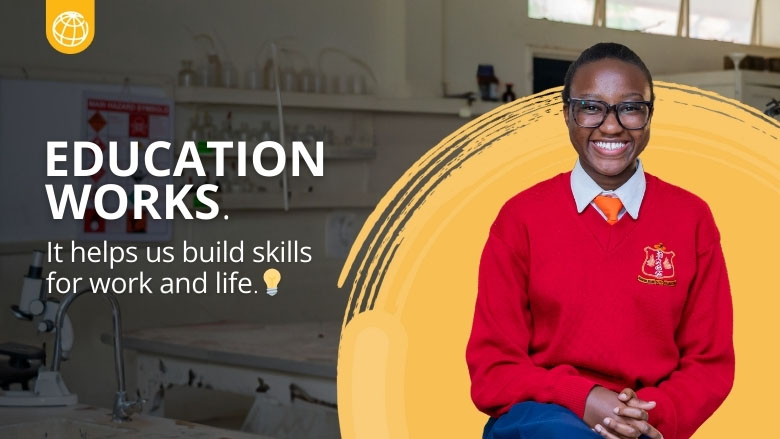
Education is the foundation to skills development and jobs, and the surest way out of poverty, empowering generations to earn an income and drive economic growth. A good education equips learners with key foundational skills—literacy, numeracy, and socio-emotional competencies—which are essential for work and life. These skills help today’s children become tomorrow’s productive workers and enable workers to reskill or upskill later in life. The World Bank Group is the largest financier of education in the developing world, with a $26.4 billion portfolio across 81 countries, supporting 324 million students to date with better education.
On this International Day of Education, we look at why education works, and how it helps propel people out of poverty, putting economies on a path to growth.
“Credit: World Bank Group. All rights reserved”




 more restrictive credit conditions. The possibility of more widespread bank turmoil and tighter monetary policy could result in even weaker global growth and lead to financial dislocations in the most vulnerable emerging market and developing economies (EMDEs). Comprehensive policy action is needed to foster macroeconomic and financial stability. Among many EMDEs, and especially in low-income countries, bolstering fiscal sustainability will require generating higher revenues, making spending more efficient, and improving debt management practices. Continued international cooperation is also necessary to tackle climate change, support populations affected by crises and hunger, and provide debt relief where needed.
 Malpass will discuss how conflict, COVID-19, and climate change have created unprecedented challenges for developing countries, hurting the poorest and most vulnerable people and communities. He will outline how, moving forward, crisis recovery and longer-term development requires economic transformation, investment in human capital, and security and stability underpinned by support from the international community.
 Netherlands for the World Bank
You must be logged in to post a comment.