
DAR ES SALAAM, January 28, 2025 — Thirty African Heads of State and governments today committed to concrete reforms and actions to expand access to reliable, affordable, and sustainable electricity to power economic growth, improve quality of life, and drive job creation across the continent.
Continue readingTag Archives: Energy
Cameroon’s journey toward affordable, reliable, and universal electricity access for all
STORY HIGHLIGHTS

- In rural Cameroon, 75% of the population remains without electricity, even though many live near the grid.
- The Nachtigal Hydropower Plant financed by the World Bank Group together with partners, will increase Cameroon’s power generation capacity by 30%.
- In addition to hydropower, Cameroon is developing several solar photovoltaic plants with a total installed capacity of 250 MW to transition to a greener electricity generation mix.
Five Ways the World Bank Group Will Achieve “Mission 300”
STORY HIGHLIGHTS
- Roughly 600 million people in Sub-Saharan Africa lack access to electricity.
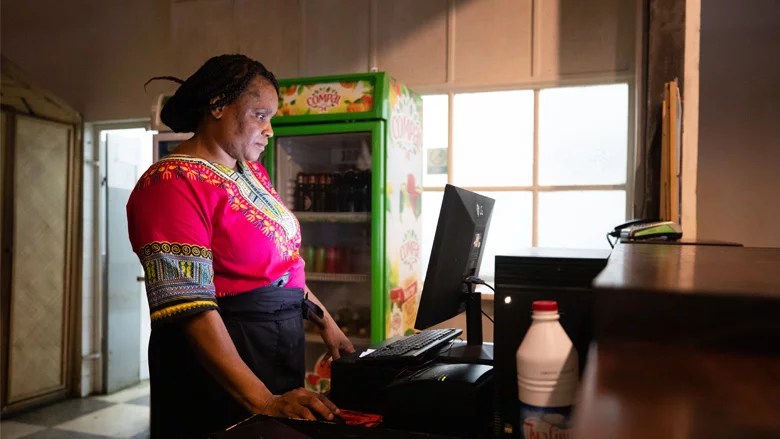
- The World Bank Group, together with the African Development Bank, has committed to providing access to electricity to 300 million people in Sub-Saharan Africa by 2030.
- Known as “Mission 300,” this ambitious plan is attracting widespread support.
New Partnership Aims to Connect 300 Million to Electricity by 2030We need to change the way we support refugees – now !
World Bank Group, African Development Bank initiative could halve the number of people in Africa living without electricity access
WASHINGTON, April 17, 2024 – The World Bank Group and African Development Bank Group are partnering on an ambitious effort to provide at least 300 million people in Africa with electricity access by 2030.
The World Bank Group will work to connect 250 million people to electricity through distributed renewable energy systems or the distribution grid while the African Development Bank Group will support an additional 50 million people.
Continue readingEnergizing Africa: What Will It Take to Achieve Universal Energy Access?
Over half a billion people in Sub-Saharan Africa are at risk of being left behind without electricity access by 2030, with nearly 400 million of them living in countries subject to fragility, conflict, and violence. Africa is where the energy access battle will be won or lost. Without access to reliable, affordable, and sustainable energy, the region will not reach its development aspirations or achieve an economic transformation that can lift millions out of poverty.
Together with partners, the World Bank Group has already begun efforts to deploy innovative financial and technical solutions that are essential for accelerating electrification rates that outpace population growth.
The discussion will focus on what it will take to scale up the solutions and investments that will help connect millions more Africans to electricity and transform African economies.
How to scale up renewable energy investments
Dependence on fossil fuels in many countries leads to a vicious cycle of increasing costs, higher energy prices for consumers, more pollution that impacts people’s health, and higher greenhouse gas emissions that endanger the planet. In contrast,
However, renewable energy projects do not materialize, and countries remain trapped in the vicious cycle. This happens despite the fact that many developing countries have some of the best solar and wind resources in the world. So how can we support governments to break free from fossil fuel dependency and catalyze the virtuous cycle for clean energy?
Thriving: Making Cities Green, Resilient, and Inclusive in a Changing Climate
Cities, as engines of prosperity, are major contributors to climate change, generating about 70% of global greenhouse gas emissions. At the same time, as home to more than half of humanity, cities are on the front lines of climate change.
New analysis from the World Bank examines the two-way relationship between cities and climate change, concluding that cities also hold one of the keys to solving the climate crisis. With data from more than 10,000 cities, the report offers insight into how to help cities become greener, more resilient, and more inclusive – in other words, on how to help their cities thrive – in a changing climate.
Impactful climate mitigation requires standards, verification and standardization
Climate costs and development together need vast new resources. For developing countries,  the needs are particularly large to provide for growing populations and decades of underinvestment. They need to make major advances on education, energy production, electricity access, health, infrastructure and nutrition just to make up for losses in recent years. Climate costs require significant additional resources, as does the increase in the cost of debt service and repayment.
Solutions to Finance the Energy Transition in Developing Countries
Low- and middle-income countries need to transform their power sector infrastructure at an unprecedented scale and pace to meet climate and development goals. The World Bank’s new framework “Scaling Up to Phase Down” maps out a 6-step virtuous cycle to help these countries overcome critical barriers that are paralyzing their energy transition and catalyze investments.
Despite accounting for two-thirds of the global population, developing countries receive only one-fifth of global energy investment. They need affordable financing, especially at the start of their energy transitions, to improve sector conditions and attract growing volumes of private capital.
Join us live from the headquarters of the World Bank Group. Be sure also to share your thoughts and questions in advance in the chat box! Our team of experts will answer them during the live event.
Scaling Up to Phase Down: Financing Energy Transitions in the Power Sector
To meet climate and development goals, low- and middle-income countries need to transform their power sector infrastructure at a scale and pace that is unprecedented. The World Bank framework “Scaling Up to Phase Down” maps out steps to support developing countries, with the help of development partners, to scale up affordable, secure, and reliable clean energy and phase down coal-fired electricity generation.


You must be logged in to post a comment.