
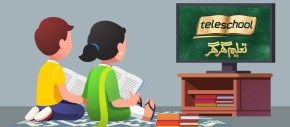
 Pakistan’s schools are reopening again today after a nearly uninterrupted 11-month hiatus. In March 2020, the Government of Pakistan closed all schools as part of a nationwide lockdown, prompting the Ministry of Federal Education and Professional Training (MoFE&PT) to seek education alternatives to ensure learning continuity.
Tag Archives: Education
Realizing the returns to schooling: How COVID-19 and school closures are threatening women’s economic future
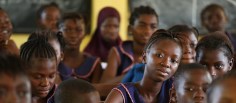 ensure that girls and women can realize the returns to their schooling.
 Returns to schooling for women are high – so says Bono and the research. A couple of years ago, in an essay in Time magazine Bono wrote: “Give girls just one additional year of schooling and their wages go up almost 12 percent.” He said the same thing a year before that at the Munich Security Conference. The source of that quote was a 2014 World Bank paper and a recent update confirms this is still the case. At the same time, girls are staying in school longer and learning more. However, these gains are at risk as COVID-19 is presenting a crisis within a crisis for girls’ education.
Urgent, Effective Action Required to Quell the Impact of COVID-19 on Education Worldwide
Sutil, who lives in a remote village in West Kalimantan, Indonesia (the world’s 4th most populous country), has found educating his child during COVID-19 to be a monumental challenge. As a farmer with a lack of electricity and no access to the internet or television, Sutil has found it difficult to help his child with his lessons. Once a week, teachers come to the children’s homes so they can help the children with their learning, however, in many cases, they have difficulties finding the children because they are out with their parents in the rice fields.
Morocco: A case for building a stronger education system in the post Covid-19 era
Building a stronger Human Capital could accelerate Morocco’s economic growth, job creation  trajectory and competitiveness gains. In 2018, Human Capital was estimated to contribute 41 percent to the country’s wealth per capita, a level substantially lower than in countries with a similar level of development.
We must prepare supply chains for future COVID-19 vaccines and therapeutics
|
Nothing would undermine delivery of successful COVID-19 (coronavirus) vaccines and |
 therapeutic treatments faster than the emergence of fake vaccines.
 Automated transport could propel development forward. Can we turn the vision into reality?
|
The next few weeks mark the beginning of the school year across the northern hemisphere. Safety of students and teachers vis-à-vis COVID-19 spread is top priority. Learn how countries are planning for the reopening of schools. This is what they had to say. Violence amid the pandemic: The COVID-19 pandemic has put a spotlight on some of the biggest cracks in societies worldwide. While many governments are still grappling with surging cases, violence is fueling the crisis in some of the world’s most fragile environments. Killer # 2: Millions of women and children may die or endure lifelong health impacts because of disruptions to essential health services and the reluctance by patients to seek care for fear of COVID-19 infection. A recent analysis examined the effects of service disruptions. The results are overwhelming. Power of digital ID: As countries focus on “building back better” after the pandemic, they have a crucial opportunity to leapfrog to a more digital economy – and to do so responsibly. Whichever model they choose, governments can transform the lives of people everywhere by building digital ID systems designed to maximize privacy, inclusion, and trust. Go deeper: Learn how the World Bank Group is responding to the COVID-19 (coronavirus) pandemic. Explore our multilingual portal. Click, bookmark and come back for updates. |
||
|
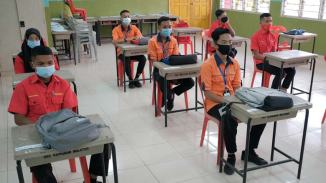


Relief, restructuring and resilient recovery key to building back better

The COVID-19 pandemic demands World Bank engagement with unprecedented speed, scale and selectivity. We’re organizing our crisis response across the three stages of relief, restructuring, and resilient recovery. Learn more about our priorities for broad and fast action with our new crisis response paper, Saving Lives, Scaling-up Impact and Getting Back on Track.
“When I grow up, I’ll be a teacher” – The new ambitions of Congolese schoolchildren now that school is free
How ministries of education work with mobile operators, telecom providers, ISPs and others to increase access to digital resources during COVID19-driven school closures (Coronavirus)
With schools closed around the world as a result of the coronavirus pandemic, many  countries that are seeking to promote and support online learning for students at home are running into challenges.
One easy-to-understand challenge relates to access:
Procurement Framework Education & Learning tools
Mandatory for all lending operations after July 1, 2016, the new Framework emphasizes  flexibility, quality, and greater value for public spending, while enabling adaptation to country contexts. It recognizes that countries are looking to be more efficient in their public spending so that they can invest more in basic public services such as education, health and infrastructure services and enrich development outcomes.
The reform is the result of extensive consultations in almost 100 countries and allows greater flexibility for each operation to identify the right procurement approach; an extended range of procurement practices and options; more tailored, context-specific approaches for fragile and conflict-afflicted states; and more hands-on support from Bank staff to help clients in capacity-building and institution-strengthening.
 Netherlands for the World Bank
You must be logged in to post a comment.