Article: How Can We Finance the Resilient Cities of the Future?

Article published by the World Bank  on October 12, 2016.

Image
STORY HIGHLIGHTS
  • By 2030, without efforts to boost urban resilience, climate change may push up to 77 million more urban residents into poverty.
  • The world has a brief window of opportunity to make cities more resilient, but it will take a significant amount of funding—especially for developing countries.
  • A new report discusses the challenges and opportunities of unlocking investment in resilient infrastructure for improved urban livelihoods worldwide.

WBG News: Vietnam’s Climate Change and Green Growth Agenda Receives $90 million Boost

WASHINGTON, D.C., June 24, 2016 – The World Bank will help Vietnam strengthen its _DSC8598climate change and green growth agenda with a US$90 million credit for policy reforms aligned with the World Bank Group’s Climate Change Action Plan.
The Climate Change and Green Growth Development Policy Financing, approved today, along with the recently approved Mekong Delta Integrated Climate Resilience and Sustainable Livelihoods Project, marks a new phase in World Bank support as Vietnam continues to focus on inclusive green growth while addressing key climate change vulnerabilities.

Continue reading

World Bank: Climate Change Poses Urgent Threat to Poor of Coastal Bangladesh

World Bank News – Washington, June 24, 2016.
STORY HIGHLIGHTS
  • Nearly 12 million people live in poverty in the coastal region of Bangladesh.
  • Poor households in coastal Bangladesh will confront increasingly severe challenges from climate change through heightened cyclonic inundation, rising river salinity, and increased soil salinity.
  • The World Bank is working with the Government of Bangladesh to enable poor households to adapt to the impacts of climate change.

Nearly 12 million people live in poverty in the coastal regions of Bangladesh. The climate already poses a challenge to the lives and livelihoods of these households, seen vividly in the damage caused by Cyclone Roanu a few weeks ago. New projections published by the World Bank suggest climate change will pose an even more severe challenge over the next three decades.

Continue reading

eConsultant2: Global Study on Climate Resilient Water Supply and Sanitation

Deadline: 17-Dec-2015 at 11:59:59 PM (Eastern Time – Washington D.C.)

The aim of this study will be to identify the current
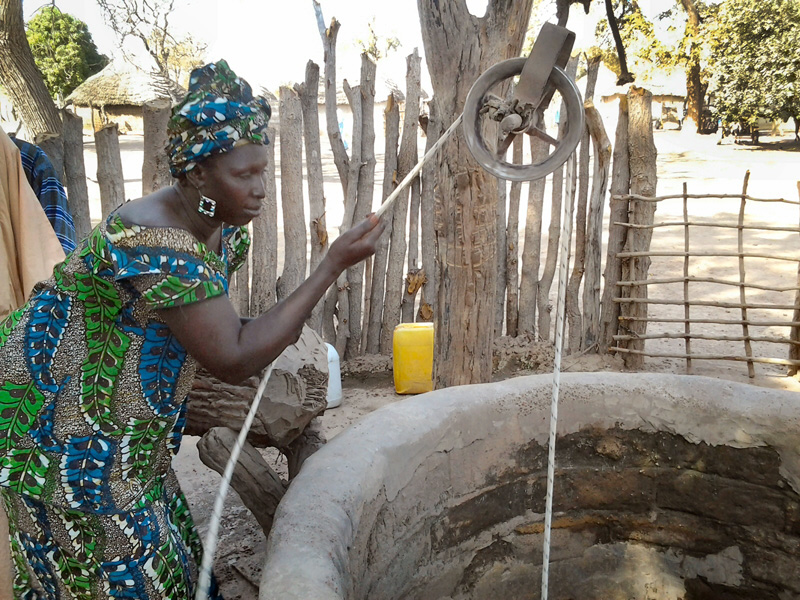
good/Senegal-Woman-at-Well-800best practices for climate resilient WSS. The selected consultant will be expected to identify common climate change scenarios that have affected/will affect water utility capacity for delivering services and identify more than one good practice per climate scenario (from both developed and developing countries).

Continue reading

Jim Kim: World Bank to spend $29 billion annually on climate by 2020

Jim Kim Lima World Bank Group President Jim Yong Kim signals that those working on environmental projects are about to enjoy their moment in the sun.

His annoucement about a major increase in the Bank Group’s financing to help countries combat climate change by building low carbon and resilient development is likely to boost support for projects related to  renewable energy and energy efficiency, climate-smart transport solutions, resilient cities, the restoration of degraded forests and landscapes, enhanced water security, and agricultural practices.
Continue reading

Job: Western Kenya project mgmt coordinator for Kenya Water Security and Climate Resilience Project

See full tender here.

Ref number: MOWI/ KWSCRP-1/002/2015-2016

Country: Kenya

Deadline: September 9, 2015

The Post -Reporting to the Project Manager, the Western Kenya PMU Coordinator as head of PMU Western Kenya Regional Office is responsible for coordinating and facilitating execution of the Program for Enhanced Water Security in the Nzoia River of KWSCRP-1 – comprising the Lower Nzoia Irrigation; Xower Nzoia Flood Protection Project and Nzoia Watershed Management – and for all KWSCRP activities in western region of Kenya, working with the executing agencies through a joint coordination mechanism. Continue reading