eConsultant2:Cost of Coastal Environmental Degradation, Multi Hazard Risk Assessment and Cost Benefit Analysis

Deadline: 03-Dec-2015 at 11:59:59 PM (Eastern Time – Washington D.C.)

The REPUBLIC OF BENIN, the REPUBLIC OF COTE DIVOIRE, GHANA waterand TOGO have received financing from the World Bank toward the cost of the Adaptation to Climate Change in West Africa Coastal Areas project, and intend to apply part of the proceeds for consulting services.

Continue reading

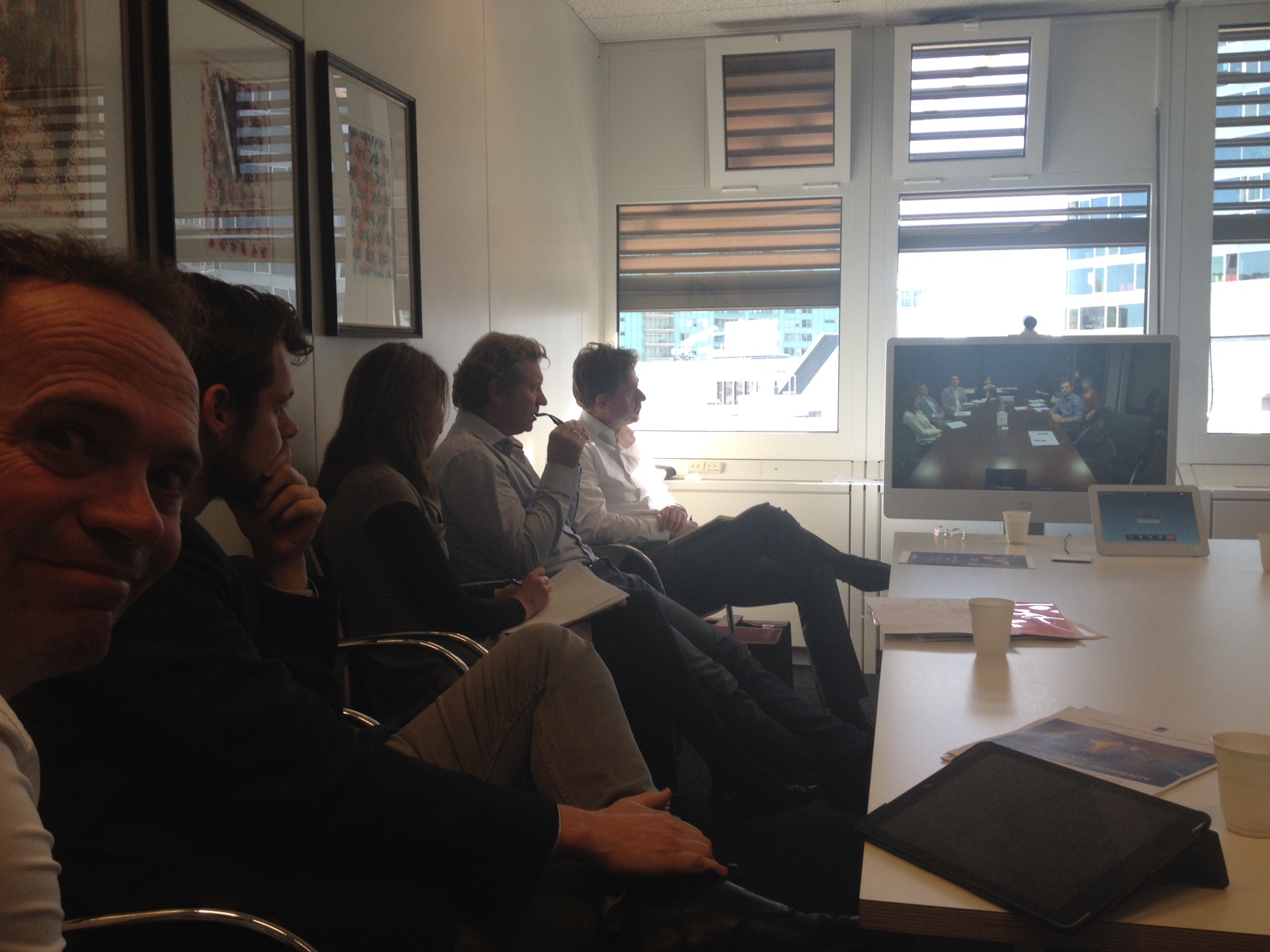
Online event: Climate Action and Green Competitiveness

greencompetitivenessDate: Thursday, November 19, 2015
Time: 9:30 a.m. – 11:00 a.m. (ET) / 14:30 – 16:00 (GMT) or convert time
Location: International Finance Corporation Auditorium, World Bank Group HQ & Online

JOIN ONLINE: http://live.worldbank.org/climate-action-green-competitiveness

Speakers:

  • Rachel Kyte: Vice President & Special Envoy for Climate Change, World Bank Group

Jim Kim: World Bank to spend $29 billion annually on climate by 2020

Jim Kim Lima World Bank Group President Jim Yong Kim signals that those working on environmental projects are about to enjoy their moment in the sun.

His annoucement about a major increase in the Bank Group’s financing to help countries combat climate change by building low carbon and resilient development is likely to boost support for projects related to  renewable energy and energy efficiency, climate-smart transport solutions, resilient cities, the restoration of degraded forests and landscapes, enhanced water security, and agricultural practices.
Continue reading

AM15 event: Unleashing Private Investment in Renewable Energy

Annual Meeting 2015 event
Lima2015

Date: Friday, October 9, 2015
Time: 11:00 a.m. – 12:30 p.m. (Peru) / 12:00 p.m. – 1:30 p.m. (ET) / 16:00 – 17:30 (GMT) or convert time
Location: Pachacamac Room, Lima Convention Center, Lima, Peru & Online

Taking action to scale-up private sector investment in clean energy is crucial to ensuring power for growing economies, securing sustainable livelihoods, and addressing climate change and greenhouse gas emissions.

What solutions already exist and what needs to be done to stimulate further private sector investment in renewable energy? Continue reading

Can Dutch firms profit from carbon pricing?

Article originally posted on the World Bank website.

New Principles to Help Accelerate the Growing Global Momentum for Carbon Pricing

STORY HIGHLIGHTS
  • New report shows the number of implemented or planned carbon pricing schemes around the world has almost doubled since 2012, with existing schemes now worth about $50 billion.
  • About 40 nations and 23 cities, states or regions are using a carbon price. This represents the equivalent of about 7 billion tons of carbon dioxide, or 12 percent of annual global greenhouse gas emissions.
  • And new report lays out six key principles to put a price on carbon – the FASTER principles – for putting a price on carbon based on economic principles and experience of what is already working around the world

The spotlight is on New York now with the upcoming United Nations meeting on the new Sustainable Development Goals, Climate Week New York, and in about two months, global leaders will meet again in Paris for COP 21.

The decisions made in New York and Paris will set the course for development for years to come. But while these are top level, pivotal meetings, actors around the world are not waiting for a global agreement to act. They are already putting a price on carbon dioxide and other greenhouse gas emissions to drive clean investment. This includes the private sector. And we’ve seen companies from the oil and gas industry – calling for widespread carbon pricing. Today, over 400 businesses worldwide are using an internal price on carbon to guide their investments.

Continue reading

Successful NL / WB Clean Cookstove Webinar held on September 29

On Tuesday, September 29, your webinarNL4WorldBank team at the Netherlands embassy, in close cooperation with the World Bank Group, the Netherlands Enterprise Agency (RVO), the Ministry of Foreign Affairs and the Global Alliance for Clean Cookstoves, organized the first ever Clean Cookstove Webinar.

You will find the audio recording of the webinar here. The initial clip is a preview – click on ‘download’ to hear the entire recording.


IFIs Back New Global Development Agenda with Stepped-Up Support

Article originally posted on the World Bank website.

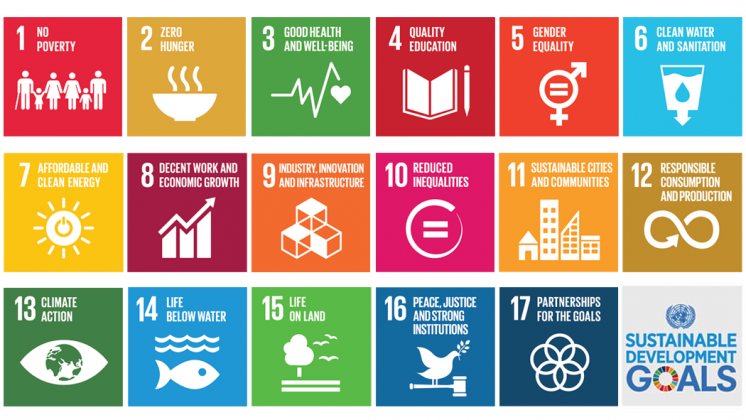
Multilateral Development Banks (MDBs) and the International Monetary Fund (IMF) hailed today’s adoption of a sustainable development agenda for the next generation and are fully committed to stepping up their support to ensure its success.

sustainable-development-goals

Continue reading

Building Resilience: Climate Change Helping Contain a Global Threat

Article originally published in the IFC’s Annual Report 2015.

Climate change will hit developing Climate-Change-Story-Bannercountries hardest — posing significant threats to their efforts to tackle water, energy, and food-supply needs.

Developing countries will need large sums of money to cope with climate change: up to $1 trillion a year. The private sector has an indispensable role to play, and IFC is at the forefront in mobilizing private capital to address climate change.

We provide finance and advice for energy-efficient and renewable-energy solutions — such as green buildings and solar power. Since 2005, we have made long-term investments totaling more than $13 billion in climate-related projects. This includes $2.3 billion in 103 projects in 31 countries in FY15. We also mobilized $2.2 billion from other investors.

Continue reading

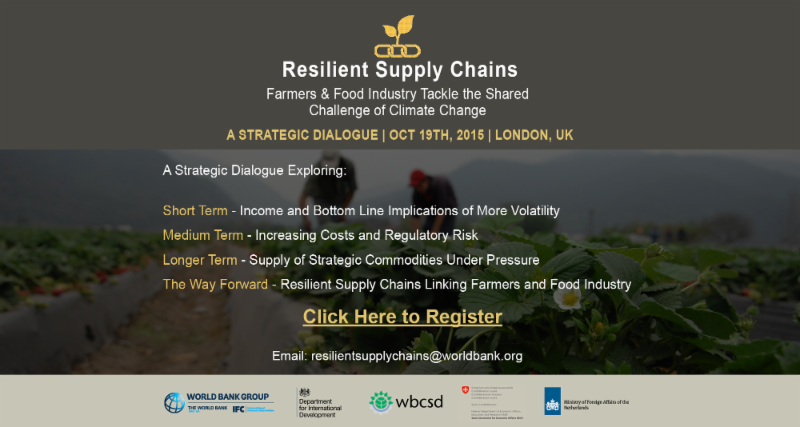
Resilient Supply Chains – A Strategic Dialogue (London, 19 October 2015)

Resilient Supply Chains – Farmers & Food Industry Tackle the Shared Challenge of Climate Change – A Strategic Dialogue (London, 19 October 2015)

Climate change brings significant, resilient supply chainsconcrete and near-term impacts for farmers and food companies’ bottom lines alike. The objective of this strategic dialogue is to bring leaders from both groups together to discuss their shared climate change challenges: Continue reading