“Credit: World Bank Group. All rights reserved”
Jobs in Africa
Reply

“Credit: World Bank Group. All rights reserved”
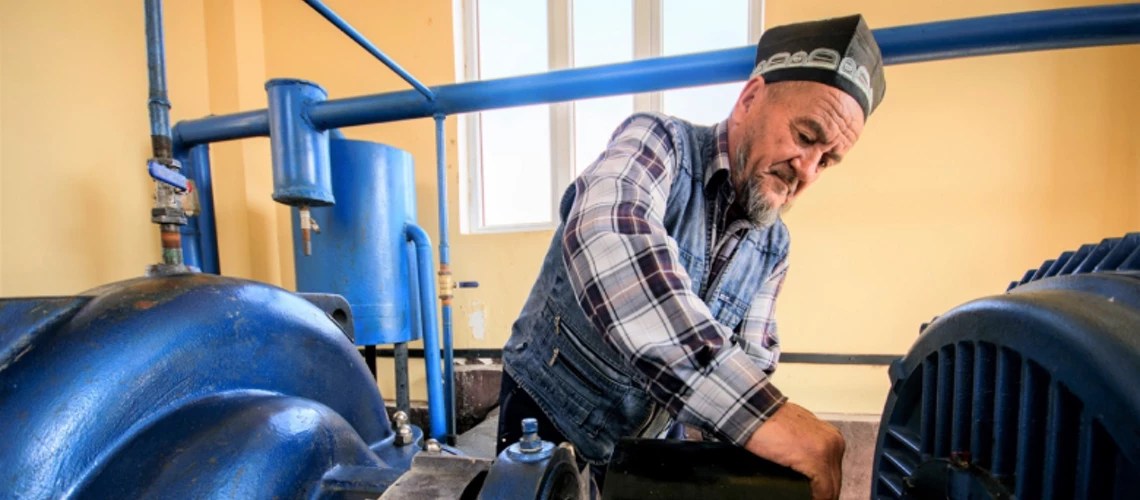
Delivering water safely uses a surprising amount of energy. In the emerging markets and developing economies of Europe and Central Asia, the energy footprint of delivering water services is particularly high. The average country spends about 10% of its energy bills on water use—more than five times the share spent in advanced economies. In fact, total water-related energy use in the region annually is roughly equal to the total energy consumption of Greece.

By 2050, one in three of the world’s children will live in Africa. Yet this demographic shift coincides with a profound learning crisis: over 70 percent of children in low- and middle-income countries (LMICs) cannot read and understand a simple text by age 10—and in Sub-Saharan Africa, the figure reached 86 percent before the pandemic. Without rapid acceleration in foundational learning outcomes, this demographic advantage risks becoming a source of deeper inequality and lost opportunity, talent, and productivity in the labor market.
Continue reading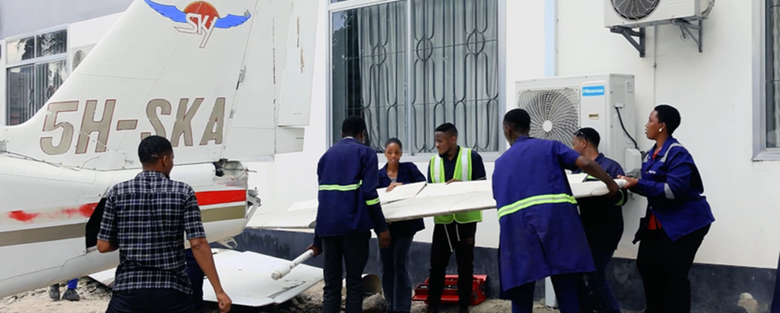
From a young age, Leah Francis Basu was fascinated by the mechanics of an aircraft. “I loved aircrafts,” she recalls, describing the moment she first discovered the science of lift. “It was surprising to me to learn the Bernoulli’s principle, where air moving faster over the top of the wing creates lower pressure, while the air beneath the wing remains at higher pressure, forcing the aircraft upward to take off.”
Continue readingThanks to the World Bank-financed Eastern Electricity Highway Project (EEHP) Kenya is now importing cheaper renewable electricity from Ethiopia. The 1,065 kilometers power transmission line is helping Kenya balance its electricity supply and demand. This is the first publicly financed high-voltage direct current (HVDC) transmission line in Sub-Saharan Africa that promotes regional integration and power exchange. With a 500 kV capacity, the project is facilitating regional power trade within the Eastern African Power Pool (EAPP) by allowing for the bi-directional transfer of up to 2,000 MW of power. The transmission line became operational in December 2022 and is on track to connect to Tanzania and the Southern Africa Power Pool. The project was also supported by the African Development Bank (AfDB), the Agence Française de Dévelopement (AFD), the Government of Ethiopia and Kenya.
“Credit: World Bank Group. All rights reserved”

That selfie you took on an idyllic white sand beach, in a sprawling city park, or atop a mountain range at sunset? It’s more than just a photo of you. It reflects nature’s magnetic pull on people across the world and its role in fueling global tourism.
Continue reading
Sub-Saharan Africa’s economic promise is clear. It has the world’s youngest and fastest-growing population; by 2050 a quarter of the world’s working-age population will be living in Africa, with vast natural resources, and expanding regional markets. Yet these strengths are undermined by a persistent weakness: the region’s skills gap.
Continue reading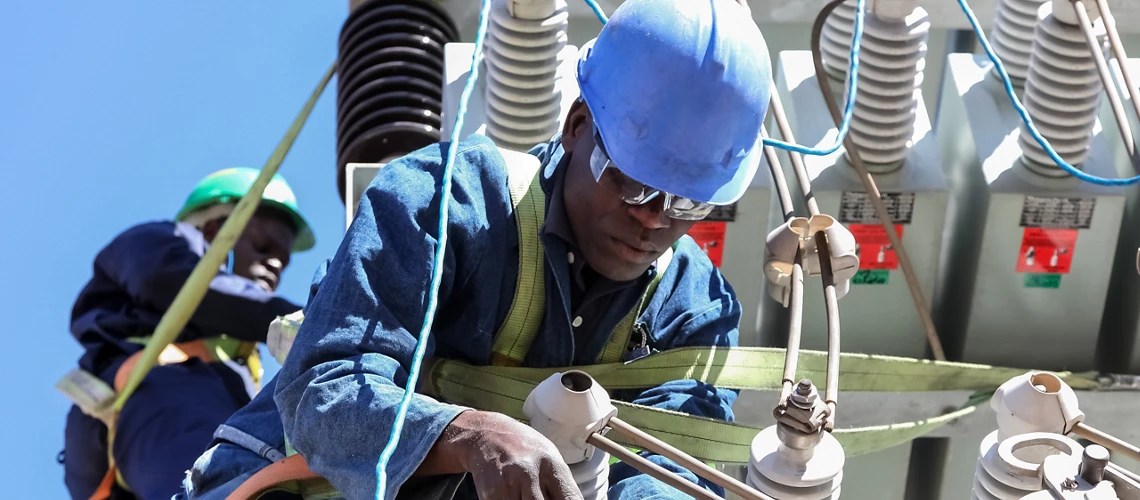
Africa is home to the largest share of the world’s unelectrified population—an estimated half a billion people, mostly in rural areas. In recognition of the significant role of electricity in economic development, the region is poised to erase this unwelcome statistic by achieving universal access by 2030 through several national and multilateral initiatives.
Continue readingSince 2006, The World Bank’s annual Country Policy and Institutional Assessment (CPIA) Report has been a guide for countries, policymakers, and investors, identifying key trends and best practices that support effective public service delivery and foster a more resilient and prosperous future for Sub-Saharan Africa (SSA). The CPIA is an annual diagnostic tool for SSA countries eligible for financing from the International Development Association (IDA), the part of the World Bank that helps the world’s low-income countries by providing grants and low to zero-interest loans for projects and programs that boost economic growth, reduce poverty, and improve people’s lives. The CPIA Report aims to capture the quality of each country’s policies and institutional arrangements, focusing on the elements within the country’s control. The scores are designed to assess sustainable growth and poverty reduction. The CPIA provides scores for each country, and an overall regional score, on a scale of 1 (lowest) to 6 (highest) in four clusters: economic management, structural policies, social inclusion and equity policies, and public sector management and institutions. The scores inform governments of the impact of each country’s efforts to support inclusive growth and poverty reduction, and the overall score helps determine the size of the World Bank’s concessional lending and grants to low-income SSA countries. The report includes scores for IDA-eligible countries and acts as a touchstone for country monitoring and regional best practices.
Continue reading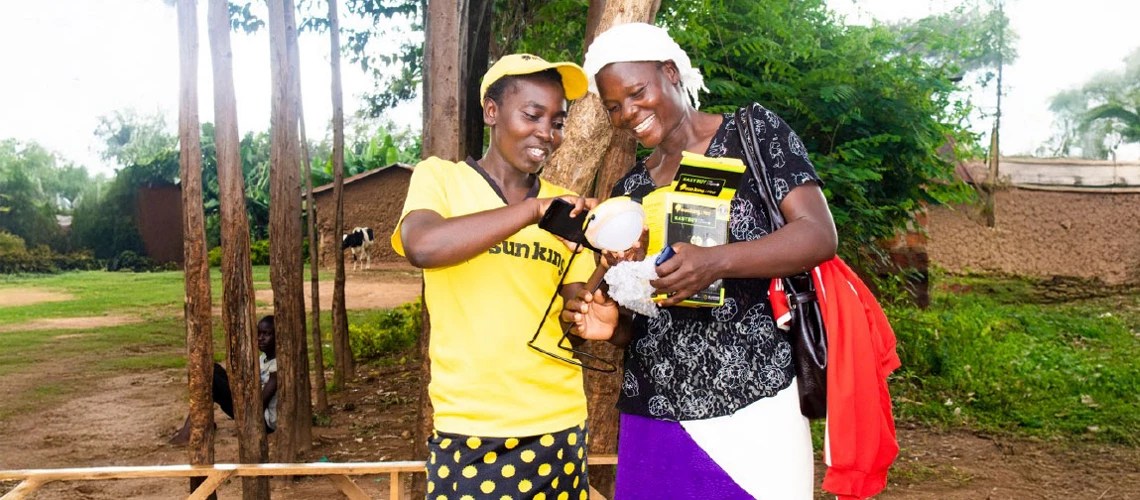
The extraordinary lack of energy in Africa–affecting about 300 million women-has profound effects on women’s economic opportunities. Women are already disproportionately affected by energy poverty, especially in rural areas. On average, women and girls spend 50 hours a week just fetching firewood, cooking, and collecting water. That’s 50 hours spent on subsistence, not on growing a business, pursuing education, or improving their health. In fact, 900 million African women and girls who lack access to clean cooking technology suffer from smoke inhalation-related diseases. That’s a huge barrier to their health, education, and economic potential.
Continue reading Netherlands for the World Bank