Deadline: 17-Mar-2019 at 11:59:59 PM (Eastern Time – Washington D.C.) 
Consulting services for Urban Water Supply review with particular emphasis on Non-Revenue Water (NRW) in Baghdad and Basra, Iraq

Deadline: 17-Mar-2019 at 11:59:59 PM (Eastern Time – Washington D.C.)
Consulting services for Urban Water Supply review with particular emphasis on Non-Revenue Water (NRW) in Baghdad and Basra, Iraq
Deadline: 21-Mar-2019 at 11:59:59 PM (Eastern Time – Washington D.C.) 
IFC will procure a consultancy firm with technical and financial expertise to assist in preparing the Two Evaluations and One Plan (Value for Money Evaluation, Financial Affordability Demonstration, PPP Project Implementation Plan) to obtain government approval for this PPP project. The Consultant will be hired and supervised by IFCs transaction advisory service Public Private Partnership. The Consultant shall owe its duty of care exclusively to IFC. All correspondences and interface with the client government and its representatives will be done with the expressed consent of IFC.
The 2019 Spring Meetings of the Boards of Governors of the World Bank Group and  the International Monetary Fund will be convened in Washington, D.C. on Friday, April 12, and will close on Sunday, April 14. The Spring Meetings will feature the joint World Bank Group/IMF Development Committee and the IMF International Monetary and Financial Committee plenary sessions, which discuss progress on the work of the institutions. Other events begin on Monday, April 8, such as seminars, regional briefings, press conferences, and many other events focused on the global economy, international development, and the world’s financial markets.
The Netherlands Enterprise Agency and the World Bank Group held a joint event on

Compliance and Integrity on February 1st, 2019 in The Hague. The event focused on taking a practical approach and shedding some light on specific issues and questions. The World Bank explained the major do’s and don’ts when working with the Bank and what it means to be under investigation.
The event was well attended and well received by the audience which comprised mainly of the Dutch private sector. The insights and openness of the participants helped the audience understand the issues that arise and more importantly how to proceed in those cases.
On August 1st Bjorn Kuil started as Senior Counselor at the Board of the Inter-American  Development Bank, having previously held the position of senior policy officer at the Netherlands Ministry of Foreign Affairs since October 2013. “Throughout my career in the public and private sector I’ve come to realize that finance can leverage relationships, mitigate risks, and plays an important catalytic role. It has become my mission working towards sustainable, inclusive economic development as this is an indispensable part of efforts to combat poverty and improve global living conditions in line with the Sustainable Development Agenda. When looking at all the challenges facing the world, including inequality, population migration, and climate change, there is a clear role for development finance in nearly all of them.”
In 2017 Sint Maarten was violently hit by hurricane Irma which prompted the Dutch government to provide funds to help with the recovery. The Dutch government contributed 550 million euros of which EUR 470 million placed in a trust fund, managed by the World Bank Group. Since the inception of the trust fund we have been reporting on the project developments and the opportunities arising for the private sector.
The government of St. Maarten has now officially launched a website dedicated to jobs and opportunities funded by the trust fund for the recovery efforts. Below the list of current opportunities which can be found at https://nrpbsxm.org/.
Deadline: 20-Mar-2019 at 11:59:59 PM (Eastern Time – Washington D.C.) 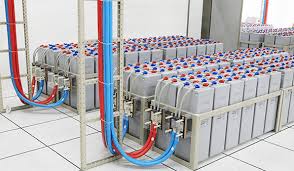
With the objective of facilitating the development and integration of renewable energies in Senegal, this study aims to prepare the tender documents to put in place battery storage (60MW capacity 30mn 1h for frequency regulation) and their integration in the electricity network for their installation and operation in the short term. The Consultant should prepare the tender documents for the installation, integration of these batteries and their operationalization during one year. Based on the existing studies, the Consultant should confirm the size and location of the battery storage.
Deadline: 24-Mar-2019 at 11:59:59 PM (Eastern Time – Washington D.C.) 
The objective of this activity is to update the understanding of the cooking sector, bringing together in one document a summary of key challenges, opportunities, barriers, and solutions toward achieving universal access to modern energy cooking services by 2030.
Deadline: 12-Mar-2019 at 11:59:59 PM (Eastern Time – Washington D.C.) 
The Gender Deep Dive aims specifically to analyze gender gaps in access to government-recognized IDs in Nigeria and provide evidence-based advice to policy makers on how to address barriers that women may face in obtaining an ID. It is important to address this gender gap in women’s lack of access to IDs both because the ability to prove ones identity is a fundamental right, and because IDs are instrumental to accessing many other rights and services where proof of identity is required, such as financial services, ownership of mobile phones, health services, social protection, and claiming rights under the law.
Deadline: 11-Mar-2019 at 11:59:59 PM (Eastern Time – Washington D.C.)
Assignment Objective:
The Legal Consultant is expected to assist the IFC transaction team, providing guidance to draft the bidding documents and participate during the international bidding process as needed to support the IFC team that would lead the advisory mandate.


You must be logged in to post a comment.