
This story is part of a series that will run ahead of the third edition of the One Planet  Summit which will take place in Nairobi, Kenya, on March 14, 2019. The Summit will bring together global leaders, entrepreneurs, international organizations, and civil society, to help accelerate and focus attention on climate investments in line with the Paris Agreement objectives. The Summit will focus on promoting renewable energies, fostering resilience and adaptation and protecting biodiversity in Africa. Follow #OnePlanet for live updates and tune in live on March 14.
eC2: ESMAP external evaluation
Deadline: 18-Mar-2019 at 11:59:59 PM (Eastern Time – Washington D.C.) 
The Energy Sector Management Assistance Program (ESMAP) is a donor-funded global knowledge and technical assistance program, administered by the World Bank. ESMAP provides analytical and advisory services to low- and middle-income countries to increase their know-how and institutional capacity to achieve environmentally sustainable energy solutions for poverty reduction and economic growth. ESMAP is commissioning an external evaluation of its program. The objective of the evaluation is to draw lessons from the operational processes and implementation of the FY17-20 Business Plan, including the achievement of the intended results and the efficiency of operational processes, and use the conclusions and recommendations for reflection, learning and strategic adaptation of the program for the next business plan. The ESMAP Program Secretariat and the Consultative Group will be the primary users of the evaluation.
eC2: SL Fertilizer Market Study
Deadline: 13-Mar-2019 at 11:59:59 PM (Eastern Time – Washington D.C.)
The Project background: Agriculture is the mainstay of Sierra Leone, accounting for 62.6% of GDP. Subsistence farming dominates the sector, where the use of fertilizer is limited due to cost, poor availability, and lack of knowledge of the increased yield benefits of correct application of fertilizer in agricultural practices. In Sierra Leone all fertilizer is imported, typically in relatively small quantities which increases cost and reduces availability at critical periods of the crop cycle. Farmers also lack the appropriate education and support which then limits their fertilizer usage.
IFC is looking to hire a firm to undertake a market study in Sierra Leone to better understand the fertilizer market and value chain and to develop a plan to strengthen the fertilizer supply chain which also supports the project development of Mangara Agribusiness Company (Mangara), a local company that is working to develop a bulk blending fertilizer plant in Sierra Leone.
The jobs challenge is bigger than ever in the poorest countries
Over the next decade, close to 600 million people will be looking for jobs, mostly in the 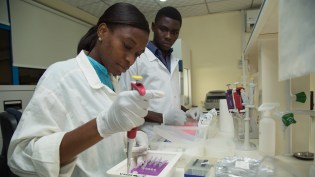 world’s poorest countries.
 The South Asia region alone will need to create more than 13 million jobs every year to keep pace with its demographics. In Sub-Saharan Africa, despite a smaller population, the challenge will be even greater—15 million jobs will need to be created each year.
The ticket to a better ride: How can Automated Fare Collection improve urban transport?
In both developed and developing countries, a growing number of cities are relying on  automated systems to collect public transport fares and verify payment. Far from being a gimmick, Automated Fare Collection (AFC) can bring a wide range of benefits to local governments, transport planners, operators—and, of course, to commuters themselves.
The recent Transforming Transportation 2019 conference paid a great deal of attention to the applications and benefits of AFC, which have been at the heart of many World Bank and IFC-supported urban mobility projects.
Innovations in satellite measurements for development
Combinatorial innovation is driving innovation in satellite-based economic  measurements at unprecedented resolution, frequency and scale. Increasing availability of satellite data and rapid advancements in machine learning methods are enabling a better understanding into the fundamental forces shaping economic development.
Why satellite data innovations matter
The desire of human beings to “think spatially” to understand how people and objects are organized in space has not changed much since Eratosthenes — the Greek astronomer best known as the “father of Geography” — first used the term “Geographika” around 250 BC. Centuries later, our understanding of economic geography is being propelled forward by new data and new capabilities to rapidly process, analyze and convert these vast data flows into meaningful and near real-time information
Upcoming BBL’s
Structural Change in Space: Employment Transition and Urbanization in Developing Countries
March 4, 2019
TIME: 12:30 – 2:00PMET
Washington, DC and Online
https://bit.ly/2NrPPTl
Smackdown Debate: How Credible Are the World Bank’s Global Poverty Estimates? How Can They Be Improved?
March 5, 2019
TIME: 12:30 – 2:00PM
World Bank, Washington DC
https://bit.ly/2St7zi3
Corporate Debt: Lessons from Europe for Asia
March 6, 2019
TIME: 12:30pm – 2pm EST
World Bank, Washington DC
https://bit.ly/2NsXzVb
Human-Centered Business Model:Sustainable Business Practices for Sustainable Development Outcomes
April 11, 2019
TIME: 2:00-3:30 PM
World Bank, Washington DC
https://bit.ly/2H3NDQC
eC2: Support Agribusiness Competitiveness in Azerbaijan
Deadline: 11-Mar-2019 at 11:59:59 PM (Eastern Time – Washington D.C.)
The Project aims at enhancing the market competitiveness of the agribusiness sector as a first priority in diversifying the country’s economy by: (i) enhancing access to quality seeds, and (ii) regulatory streamlining along agribusiness value chains. The regulatory work in the horticulture value chain will seek to reduce the administrative burden of private sector players in these markets and thus contribute to cutting private costs and improve the competitiveness of the horticulture industry.
Annual Bank Conference on Development Economics 2019 Multilateralism: Past, Present, and Future
The Annual Bank Conference on Development Economics (ABCDE), organized by the  World Bank’s Development Economics (DEC) Vice Presidency, is one of the world’s best-known series of conferences for the presentation and discussion of new knowledge on development. The conference aims to promote the exchange of cutting-edge knowledge among researchers, policymakers, and development practitioners.
The next conference will take place on June 17–18, 2019 at World Bank Headquarters in Washington, D.C. The theme of the conference will be “Multilateralism: Past, Present, and Future”. The 2019 ABCDE conference will be part of a series of events scheduled to celebrate the 75th anniversary of the Bretton Woods conference.
eC2: FIRM CONSULTANT FOR OUTGROWER TRAINING AND COACHING IN FEED AND LIVESTOCK
Deadline: 07-Mar-2019 at 11:59:59 PM (Eastern Time – Washington D.C.) 
IFC is looking for Out Grower training and coaching firm consultant to start its livestock out grower development project in Raya Azebo District and neighboring woredas in Ethiopia where in the 1st phase of the project, at least 1000 farmers (out growers) (a)adopt good animal husbandary practices, (b) produce proper animal feed for themselves and supply to feedlot, (c) deliver animals that meet export market requirements by end of December 2019.


You must be logged in to post a comment.