Deadline: 20-Jul-2019 at 11:59:59 PM (Eastern Time – Washington D.C.)
The objective of this consultancy is two-fold. Prepare a pre-feasibility study to explore electric bus and other technological solutions and alternatives for the cities of Cali, Colombia and San Jose, Costa Rica in order to reduce the GHG emission of the transport sector of the cities. In addition, assist the cities to implement EDGE certification pilots for sustainable buildings.
Data plays a crucial role in the 2030 agenda set out by the Sustainable Development Goals (SDGs). It helps us to focus policies and make better decisions. It is needed to set targets, measure progress towards those targets and to hold governments accountable to their commitments under the SDGs.
Data is also essential for governments to fulfill their pledge to leave no one behind in the SDGs; that the goals should be met for all segments of society and that those furthest behind should be reached first. Despite significant progress over the last few years, we are still far away from being able to systematically identify those at risk of being left behind or to monitor their progress towards the 2030 commitments.
Deadline: 21-Jul-2019 at 11:59:59 PM (Eastern Time – Washington D.C.)
The consulting firm will work on the following; (a) mapping of existing community-based delivery platforms across sectors and identify opportunities for better coordination and enhanced synergy, including an in-depth analysis of the existing mapping results; (b) review and analyze the existing multisectoral coordination mechanisms at both national and subnational levels, including the SUN Secretariat; and (c) review the existing behavioral change communication (BCC) study results and analyze the interaction of various delivery platforms which convey messages related to nutrition and identify options for better harmonization and optimization. More specifically, the consulting firm will:
As public and private financial institutions innovate and expand the range of financial products that households and firms use, questions about how these services are affecting consumers, providers, and the economy as a whole have become central. A new policy brief by Abraham, Schmukler, and Tessada explores how evaluating the “additionality” of financial services can help answer such questions.
Thank you, Prime Minister Abe, for being such a gracious host.
It is a great pleasure to be here during the new era of Reiwa, “Beautiful Harmony.” And it’s a true pleasure that the World Bank and Japan have maintained harmony since the early 1960s, notably when the World Bank made a loan to help fund the construction of the bullet train ahead of the 1964 Tokyo Olympics. I’ll ride that train tonight as I go to Tokyo. The bullet train and Japan’s many other advances enhanced connectivity and helped lead to Japan’s fast growth and its successful graduation from World Bank lending soon after the Olympics in 1966.
Following an intense research and writing process over the last 10 months, I am pleased to announce that a draft of the World Development Report (WDR) 2020 – Trading for Developing in the Age of Global Value Chains is now available online for public comment.
Dieynaba Nioula Kane remembers vividly when, for the first time in her life, she was forced to ask friends and family for money. It was out of desperation after the birth of her fifth child, a little boy with a life-threatening condition that needed specialist treatment in the capital. Dieynaba was forced to leave her job teaching French and hurriedly relocate to Dakar, where she was able to find the health services he needed.
But the expenses quickly piled up. Hospital bills, a tracheostomy, medicines, dressings, fees for nurses and doctors, plus the cost of food and transportation to and from the hospital. As she took a break from paid employment for four years to focus on her son’s health her family’s economic conditions deteriorated. It took the family years to recover.
Deadline: 16-Jul-2019 at 11:59:59 PM (Eastern Time – Washington D.C.)
Assignment of developing:
A) A market overview of the logistics sector in Indonesia (traditional plus e-logistics) including a demand-supply analysis now and in the next 5 years.
B) A market share estimation for the Platform with estimated revenues, which necessarily includes an estimation of fares and Average Order Value (AOV) evolution.
C) An overall assessment of the Platform business plan, including growth assumptions, estimated necessary resources, Capex and Opex to achieve the objectives, like facilities, fleet, human resources and systems.
The money workers send home to their families from abroad has become a critical part of many economies around the world. Based on the most recent data, remittances, as this money is called, will only grow in importance. Officially recorded remittances amounted to a record $529 billion in 2018, and are on track to reach $550 billion in 2019.
This money is flowing at about the same levels as foreign direct investment (FDI), but if China is excluded, they are the largest source of foreign exchange earnings in low- and middle-income countries, according to Migration and Remittances Brief 31, published by the World Bank Group and KNOMAD, the Global Knowledge Partnership on Migration and Development. In other words, if China is excluded from the analysis, remittances have already overtaken FDI as the biggest source of external financing.


 Goals (SDGs). It helps us to focus policies and make better decisions. It is needed to set targets, measure progress towards those targets and to hold governments accountable to their commitments under the SDGs.
 ial products that households and firms use, questions about how these services are affecting consumers, providers, and the economy as a whole have become central. A new
 to announce that a
 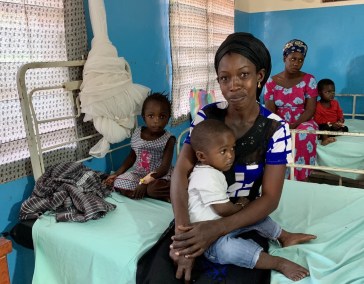 forced to ask friends and family for money. It was out of desperation after the birth of her fifth child, a little boy with a life-threatening condition that needed specialist treatment in the capital. Dieynaba was forced to leave her job teaching French and hurriedly relocate to Dakar, where she was able to find the health services he needed.


You must be logged in to post a comment.